
I’ll walk you through the ten key differences I’ve found between metal and wood patio furniture, starting with how aluminum stays manageable at 90°F air temperature while cast iron climbs to 140°F in direct sun. Metal conducts heat roughly 600 times faster than wood, so you’ll want cushions on aluminum by mid-morning, whereas cedar stays near air temperature naturally.
I look at maintenance too: aluminum asks only for soap-and-water cleaning twice yearly, but wood demands annual sealing to stop rot and insects. Teak can survive 50+ years with that care, while neglected wood fails early.
For moving pieces around, aluminum under 30 pounds wins easily over 80-pound teak benches, though wrought iron’s weight anchors it against coastal winds.
Upfront costs run $300–$800 for aluminum sets versus $1,000–$3,000 for teak. Humid climates favor rust-proof aluminum; dry regions suit durable teak. Both materials recycle or renew responsibly. Your specific weather patterns and maintenance habits will determine the best choice for your yard.
Weather Wars: How Metal and Wood Handle Storms and Sun
How do you choose furniture that won’t quit on you after one rough season. Weather resistance separates pieces that last from ones that don’t.
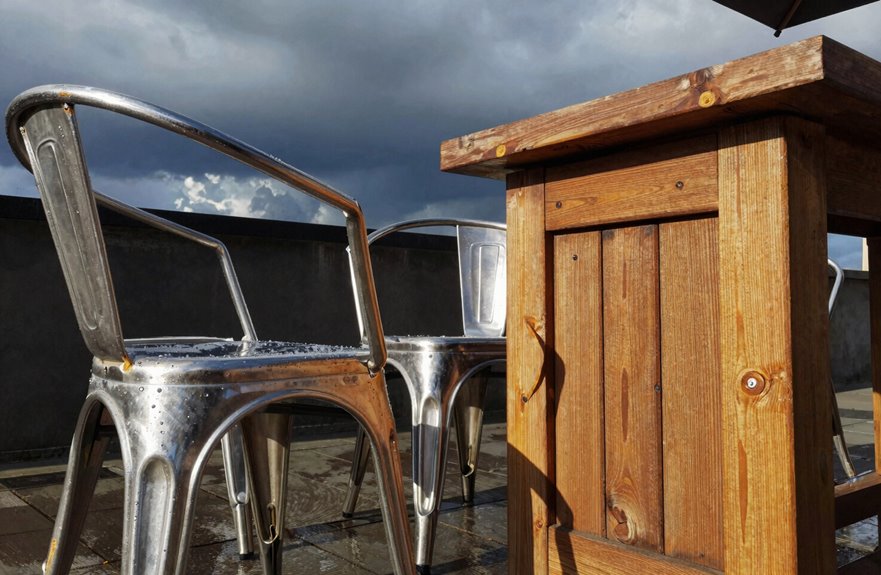
Metal offers two paths. Aluminum, with its powder-coated finish, shrugs off rain, snow, and sun. It’s lightweight, making it easy to move when storms hit, but needs cushions for stability in wind. Wrought iron stays put in gales, yet demands regular rust-preventive maintenance and touch-up painting to survive.
Metal furniture splits the difference: aluminum moves when storms threaten, wrought iron stands firm but rusts without vigilance.
Wood tells a different story. Without proper sealing, rot, mold, and insects destroy it fast. Teak resists better thanks to natural oils, but still needs annual sealing or staining in humid, sunny spots.
Your choice shapes your workload. Aluminum minimizes maintenance. Wood rewards care with warmth. Pick what fits your willingness to tend it.
Heat Test: Why Metal Gets Hotter (And What That Means for You)
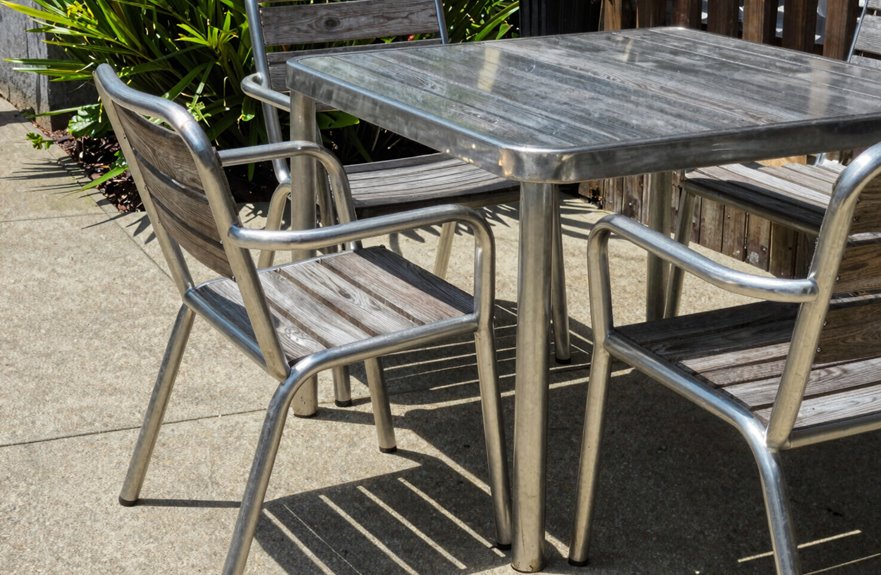
I want to explain why your metal patio chairs feel like they’re burning your legs on a July afternoon, and what you can actually do about it. Metal’s thermal conductivity, basically how fast it moves heat from the sun to your skin, is roughly 600 times higher than wood’s. This means aluminum can hit 140°F in direct sun within 30 minutes while cedar stays near air temperature. Once you understand this difference, you’ll see why adding cushions or moving chairs into shade isn’t just about comfort. It’s about using physics to reduce heat transfer to your body.
Thermal Conductivity Explained
Step outside on a summer afternoon, and you’ll quickly notice that metal patio furniture feels dramatically hotter than wooden pieces sitting right beside it. The reason comes down to thermal conductivity.
Metals transfer heat incredibly fast. Aluminum, common in patio sets, rates about 205 W/m·K. Cedar wood rates only 0.12 to 0.04 W/m·K. That’s a massive difference. When sunlight hits metal, heat transfer races through the material and straight to your skin. Wood absorbs that same energy slowly, staying comfortable longer.
Grabbing a metal armrest at noon teaches this lesson quickly. In direct sun, metal surfaces can exceed air temperature by dozens of degrees, creating real burn risk. Wood simply doesn’t punish you the same way.
Wind, shade, and moisture help both materials cool, but metal’s advantage there rarely outweighs its scorching start.
Practical Seating Solutions
So what can you actually do about scorching metal seats? I’ve learned a few tricks that keep my patio comfortable all summer.
First, I position my metal furniture under shade. A 9-foot umbrella or pergola cuts direct sun exposure by 70%, dropping surface temperatures dramatically. Second, I invest in cushions with heat-dissipating foam cores. 2-inch thick pads with breathable mesh undersides work best. Without them, aluminum reaches 120°F in 90-degree weather.
Third, I choose powder-coated finishes in light colors. White or beige metal absorbs 50% less heat than black wrought iron, which stays hot for 20 minutes after sunset.
Wood furniture naturally avoids these problems. Teak or cedar stays within 10 degrees of air temperature, even at noon.
Metal furniture requires planning and preparation, while wood furniture accommodates spontaneous outdoor gatherings without special measures.
Maintenance Reality: What Upkeep Metal and Wood Actually Need
I’ll break down your metal and wood maintenance into three clear areas so you know exactly what you’re signing up for. First, I’ll walk you through the basic care each material needs, then I’ll compare how seasonal changes affect your workload. By the end, you’ll see which option fits your lifestyle and your willingness to pick up a brush.
Metal Maintenance Basics
Metal furniture brings a sleek look to your patio, but not all metals require the same care.
- Aluminum is your low-maintenance option. Wipe it with soap and water twice yearly, and it stays rust-free without additional effort.
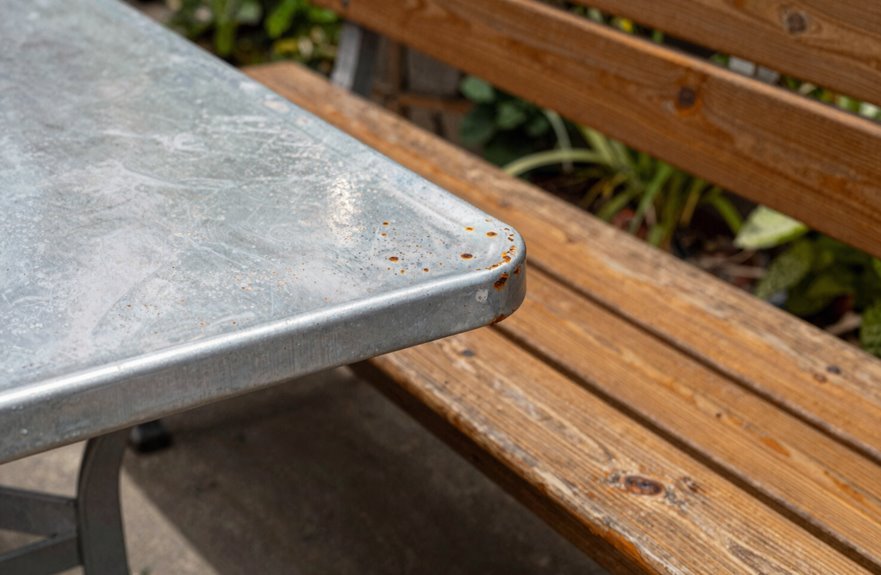
- Wrought iron requires more attention. Touch up chipped spots with protective finishes every spring, or rust will develop quickly.
- Stainless steel resists corrosion well. Be aware that it gets hot in direct sunlight. Add cushions by 11 a.m. on sunny days.
- Living near salt air. Clean monthly and reapply protective coatings seasonally.
Choose metal that fits your lifestyle and maintenance capacity. You’ll spend less time on upkeep and more time enjoying your outdoor space.
Wood Care Requirements
Wood furniture requires more maintenance than metal, but offers warmth and character in return. Wood care is an investment in pieces that become part of your home’s story.
The care process involves three steps: First, clean with mild soap and water. Second, reapply sealing finish annually, sometimes sooner if your teak or cedar shows signs of dryness. Third, store or cover pieces during storms.
Durable woods like teak carry natural oils that fight rot and insects, providing 50+ years of use. Cedar and acacia resist decay as well, but they still need that protective barrier against moisture.
Without sealing finish, untreated wood will develop mold, rot, and insect damage. Maintaining a consistent care schedule keeps your furniture in good condition for decades.
Seasonal Upkeep Comparison
When I compare what metal and wood actually demand from me each season, the gap in upkeep becomes clear fast. Metal asks for little. Aluminum just needs soap and water, while wrought iron wants occasional touch-up paint. Wood insists on more commitment.
- Metal sits quietly most months, needing only yearly inspections for chipped coatings.
- Wood craves annual sealing or staining to fight rot, mold, and hungry insects.
- High humidity hits both hard. Metal rusts faster without protection, and wood swells unless you stay vigilant with treatments.
Teak, cedar, and acacia each bring their own rules to this game. Skipping wood maintenance costs money and accelerates damage, while metal tolerates longer intervals between care. Your choice depends on how much time you can dedicate to seasonal work.
Lifespan Showdown: Which Material Outlasts the Other
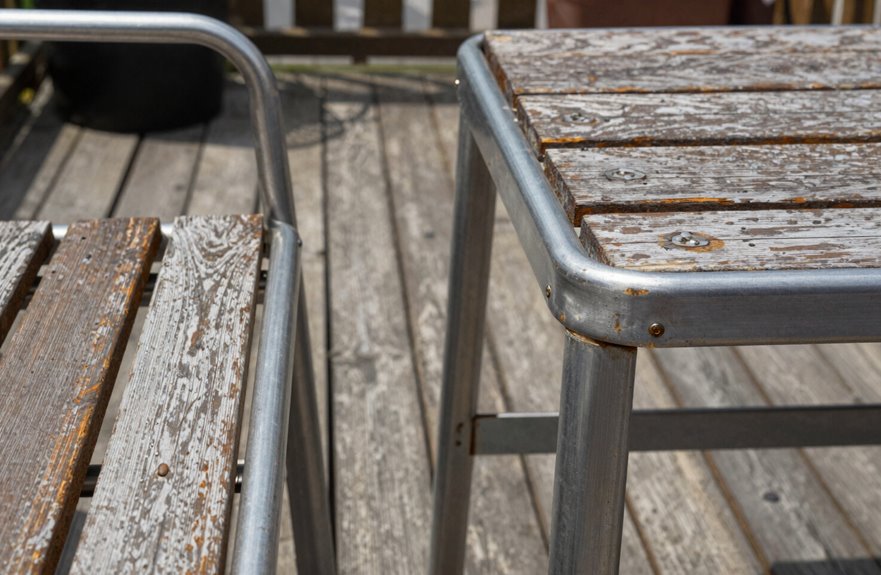
How long can you really expect your patio furniture to stick around? Let’s break it down together.
- Start with the champions. Teak, that golden-brown beauty, can grace your patio for 50+ years. Its natural oils fight rot and bugs like a built-in shield. Aluminum, meanwhile, shrugs off corrosion for decades with minimal maintenance. It’s lightweight, tough, and requires little upkeep.
- Know the trade-offs. Wrought iron lasts long too, but it requires protective coatings to prevent rust. Wood demands staining and sealing regularly. Skip the upkeep, and both materials deteriorate faster.
- Match your environment. Humid climate? Aluminum wins. Dry area with care? Teak thrives. Your choice shapes your furniture’s longevity.
Bare Comfort: Sitting on Metal vs. Wood Without Cushions
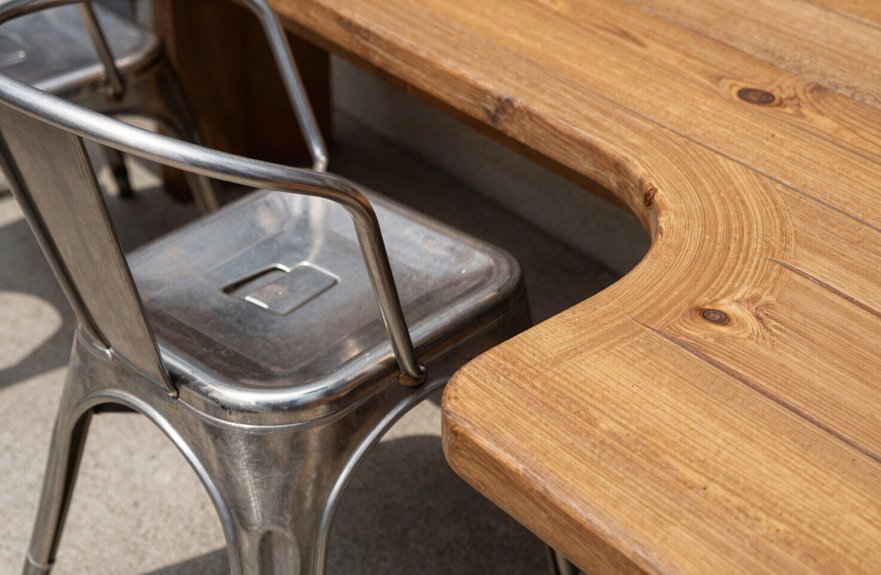
Where do you actually sit when the cushions get left inside? I’ve tested both surfaces bare, and the difference is immediate.
Metal fights back. It stays hard and unforgiving, with no give under your weight. In direct summer sun, metal surfaces can reach 140°F, hot enough to make you jump. Wood greets you differently. It holds natural warmth, not scorching heat, and its fibers flex slightly, reducing fatigue during a thirty-minute sit.
Watch for three key distinctions:
- Temperature control: Wood stays cooler, metal absorbs and retains heat
- Surface give: Wood flexes naturally, metal remains rigid
- Weight distribution: Wood’s slight contour supports longer seating without aches
Aluminum moves easily but lacks comfort bare. Wrought iron endures forever yet punishes unguarded thighs.
Wood performs better for spontaneous seating. Metal requires cushions for comfort.
Design Face-Off: Modern Metal Styles vs. Natural Wood Looks
Comfort matters, but looks shape your backyard’s personality. When I choose outdoor furniture, I’m really picking a vibe for my space.
Metal styles bring clean lines and sleek silhouettes. Powder-coated finishes in bold colors or matte blacks pop against concrete and pools. Aluminum pieces stay rust-free through storms, offering a low-maintenance, modern edge for city living.
Wood looks tell a different story. Teak ages to silvery gray; cedar keeps that warm reddish glow. The visible grain and smooth joinery showcase craftsmanship that invites lingering conversations.
Metal reflects light with industrial chic. Wood absorbs it, deepening its tone season after season.
Both options welcome people in. Your choice depends on the gatherings you want to host.
True Cost: Sticker Price vs. Lifetime Investment for Each
Why does the price tag rarely tell the whole story? Sticker price and lifetime maintenance paint very different pictures for your wallet.
- Metal wins upfront. Aluminum sets often cost $300–$800, while teak dining sets run $1,000–$3,000. Metal furniture typically requires less initial investment.
- Wood fights back over time. Teak and ipe can last 30–50 years with care. A 25-year-old teak table demonstrates this durability in practice.
- Maintenance decides everything. Wood needs sealing every 1–2 years. Metal just needs soap, water, and occasional touch-ups. Neglecting wood maintenance means replacing it twice over a comparable timeframe.
Your climate matters too. Coastal humidity destroys cheap metal fast. Choose based on how long you’ll stay and how much tending you’ll actually do.
Heavy or Handy? How Easy Metal and Wood Are to Move
How often do you actually rearrange your patio? Mobility matters when choosing furniture.
Let’s break this down. 1) Aluminum wins for mobility—most pieces weigh under 30 pounds, so I can drag a six-seat dining set solo. 2) Cast aluminum beats cast iron and steel; same look, half the effort. 3) Wrought iron stays put. I love that stability in coastal winds, but forget quick reconfiguring. 4) Wood feels heavier than it looks. A solid teak bench weighs 80-120 pounds. Even lighter woods outbulk metal. 5) Details save you: wheels on metal frames, slim legs versus thick posts.
Match your lifestyle. Frequent host? Prioritize lightweight flexibility. Set-and-forget type? A heavy, stable piece builds your space’s identity.
Eco-Friendly Patio: Is Metal or Wood the Greener Choice?
Once I’ve settled on where my furniture goes, I start thinking about what it’s made of and what that means for the planet.
Both wood and metal have green credentials, but they play different games. I weigh three factors:
- Renewability – Responsibly sourced wood, especially certified teak or cedar, regrows. Metal doesn’t, though it recycles well.
- Lifespan – Quality metal often lasts 20+ years with minimal care, while cheaper wood fades faster.
- Production cost – Mining and smelting metal burns more energy upfront than harvesting wood.
I choose teak for its natural rot resistance, or powder-coated aluminum that won’t need replacing. The longest-lasting material minimizes landfill waste, which provides the greatest environmental benefit.
Final Verdict: Choose Metal or Wood Based on Your Climate
While I’ve weighed the environmental impact, I still need to match my furniture to where I actually live. This climate-driven guidance helps create outdoor spaces that last.
- Live somewhere windy or storm-prone? I choose aluminum. It’s rust-proof, weighs about 35 pounds per chair, and won’t become a projectile in 40-mph gusts. I avoid uncoated wrought iron, as it rusts within two seasons of coastal exposure.
- Deal with extreme sun? I pick wood. Teak stays 20-30 degrees cooler than metal at 95°F ambient temperature. Metal surfaces require cushions to remain comfortable; wood doesn’t.
- Have mild weather and time for upkeep? Cedar or teak provides natural warmth and rewards regular maintenance. I seal mine every 12-18 months.
Your climate determines the best choice.