
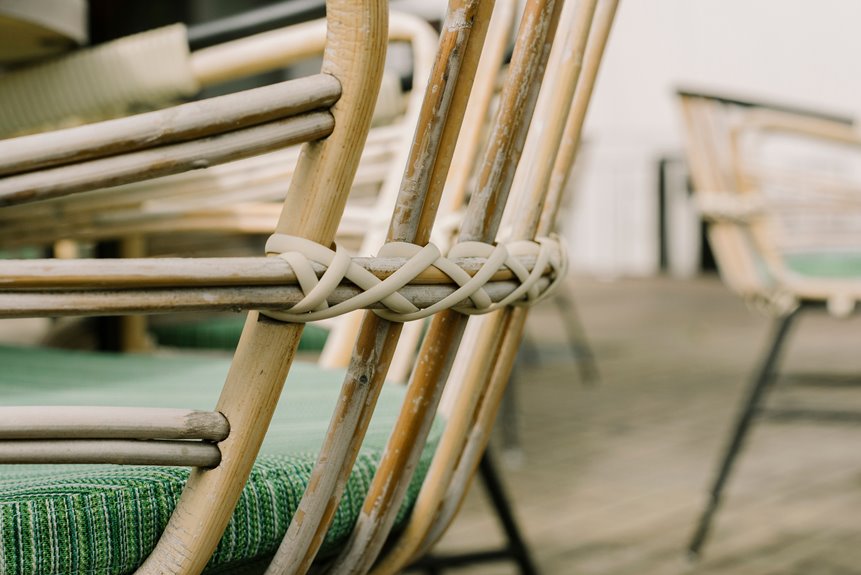
I’ve lived with both rattan and wood patio pieces.
First, rattan is a woven palm vine that’s 30–50% lighter than solid wood, making it easy to move alone.
Second, wood like teak or cedar provides structural rigidity and develops a silvery patina, while rattan stays flexible but brittle.
Third, maintenance differs completely: wood needs sealing every 12–18 months with polyurethane or oil-based sealant, but rattan requires shielding from rain and UV with twice-yearly protection sprays.
Fourth, wood handles moisture far better when sealed properly; natural rattan absorbs water, cracks, and must stay covered or indoors.
Fifth, longevity favors wood. Teak lasts 50+ years, cedar 20–40 years, while natural rattan manages 5–15 years at best.
Sixth, style and placement matter: rattan suits casual, flexible arrangements in covered spaces, but wood anchors permanent setups with classic weight.
Your choice determines both the practical demands and aesthetic character of your patio over time.
What Rattan and Wood Patio Furniture Actually Are
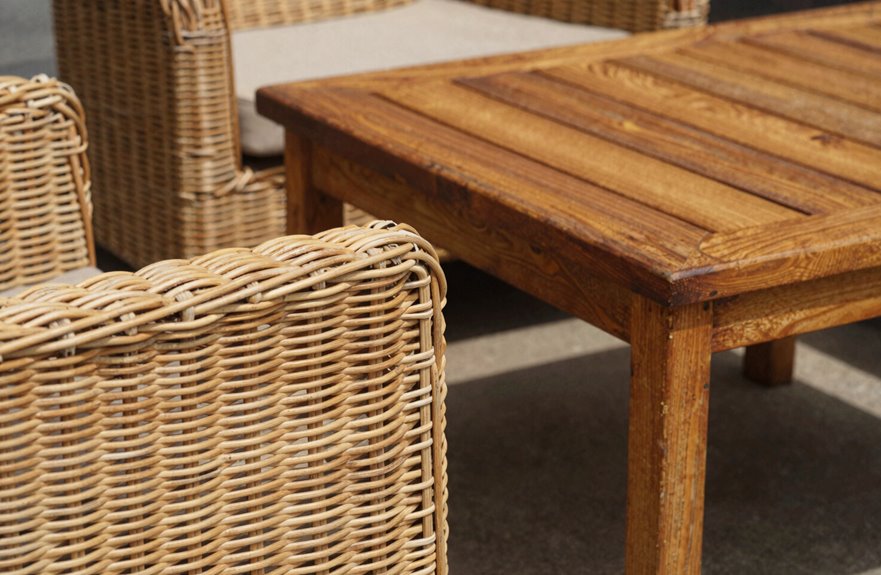
Let me walk you through what these two materials actually are before we compare them.
Rattan is a solid palm vine, flexible, strong, and perfect for weaving. Craftsmen can shape it into curves that wood simply cannot manage. When you choose rattan patio furniture, you’re getting lightweight pieces with that classic wicker look. Rattan carries significant moisture sensitivity. Leave it exposed, and it will grow brittle quickly.
Wood patio furniture comes from timber like teak or cedar. It offers structural rigidity and develops a beautiful patina over years. Wood demands sealing and care; annual treatments keep its durability intact. While rattan needs protection from rain and UV, properly treated wood handles outdoor use better. Both need maintenance, but their care differs fundamentally.
Which Material Survives Your Climate: Rattan vs. Wood
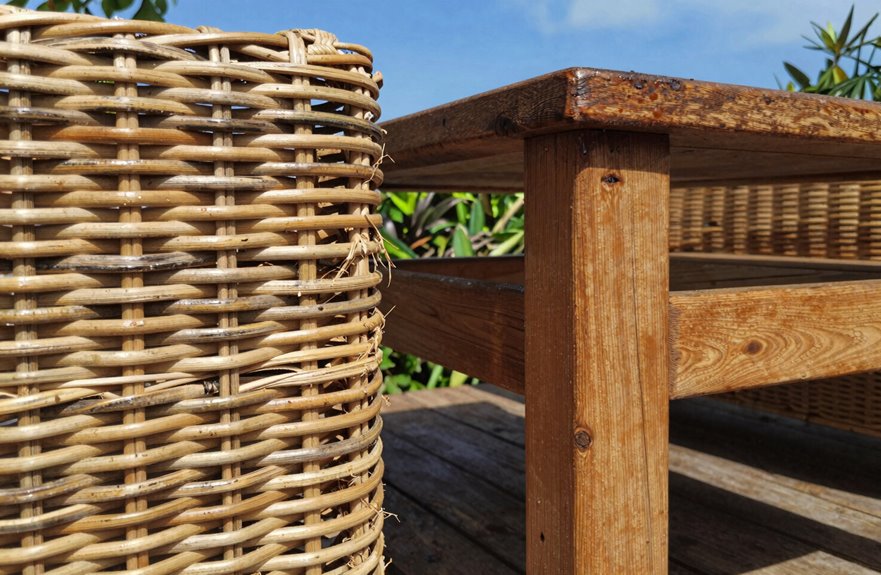
When picking patio furniture, start by asking one essential question: what’s my weather actually like? Your local weather conditions determine everything about outdoor longevity.
Natural rattan struggles in humidity. It absorbs moisture, turns brittle, and cracks. Natural rattan demands covered spaces or indoor storage during rain. For true climate durability, look elsewhere.
Natural rattan and humidity don’t mix—moisture absorption leads to brittleness, cracking, and constant storage battles.
Wood offers better moisture resistance, especially teak wood with its natural oils fighting rot and insects. Proper wood sealing extends outdoor furniture life significantly. Annual sealing and mild soap cleaning protect your investment.
Synthetic wicker mimics rattan durability without the weather worries, but real rattan cannot compete. In wet climates, sealed wood outperforms natural rattan. Choose based on your specific climate conditions to keep furniture functional outdoors rather than stored away.
The Real Maintenance Difference: Sealing Wood vs. Shielding Rattan
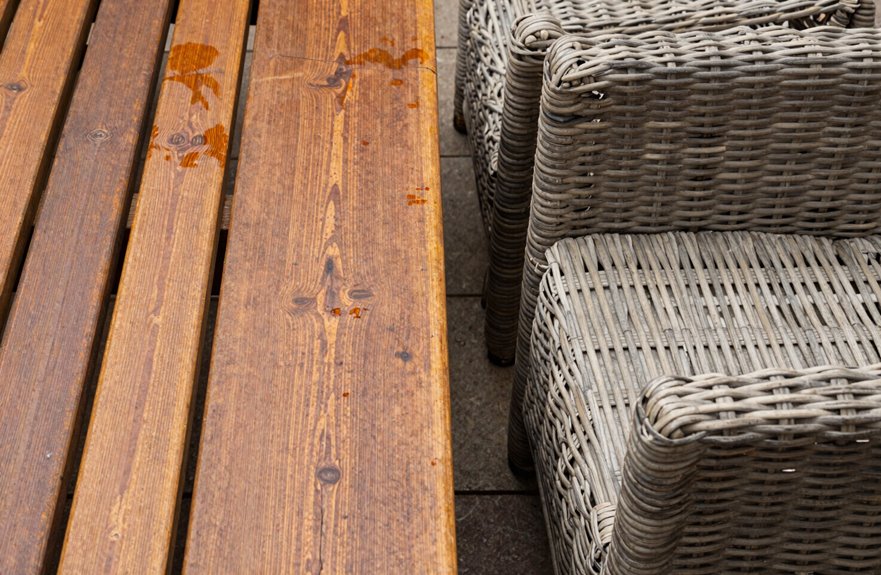
Wood demands that you roll up your sleeves every 12 to 18 months, scrubbing surfaces clean and brushing on sealants, oils, or stains to block moisture and sun damage. Skip this, and you’ll watch your chairs warp or crack within two to three years. Rattan flips the script: you won’t apply chemicals, but you must haul it indoors or snap on waterproof covers before storms, since even six hours of soaking rain can turn those woven fibers brittle and weak. Pick your battle between scheduled elbow grease or vigilant storage, and you’ll keep your patio set solid for a decade or more.
Wood Sealing Essentials
I’ll walk you through what sealing wood actually demands, step by step, because this is where patio furniture lives or dies.
- Choose your armor. Wood sealing starts with picking a surface sealant: polyurethane for toughness, varnish for clarity, or oil for that hand-rubbed warmth. Each builds a moisture barrier against rain and morning dew.
- Block the sun. UV fading bleaches unstained wood gray within one season. A quality sealant absorbs or reflects those rays, keeping your cedar or teak golden-brown.
- Schedule the work. Reapplication hits every 1–3 years depending on your climate. Coastal humidity requires treatment every 12 months; dry inland areas stretch toward 36.
- Inspect often. Check for cracks letting in water ingress. Sand lightly, clean with mild soap, then recoat.
This maintenance rhythm protects your investment and keeps your outdoor space welcoming.
Rattan Shielding Methods
Wood demands sealing, but rattan asks for shielding. These require two completely different approaches against the same outdoor enemies.
Rattan shielding protects a moisture-sensitive vine from humidity and rain. Without proper care, brittleness sets in fast. The approach involves:
- Use UV barriers and surface protection sprays twice yearly. They block degradation without hiding the natural weave.
- Prioritize outdoor storage with covers, or bring pieces indoors during wet seasons to stop water intrusion.
- Inspect weave integrity regularly; loose strands signal shedding durability ahead.
Unlike wood sealing, which uses varnishes or oils to resist moisture for decades, shielding rattan requires more frequent attention. Wood needs resealing every 3-5 years, while rattan needs attention 1-2 times yearly.
Properly maintained rattan lasts 5-15 years. Neglected rattan deteriorates within months to a few years as the weave breaks down.
Moving, Storing, and Living With Each Material
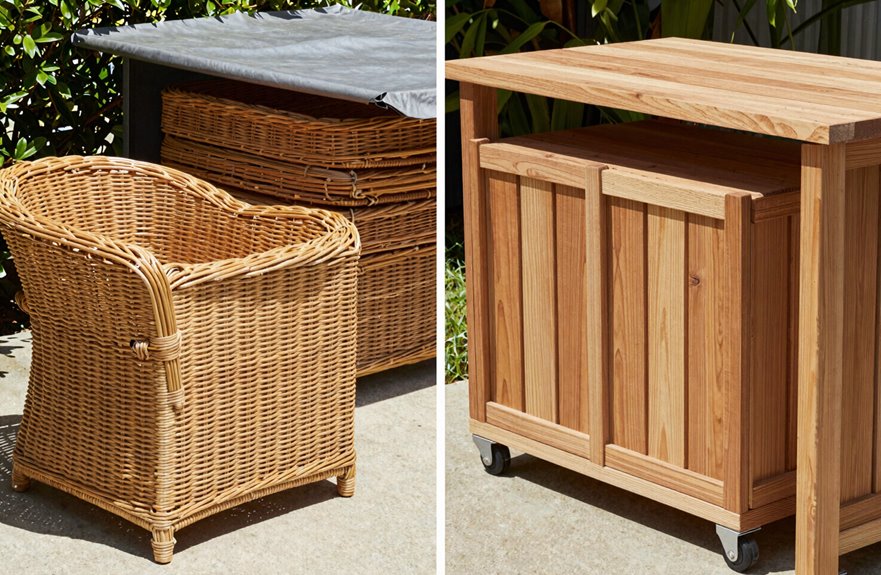
1. When I rearrange my patio, rattan pieces weigh 30–50 pounds less than solid teak, so I can shift them alone, but I need a friend to help move my 80-pound wooden bench. 2. I store my natural rattan in my garage during winter because moisture below 40 degrees cracks the woven fibers, while my acacia wood set stays outside under a ventilated cover with a yearly coat of sealant. 3. Living with both means I wipe spills immediately on rattan to prevent staining, and I check my wood for splinters each spring. These regular maintenance tasks extend the lifespan of each piece.
Weight and Portability
Few things affect patio furniture utility more than how easily you can move pieces when hosting or storing them for winter. Weight and portability determine your actual day-to-day experience with outdoor furniture.
- Rattan wins on lightness. Natural rattan weighs 30-50% less than solid wood, providing real maneuverability when rearranging for guests.
- Wood demands planning. A teak dining chair runs 25-35 pounds versus 10-15 for rattan. Wood relocation typically requires additional help.
- Synthetic wicker improves further. These pieces cut weight even more, boosting ease of handling for quick patio changes.
- Breakdown matters. Rattan’s woven construction allows partial disassembly, significantly reducing storage footprints.
- Living flexibility. Rattan suits weekly rearrangement. Wood works better when you want permanent placement with lasting stability.
Storage Requirements
Where exactly should your patio furniture live when the weather turns? Storage requirements separate fair-weather pieces from true companions.
- Natural rattan demands indoor storage or covered storage when humidity rises. Without humidity protection, brittleness sets in fast.
- Synthetic wicker storage offers more freedom. UV resistance and waterproofing let it stay outside longer, though protection during harsh months remains advisable.
- Wood needs freeze-thaw protection. In zones with hard winters, elevate frames 2-3 inches off concrete using risers. Moisture intrusion from thawing ice warps even weather-resistant furniture.
- For cushions, follow one rule: separate, dry storage always. Weather-resistant cushions aren’t mold-proof. Store them in breathable containers for mold and mildew prevention.
- Elevated storage benefits both materials. A shed, garage, or deck box with ventilation preserves your investment through every season.
Daily Living Experience
How does your furniture feel when you’re actually living with it day to day? In my outdoor living space, I’ve noticed rattan vs wood creates very different rhythms.
Rattan wins on mobility and weight. I lift pieces alone, usually 15-25 pounds, to chase shade or sun. Wood demands two people, sometimes 40-60 pounds per chair. For daily use, that matters.
The trade-off is moisture sensitivity. Rattan requires you to grab cushions and upholstery before storms and store pieces dry. Wood tolerates weather durability better, needing only seasonal sealing, about 2 hours yearly.
Cushions on rattan sets pop off fast for cleaning. Wood requires sturdier pads and more maintenance and care.
Storage and protection differ significantly. Rattan needs covered space. Wood withstands patios year-round with basic seasonal sealing. Choose your lifestyle, not just looks.
How Long Rattan and Wood Furniture Really Last
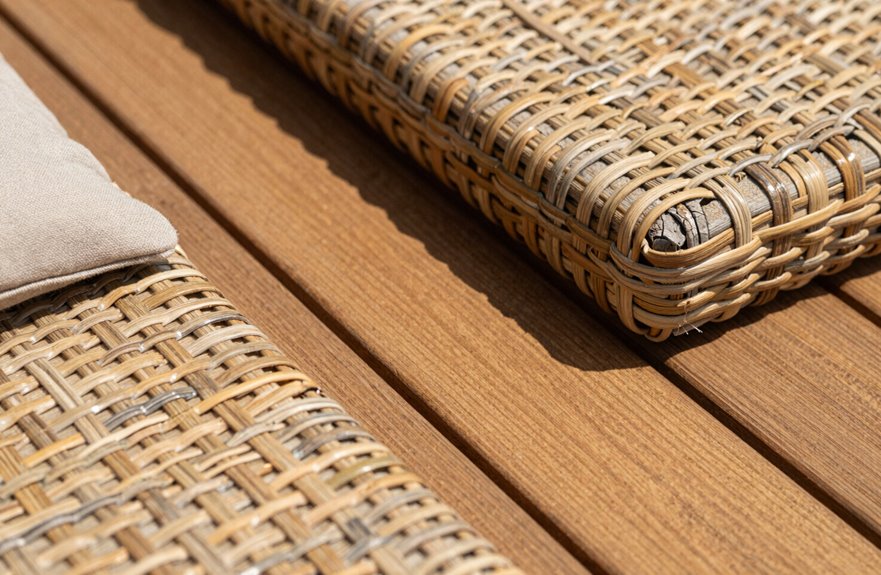
Why does longevity matter when picking patio furniture? You want pieces that last through multiple seasons, not constant replacements.
- Rattan furniture lifespan varies dramatically. Natural rattan gives 5–15 years, but synthetic wicker pushes 10–20 years through harsh outdoor exposure.
- Wood furniture longevity outpaces rattan when you choose wisely. Teak durability stands unmatched, lasting 50+ years while weathering into that coveted silvery patina. Cedar and acacia deliver 20–40 years with annual sealing.
- Maintenance determines everything. Without protective care, sun and rain devour natural materials. You extend years of use by investing in storage and covers during off-seasons.
- Synthetic vs natural materials presents your core choice: convenience or authenticity. Synthetics forgive neglect; naturals reward your attention.
Planning for decades rather than seasons transforms your patio into a lasting investment.
Which Look Fits Your Space: and Which Should You Buy?
When you’re staring at your empty patio, the choice between rattan and wood furniture requires careful consideration. You want outdoor spaces that feel like home.
First, assess your space fit. High humidity or open rain exposure? Choose synthetic wicker rattan with better weather resistance. Covered areas? Natural materials work beautifully. Consider durability needs: synthetic rattan lasts 5–15 years; teak wood endures 50+ years with sealing. Match style and aesthetics to your vision. Rattan offers airy curves, while wood delivers solid permanence. Factor in maintenance commitment as well.
| Feature | Rattan Outdoor Furniture | Wood Outdoor Furniture |
|---|---|---|
| Weight | Lightweight, easy to move | Heavy, stays put |
| Best Use | Flexible arrangements | Permanent setups |
| Weather Handling | Needs covers or synthetic wicker | Sealing required |
| Style Feel | Casual, textured warmth | Classic, substantial |
| Lifespan | 5–15 years | 15–50+ years |
Select the option that best serves your specific needs and climate conditions.