
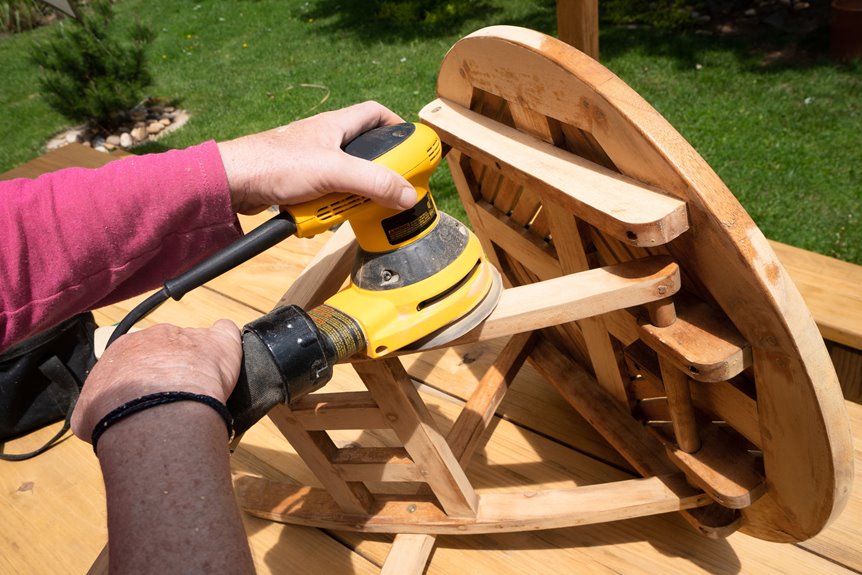
I oil my outdoor furniture two to three times each season when it sits in direct sun, but you’ll need to adjust based on four key factors.
First, check your wood type: teak needs yearly oiling minimum, cedar once or twice yearly, and oak one to two times per season in harsh conditions.
Second, consider your climate. Direct sun demands more frequent applications than shaded spots, and humid or coastal areas accelerate wear.
Third, pick your oil carefully: boiled linseed oil dries in 12–24 hours but needs monthly reapplication in peak sun, while raw tung oil takes 48 hours between coats yet lasts longer if you layer it with shellac and marine varnish.
Fourth, always prep properly. Clean with warm water and mild detergent, dry for 24 hours, and check that temperatures stay above 13°C before you start.
Skipping these steps results in graying wood, water absorption, and cracks within two to three seasons. Each factor requires attention to build an effective maintenance calendar.
How Often to Oil Outdoor Furniture: The Baseline Schedule
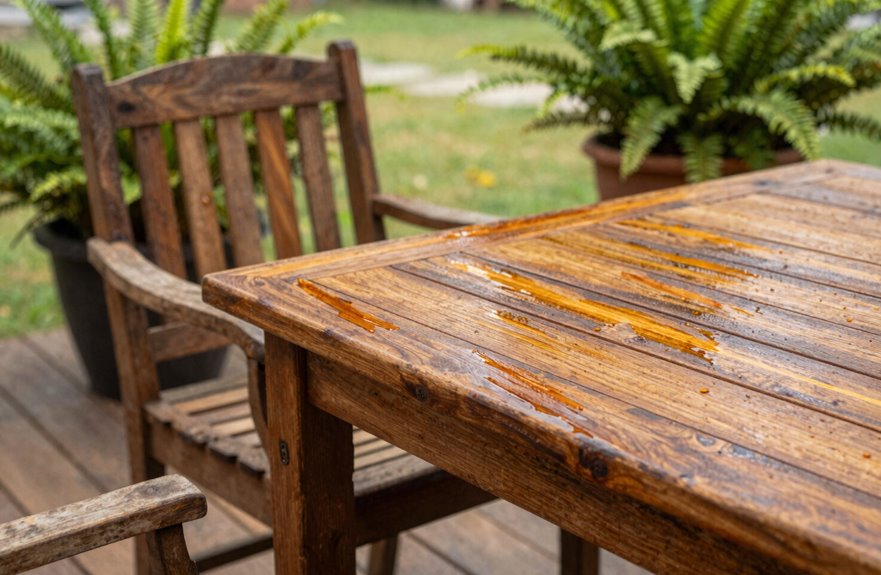
How often should you really oil your outdoor furniture? The following rhythm keeps pieces looking their best.
- Start with the baseline: oil furniture 2–3 times per season when it sits in direct sun. This protects the wood from drying and cracking.
- Adjust for your wood type. Teak chairs need oil at least once yearly, but increase applications when storms hit or temperatures swing wildly.
- Time it right. You can oil eight chairs in about two hours. Then wait 48 hours before anyone sits down.
- Prep matters. Clean first, wait 24 hours for drying, and check the forecast. Never oil in blazing sun or extreme heat; this ensures even absorption.
This approach keeps outdoor furniture in good condition for years.
Linseed Oil vs. Tung Oil: Which Needs More Frequent Reapplication?
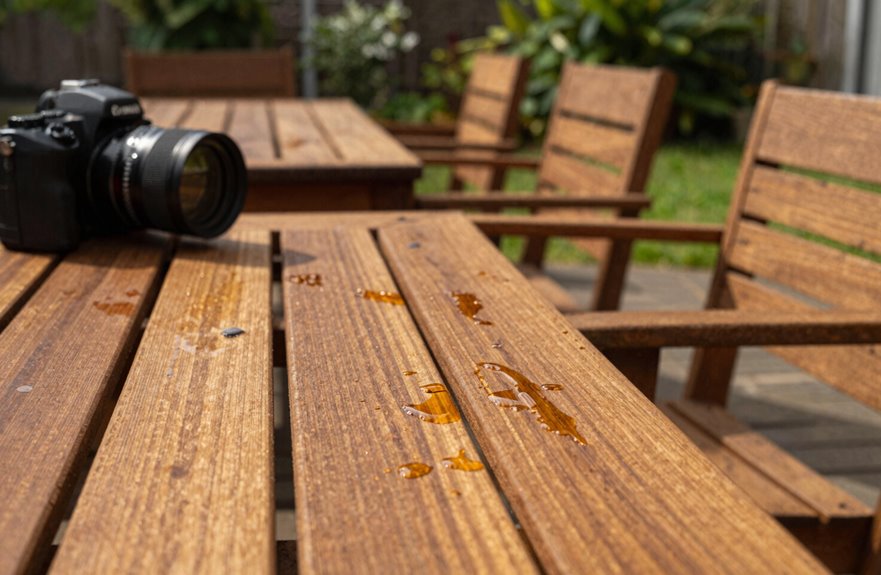
I want to break down how linseed oil and tung oil stack up when you’re planning your touch-up calendar.
Boiled linseed oil dries in about 24 hours and seals wood in 2–3 coats, while raw tung oil needs 48 hours between coats and builds slower. Linseed holds up for 6–8 weeks in direct sun before graying, but tung oil, though harder when cured, can show wear in seasonal freeze-thaw cycles within 4–6 weeks without topcoat protection.
This means you’ll reapply boiled linseed oil 2–3 times per season, whereas pure tung oil demands monthly attention unless you layer it with shellac and marine varnish, which stretches gaps to 10–12 weeks.
Drying Time Comparison
When you’re deciding between linseed oil and tung oil for your outdoor furniture, drying time directly affects how often you’ll need to reapply finish.
Boiled linseed oil dries in 12-24 hours, letting you build protection quickly. Most projects can be finished in a weekend. Tung oil takes 24-48 hours between coats, sometimes longer in humid conditions. This extended timeline requires more patience upfront.
For outdoor furniture care, this translates to:
- The faster linseed oil cures, the sooner you’re done, but you’ll need to return more often, sometimes monthly in peak sun
- Tung oil’s slow drying allows longer gaps between full re-oiling seasons
- Layering tung oil with shellac and varnish increases your waiting time but extends the overall protection period
Both oils maintain your furniture’s appearance effectively. Your choice depends on whether you prefer frequent maintenance sessions or longer intervals between reapplication.
Weather Durability Differences
Where exactly do these two oils fall apart when the weather turns harsh? Linseed oil, despite drying faster, still requires 2–3 reapplications per season if your furniture sits in direct sun. Tung oil demands even more attention when seasonal climates hit hard.
Both oils surrender to sun and weather eventually. You’ll want to reapply 1–2 times yearly at minimum, plus extra coats after cleanings. Harsh, sunny, or humid environments require more frequent reapplication.
Combining either oil with varnish or sealers stretches those intervals. You’ll still re-coat between seasons, but less often. Your furniture stays protected while reducing maintenance demands.
Maintenance Frequency Needs
How often must you really commit to this upkeep? I find linseed oil demands my attention 2–3 times each season, especially when my chairs bake in direct sun. Boiled linseed oil dries faster, so I squeeze in extra coats when weather cooperates. Tung oil lasts longer, but I still watch for dullness or water that stops beading.
- The 48-hour curing window requires patience, yet protects what I’ve built
- Two hours for eight chairs represents a meaningful investment
- Annual rituals, or more in harsh climates, require consistent attention
I schedule around rain forecasts and sun angles, treating Teak oil alternatives with the same calendar discipline. My furniture rewards this rhythm with years of service, and regular maintenance extends the lifespan significantly.
How Climate Changes Your Oiling Frequency
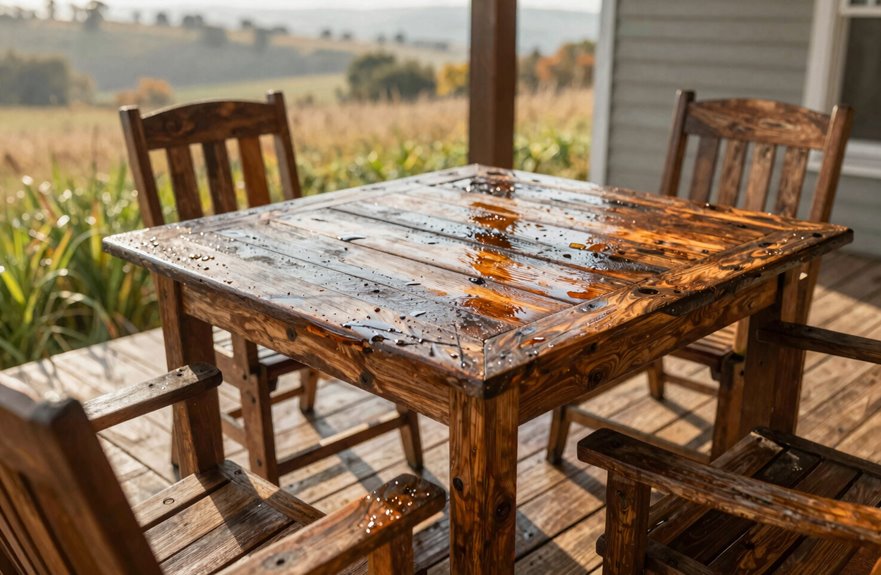
I adjust my oiling schedule based on where my furniture sits and what the sky is doing. Direct sun exposure requires reapplying 2–3 times per season, since UV rays break down protective finishes fast. Humidity and rain also matter. Wet climates demand more frequent touch-ups, and I always observe the 48-hour curing window before exposing freshly oiled pieces to moisture.
Sun Exposure Impact
Perhaps you’re wondering why your neighbor’s teak table looks rich and honey-brown while yours has turned silvery-gray and rough. Sun exposure makes all the difference in how often we oil our outdoor pieces.
Direct sunlight accelerates drying and wear, so I re-oil sun-exposed furniture 2–3 times per season. In shaded spots, I stretch that to once per season. I always check surface dryness first.
Sun damage presents itself as:
- Watching your investment fade from warm amber to ashen gray
- Running your hand across cracked, thirsty wood that once felt smooth
- Knowing you could have prevented it with a simple calendar reminder
I use boiled linseed oil for faster protection in sunny areas, but I never apply it in direct heat. Uneven finishes ruin the look. After intense sun periods, I add extra sessions. Start with teak cleaner if graying has begun, then nourish your wood back to health.
Humidity and Rain
Sun might bake your furniture, but water works just as hard to break it down. Outdoor teak in humid, rainy climates needs extra attention. Moisture seeps into grain, swells wood, and strips protective oils faster than you’d expect.
Timing depends on climate conditions:
| Climate Condition | Oiling Frequency |
|---|---|
| Dry, mild weather | Once yearly |
| Moderate humidity | Every 6-8 months |
| Heavy rain seasons | Every 3-4 months |
| High humidity + strong sun | Every 2-3 months |
| Constant dampness | Monthly checks, oil as needed |
Don’t follow rigid calendars. Instead, watch for graying, rough patches, or water soaking in rather than beading up. When outdoor teak starts looking thirsty, re-oil it; usually add one or two extra applications during wet seasons. Your furniture tells you what it needs. Pay attention to those signals.
Oil Alone or Oil Plus Varnish: Which Schedule Works Better?
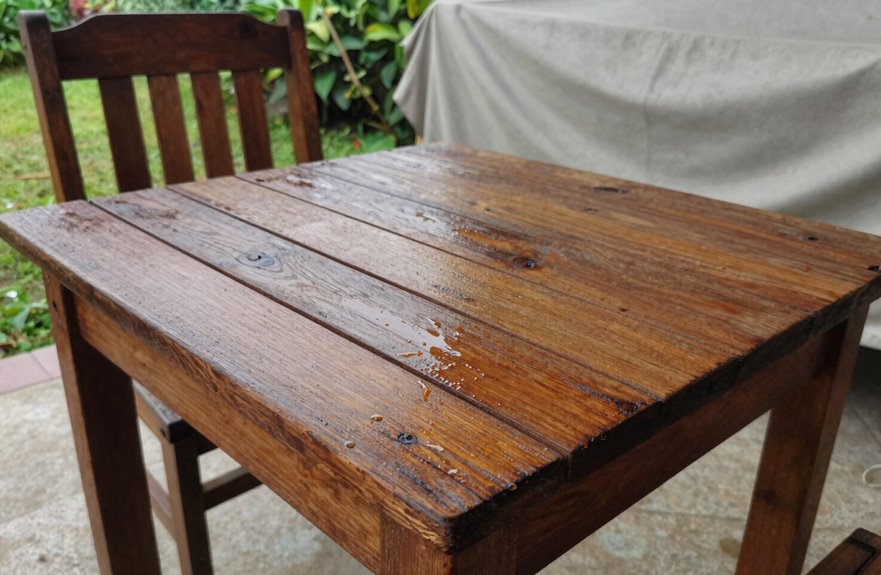
How do you decide between a simple oil routine and a layered oil-plus-varnish approach? I weigh my time against how much protection my outdoor furniture truly needs.
Oil alone asks more of me: 2 to 3 times each season in direct sun. I rub it in, wait, repeat. The rhythm becomes familiar, almost meditative.
The rhythm of rubbing, waiting, repeating—month after month, sun season after sun season.
Oil plus varnish stretches my efforts further. I build layers: oil first, then shellac, then outdoor varnish. Each coat needs its drying window. Fewer oil cycles follow, but I must watch every layer.
- The warmth of bare wood against your palms, renewed each month
- Pride in mastering a multi-step finish that neighbors notice
- Belonging to a circle of caretakers who choose patience over shortcuts
I pick my path by climate and commitment, not by guesswork.
Teak, Cedar, and Oak: Wood-Specific Oiling Timelines
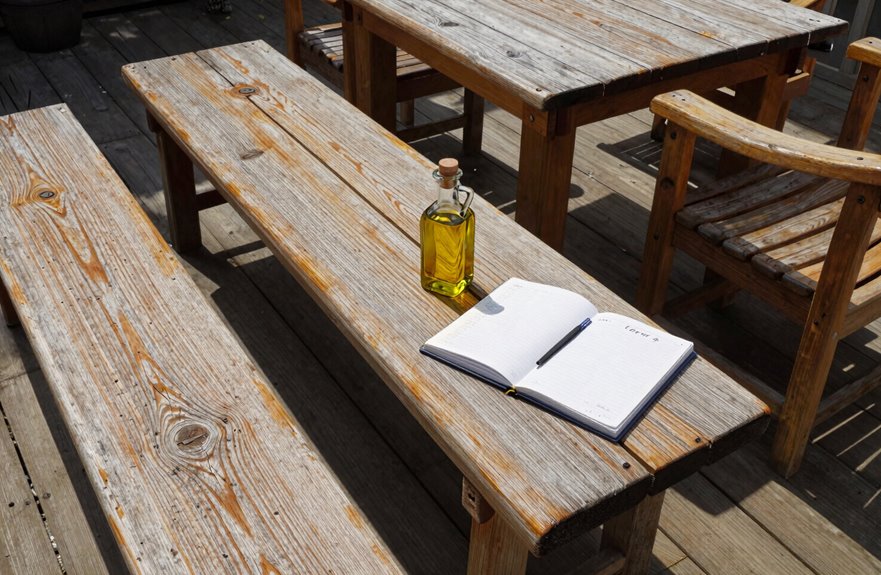
When I look at my outdoor furniture, I don’t see just wood. I see three distinct personalities that need different care.
Teak demands yearly attention, or more if weathering accelerates, to keep that warm reddish-brown glow instead of letting it drift silver-gray. Untreated Teak suffers faster in harsh sun and rain, so I adjust accordingly. Cedar asks for oiling once or twice yearly, stepping up near coastlines or blazing sun. Oak works hardest. It needs 1–2 times per season in tough conditions, with full drying between coats.
| Wood | Oiling Frequency |
|---|---|
| Teak | At least yearly, more as needed |
| Cedar | 1–2 times yearly |
| Oak | 1–2 times per season |
Clean and dry thoroughly first, then watch for color fade or dryness to guide your timing.
How Can You Tell Your Furniture Needs Oil Now?
What clues do I look for when deciding it’s time to pull out the oil can? Your furniture tells you, if you’re watching.
First, I run my hand across the grain. If it feels rough or dry instead of smooth, the wood needs oil. Second, I check the color. Faded, ashy patches mean the protective oils have baked away in the sun. Third, I look for tiny cracks starting at the edges. These three signs indicate your oiling frequency needs attention right now.
- That moment when you realize your favorite chair looks neglected
- The knowledge that you could have prevented the damage with just two hours of care
- The benefit of catching it early, before your outdoor space loses its appeal
Stick to 2–3 times per season, and your furniture will remain in good condition.
What Happens to Outdoor Furniture If You Skip Oiling?
Imagine running your hand across your favorite teak chair after a full summer of neglect. You’d feel roughness where smoothness once lived. This happens when oil treatments are skipped.
What unfolds:
- Color shifts fast. Your golden-brown teak turns silver-grey within 3-6 months of sun exposure. Some folks love this weathered look; others mourn their warm tones.
- Protection drops. Without oil, wood absorbs water like a sponge. Stains from grease, dirt, and morning coffee set in deeper, faster.
- Damage accelerates. Cracks appear after 2-3 seasons of bare exposure. The surface grows coarse enough to snag clothing.
- Recovery gets harder. Delaying oil means intensive sanding and cleaning later. Starting fresh costs twice the effort of maintaining.
Regular oiling prevents these problems and extends your furniture’s lifespan significantly.
Step-by-Step: Oil Your Outdoor Furniture Correctly
Now that you understand what skipping oil does to your furniture, I’ll walk you through the right way to protect it. Stir boiled linseed oil before and during use, then apply an even layer with a brush or cloth. Always start from the bottom and move upward on Teak furniture. After 20 minutes, wipe off excess oil with clean cloths to prevent tackiness. Let it cure for 48 hours at temperatures above 13°C, keeping water away completely. Oil 2–3 times per season, especially for pieces in direct sun. Dispose of oily rags properly to avoid fire hazards.
- Your golden Teak furniture will develop a rich, magazine-quality finish with proper oiling.
- Regular oiling prevents cracking and graying, extending your furniture’s lifespan by years.
- You’ll join experienced caretakers who maintain their outdoor pieces through consistent seasonal care.
Make Oil Dry Faster With Temperature and Humidity Control
Why wait longer than you have to? Controlling your environment cuts oil drying time significantly.
First, I choose boiled linseed oil. It dries faster than regular linseed oil and seals wood quicker. Second, I wait for days above 13°C with stable, moderate temperatures. I check the weather forecast to avoid rain or high humidity, which ruins proper curing. Third, I work in shade, not direct sunlight, to prevent uneven drying and ensure even absorption. Fourth, I spread small, even coats and wipe off excess within 20 minutes. This supports faster, more uniform results.
These steps aren’t complicated, but they work. When you control temperature and humidity, you protect your furniture without unnecessary delays.
Restore Dry Wood Before Your Next Oil Application
Before oiling outdoor furniture, check how thirsty the wood looks. Dry, gray patches need attention first. Wash the surface with mild soap and water, then let it dry for a full day before sanding. When you sand those rough, raised fibers with 180-220 grit paper, you create a smooth, open surface that absorbs oil evenly and protects the piece for multiple seasons.
Assessing Wood Condition
How do you know if your outdoor furniture is ready for its next oil treatment? I check for dryness, grey tones, and rough patches before I begin any outdoor furniture care routine.
- Feel the wood’s thirst. Dry, pale surfaces need nourishment.
- Touch the grain. Rough fibers indicate neglect.
- See the grey. Weathered surfaces require revival.
I start with warm, mild cleaning, using a soft brush if mold is present. I let pieces dry twenty-four hours minimum; moisture damages the wood. When wood looks worn, I sand with 180–220 grit paper, following the grain until smooth. I recheck dryness and surface quality. Only then do I apply oil, ensuring even absorption and the rich finish desired for outdoor spaces.
Cleaning Surface Thoroughly
Where do you start when your outdoor furniture looks tired and thirsty? I begin with outdoor cleaning, because oil won’t stick to grime.
First, I mix warm water with a mild detergent. I grab a soft cloth or brush, then scrub away dirt, dust, and any mold hiding in the grain. I work gently but thoroughly.
Next, I rinse completely. No soap residue can remain.
Then I wait. I let the wood dry for at least 24 hours. This step is critical; moisture blocks oil absorption and ruins the finish.
Before I oil, I check the surface. It must feel dry to the touch, with no damp spots anywhere.
Regular outdoor cleaning keeps my furniture ready for each oiling cycle. Clean wood absorbs oil evenly, resulting in a smooth, protected finish.
Sanding Rough Areas
Once my furniture is clean and bone-dry, I run my hand across the surface. If I feel rough patches or raised grain on my Teak pieces, I know it’s time to sand. I grab fine 180–220 grit sandpaper and work with the grain, not against it. This removes the weathered patina and opens the wood so oil can sink in deep.
- Feel the satisfaction of restoring something you chose with care
- Protect the investment that makes your outdoor space feel like home
- Pass down furniture that carries your family’s story
I sand until everything feels smooth and even, then wipe away every speck of dust. I wait until the surface is completely dry before reaching for the boiled linseed oil. This prep work ensures proper oil absorption and finish quality.
When to Stop Oiling and Switch to Teak Sealer
Although I love the rich glow that teak oil brings out in my outdoor furniture, I’ve learned there’s a point where switching to teak sealer makes more sense. I stop oiling when I want that warm reddish-brown color to last without constant reapplication.
| Situation | My Action |
|---|---|
| I want long-term color retention | I apply teak sealer instead |
| Gray patina has appeared | I sand lightly with the grain, then seal |
| I’m tired of frequent maintenance | I switch to annual resealing |
I always clean and dry the furniture first, following the sealer’s instructions for drying times. If I’ve already oiled, I wait until that finish wears before sealing. This approach keeps my outdoor space looking cared for and eliminates the constant oiling cycle that requires regular maintenance.
Build Your Personalized Outdoor Furniture Oiling Calendar
How do I keep my outdoor furniture protected without guessing when it’s time for maintenance? I build a calendar that fits my life and my climate.
Here’s how I do it:
- I mark my start date. For my teak pieces, I oil once yearly minimum to keep that warm, honey-brown color I love. If I’m battling harsh sun or storms, I bump it to 2–3 times per season.
- I block two hours for eight chairs, then add 48 hours curing time before anyone sits.
- I watch the forecast. I never oil in direct sunlight or extreme heat. I clean first, then apply when it’s mild.
- Seeing your wood glow like new again provides visible results that justify the effort.
- Knowing rain won’t ruin your weekend plans eliminates last-minute stress.
- A maintained backyard functions as an extension of your living space.