Metal garden beds give you serious durability. You can expect 15 to 30 years of rust-resistant performance from galvanized steel with powder-coated finishes. You’ll dodge rot, termites, and slugs while gaining modular flexibility for quick layout changes. However, metal conducts heat fast, pushing soil temps 10–15°F above air temperature, so you’ll need 3–4 inches of mulch or shade cloth to protect roots. Zinc leaching becomes a real risk when soil pH drops below 6.0, which means testing twice yearly and keeping levels between 6.5 and 7.0. Upfront costs run higher than wood, though you’ll skip the 7–10 year replacement cycle. Sharp edges demand inspection each spring, especially after winter expansion. In cold zones, metal holds residual warmth and extends your season 3–4 weeks. Each trade-off has a specific solution.
Metal Garden Beds: Do They Really Last 25+ Years?
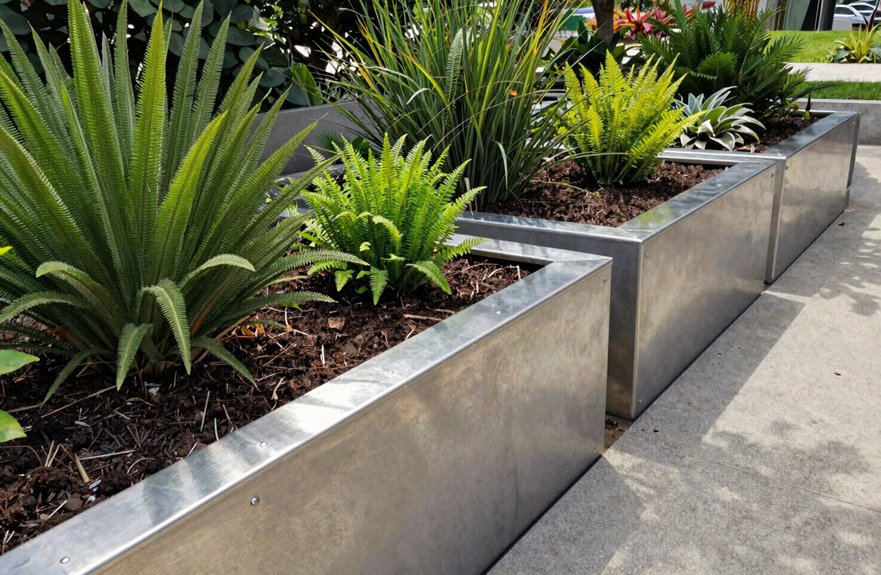
When I first considered switching to metal garden beds, I asked myself one big question: would they actually stick around for the long haul? After digging into the research, I found that metal beds durability genuinely delivers, typically 25 to 30 years with basic care.
What makes this possible:
- Galvanized steel forms the backbone. This zinc-coated material resists rust and corrosion, giving you decades of service.
- Simple maintenance protects your investment. I check mine yearly for scratches, ensure drainage holes stay clear, and avoid acidic soil mixes that accelerate wear.
- The math works out. Higher upfront costs sting initially, but replacing wood beds every 5-7 years adds up fast.
Your long-term lifespan depends on climate. Hot regions demand attention to root zone overheating, but thoughtful placement solves this. Metal garden beds provide measurable durability compared to traditional wood alternatives.
Where Metal Garden Beds Beat Wood and Plastic Every Time
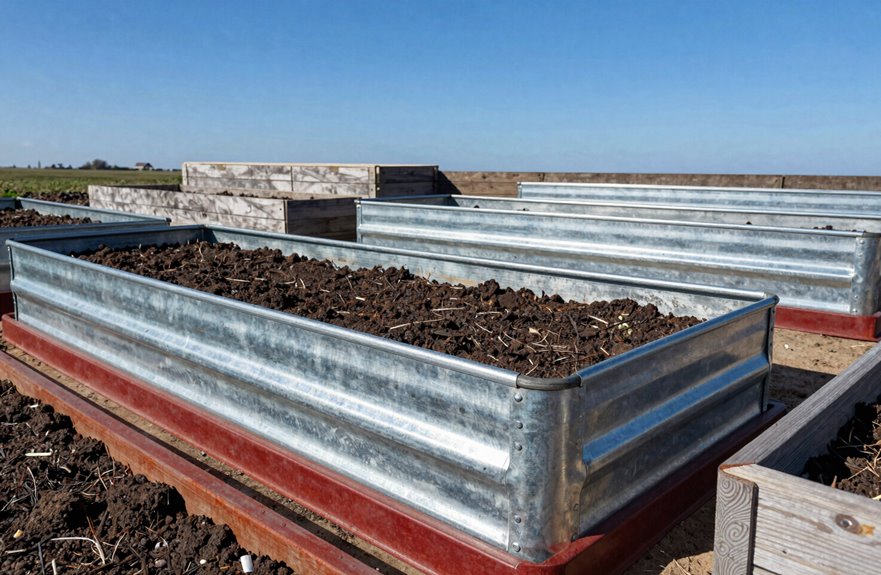
I’ve worked with enough rotted cedar and chewed-up vinyl to know exactly where metal beds pull ahead. They’ll shrug off termites, carpenter ants, and fungal decay that turn wooden boxes into spongy ruins within five to seven years, and they won’t crack under UV exposure like plastic after three hot summers. If you want a bed that stays square, strong, and serviceable for three decades, metal is your only real contender.
Durability and Longevity
Although I’ve replaced countless rotted wooden beds over the years, my galvanized steel raised bed still looks nearly new after a decade of wet Pacific Northwest winters. Metal beds offer superior durability and longevity, making them the preferred choice for gardeners who want lasting results without constant rebuilding.
Galvanized steel outperforms the alternatives for these reasons:
- It resists rot and warp, staying stable through freeze-thaw cycles
- Corrosion-resistant coatings protect against rust for 15–20 years minimum
- With basic care, you can push lifespan to 25–30 years
The higher upfront cost pays off quickly. While wooden beds demand replacement every 7–10 years, a galvanized steel investment continues producing for decades. Most gardeners find that buying once proves more economical than buying twice.
Pest Resistance Advantage
While my metal bed has lasted years without showing wear, that’s not the only advantage it holds over other materials. Metal beds offer genuine pest resistance that makes a real difference in my garden.
The smooth, non-porous walls stop slugs and snails cold. They can’t grip the surface like they do with rough wood. Unlike timber, galvanized steel doesn’t rot or decay, so pests never find the decomposing home they seek.
The rigid frames seal tightly against the soil. This keeps burrowers like voles from sneaking in sideways. These durable pest-proof features mean I’m not constantly battling unwanted visitors or repairing damage.
Metal beds don’t offer pests what they need: food, shelter, or easy entry. I spend less time managing pest problems during the growing season.
What You’ll Actually Pay: Midrange vs. Premium Metal Beds
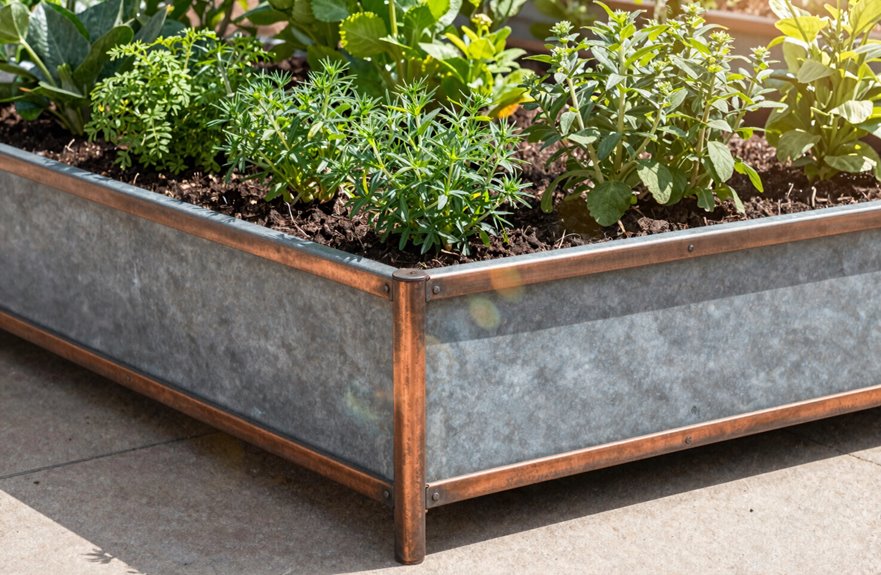
How much should you realistically set aside for a metal garden bed that won’t rust out in five years? I looked at midrange and premium options to find where smart gardeners put their money.
Midrange beds run cheaper upfront. They’re solid, with galvanized or powder-coated frames that handle regular seasons fine. Premium beds cost more, but you get heavier 11-gauge steel, better corners, and warranties stretching 20 to 30 years. The price difference between galvanized and powder-coated finishes matters. Powder-coating resists rust longer and comes in colors.
When comparing these tiers by lifespan, several factors stand out:
- Midrange beds last 10 to 15 years with decent care
- Premium models aim for 20 to 30 years under heavy use
- Seasonal sales often shrink the gap, making upgrades tempting
Watch for promotions. Premium features frequently drop close to midrange prices during sales, which is when the upgrade becomes financially worthwhile.
Why Metal Garden Beds Overheat (And How to Cool Them)
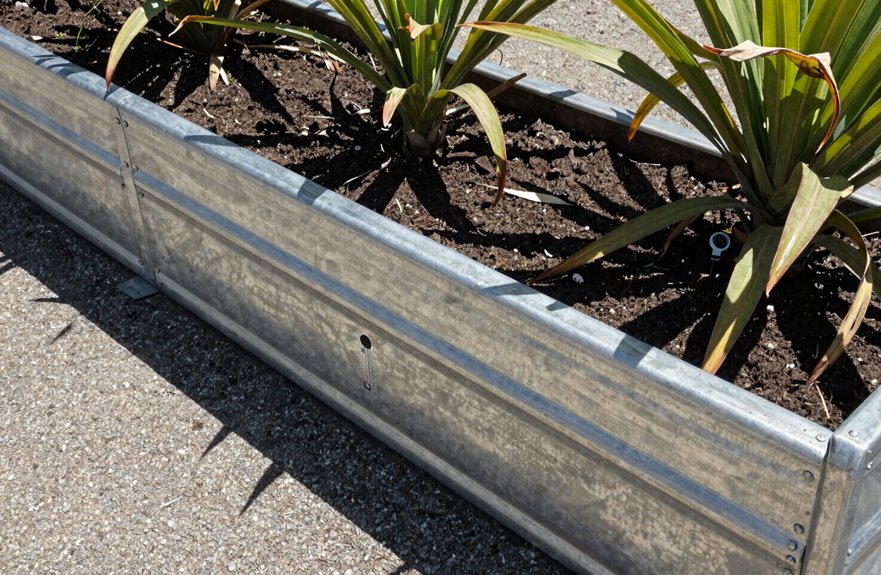
You’ve settled on a metal bed that fits your budget and timeline. When summer hits, metal raised beds conduct heat rapidly. Under direct sun, heat absorption spikes, and your soil temperature can climb 10-15 degrees above ambient air. That stress cracks heat-sensitive plants like lettuce and spinach.
I learned this through trial with my first bed. The metal surface hit 120°F by noon. My tomatoes survived, but my arugula bolted in four days. These solutions work: mulch 3-4 inches deep, line the interior with cardboard or burlap, and pick lighter powder-coated finishes over bare metal. Shade cloth during peak hours drops heat absorption by 30%. Your plants will perform better as a result.
Metal Garden Bed Safety: Sharp Edges and Soil Risks
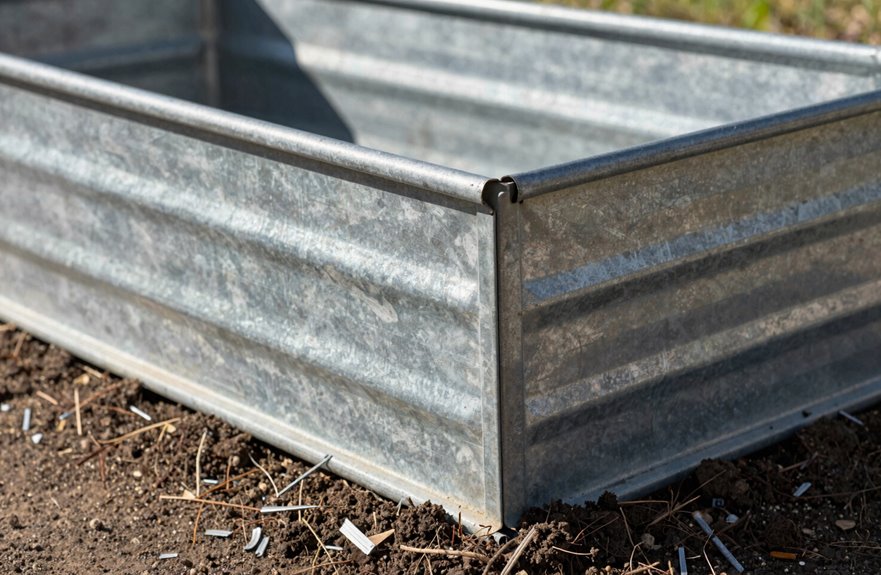
Metal garden beds can hide real dangers beneath their sleek appearance, starting with edges sharp enough to slice skin during assembly if the manufacturer didn’t finish them properly. Run your bare hand along every corner before planting, feeling for burrs that could catch on gloves, children’s fingers, or tender vegetable stems that brush against the frame. Beyond cuts, cheap galvanized steel or rusting alloys can release zinc or other compounds into soil. Check for food-safe coatings and test your dirt when beds show wear to detect harmful leaching.
Edge Safety Hazards
What should you watch for when handling metal garden beds? Edge safety matters most during setup and seasonal maintenance. Sharp edges from unfinished metal can slice your hands or snag your work gloves when you’re lifting panels into place.
Before starting, check the following:
- Run your hand along all edges to feel for burrs or rough spots
- Install corner guards on beds within 6 feet of play areas where kids garden with you
- Inspect joints every spring, since winter expansion can expose new sharp edges
Protective measures like smoothing edges with a metal file take 10 minutes and prevent cuts. Quality beds come with rounded 2-inch corner radii, yet you should still verify annually. Keeping every gardener safe requires these basic precautions.
Soil Contamination Risks
Edge safety isn’t the only concern with metal beds. Galvanized zinc leaching poses real risks to growing spaces, especially when soil turns acidic.
Zinc moves from coating into soil when pH drops below 6.0. Without soil pH management, levels can hit 200-400 ppm, toxic territory for beans and peas. Testing beds twice yearly allows for pH maintenance in the 6.5-7.0 range using garden lime when needed.
Metal corrosion accelerates this problem. Coastal gardeners and those with naturally acidic soil face faster breakdown, releasing more ions near plant roots. Beds can rust through in five years without protection.
Lining beds with landscape fabric, adding organic mulch, and monitoring closely reduces contamination risk. Testing kits cost $15 and provide the data needed to protect plants from zinc toxicity.
Modular Layouts That Reduce Heat and Maximize Space
How do you keep your plants thriving when summer heat pounds your garden and space runs tight? Modular layouts give you real control over both challenges. These systems use standardized, interchangeable components that snap together fast. No complete teardown is needed when you want to reshape your beds.
What makes modular setups work for heat reduction and space optimization:
- Stacked or stepped kits build upward, creating cooler lower layers while doubling your growing area vertically
- Built-in trellises and covers cast shade exactly where you need it, dropping soil temps around sensitive roots
- Shared corners and smooth joints mean safer handling during quick reconfigurations
System cohesion keeps drainage and airflow consistent across every arrangement you try. This approach delivers flexible gardening that adjusts when conditions shift.
Adapting Metal Garden Beds for Extreme Climates
Where do you turn when your garden faces brutal summers or frigid winters? Metal raised beds adapt remarkably well to extreme climates with the right adjustments.
Metal raised beds thrive in any extreme climate when properly adjusted.
In scorching heat, combat rapid soil warming through deliberate heat management. Position shade cloth 18 inches above beds during peak sun, and lay reflective silver mulch directly on soil surfaces. These steps cut soil temperature by 10–15°F, protecting roots from stress.
Cold regions offer hidden advantages. Metal retains residual warmth better than air, extending the growing season 3–4 weeks. Monitor moisture carefully since condensation risks increase.
Select galvanized steel with powder-coated finishes for corrosion resistance, checking that coating integrity prevents zinc leaching into acidic soils. Elevating beds 24–30 inches improves drainage and reduces physical strain during tough weather stretches.