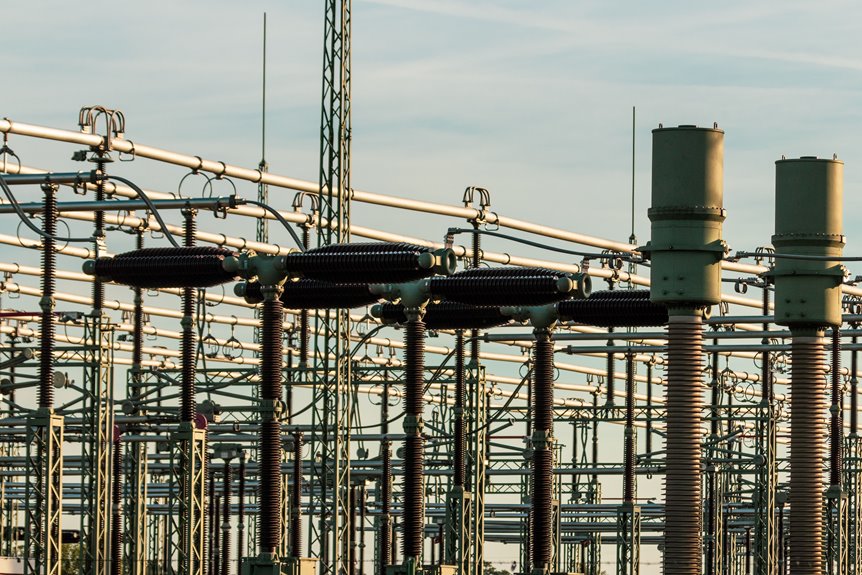
I’ve worked with both systems. First, low voltage runs on steady 120V household power through a transformer, so weather never dims your lights; solar fails when clouds block charging.
Second, low voltage fixtures push 200+ lumens while solar manages just 2-100 lumens that fade at dusk.
Third, solar needs 6+ hours of direct sun; shade cuts performance 50-75%.
Fourth, low voltage needs professional installation with buried cables and proper transformer sizing, but solar offers simple DIY setup.
Fifth, over ten years, low voltage costs less despite higher upfront investment since solar batteries need replacing every 3-5 years.
These differences directly determine which system functions better for your specific yard conditions.
Why Low Voltage Lighting Outperforms Solar in Reliability

Why do some lights shine bright every evening while others flicker out by midnight? The answer lies in how we power our spaces.
Low voltage systems connect through a transformer to a home’s steady 120V power supply. This weather independence means clouds, rain, or short winter days never dim nights.
Low voltage lighting draws steady power from your home, delivering reliable illumination regardless of weather or season.
- Reliability: LED bulbs don’t depend on batteries that weaken or solar panels that fail to charge. They simply work.
- Consistent illumination: Uniform brightness appears across every fixture, every night.
- Control: Timer controls set precise schedules that actually stick.
- Steady performance: Proper transformer sizing, whether 100W, 200W, or 400W, ensures minimal voltage drop across the yard.
This approach delivers lighting that functions reliably, season after season.
Low Voltage vs Solar: The Real Brightness Gap in Lumens

Reliability matters, but brightness decides what you actually see when the sun goes down. I’ve measured the difference myself, and it’s striking.
Low voltage fixtures typically push past 200 lumens. Solar lights deliver 2 to 100 lumens, depending on what the solar panels captured that day. That’s the real brightness gap.
Solar output drops with weather and fades fast at dusk when you actually need it. LED efficiency in low voltage systems delivers superior lumen-per-watt performance because they aren’t draining limited batteries.
This difference becomes most apparent along pathways and featured areas. Low voltage lighting gives consistent, strong illumination where solar can leave you squinting. For uplighting or large spaces, the brightness difference is substantial; low voltage provides reliable illumination while solar often falls short.
Is Your Yard Too Shady for Solar to Work?
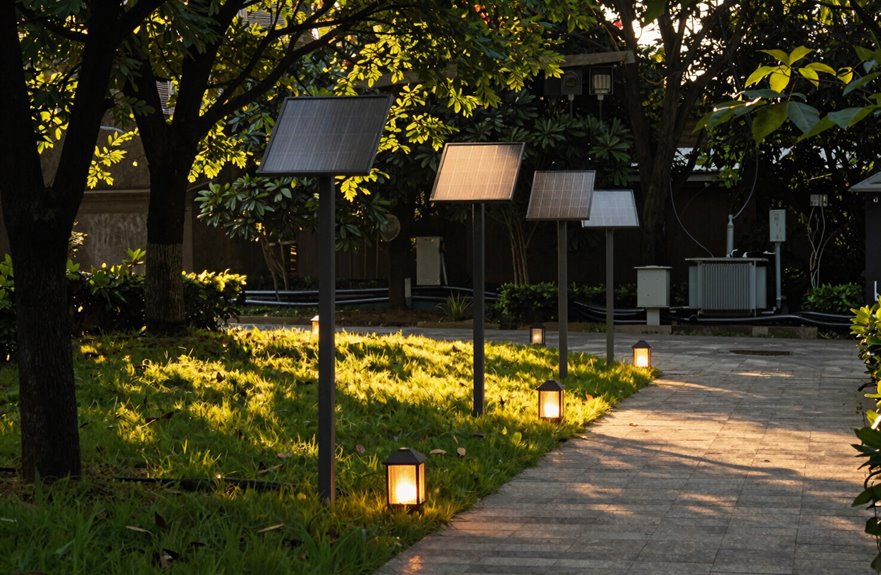
Where exactly does the sun hit your yard? Solar outdoor lighting needs unobstructed direct sun to function properly. When shade covers your panels, battery recharge suffers dramatically.
Solar outdoor lighting demands unobstructed direct sun—shade dramatically cripples battery recharge and performance.
In practice, this plays out as follows:
- Morning sunlight might peek through, but afternoon shade blocks 6+ hours of charging.
- Dense tree cover reduces brightness by 50-75%.
- Seasonal leaf growth worsens the problem year-round.
Without consistent sunlight, your lights fade by 10 PM or never reach full output. Many homeowners experience this problem. Installing, relocating, then replacing failed units becomes the standard cycle.
When shade is unavoidable, low voltage systems offer a better solution. A single transformer powers your entire setup regardless of weather or coverage. You get reliable illumination without depending on solar performance.
Your yard’s specific conditions should determine your lighting choice.
Installation Reality: Professional Costs vs. DIY Simplicity
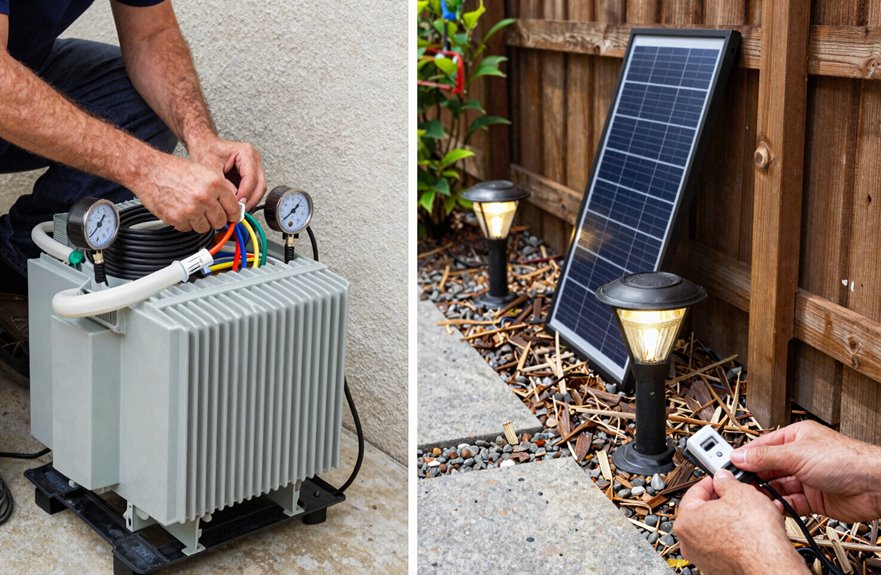
When you’re weighing your options, the installation process itself often tips the scales. Low-voltage systems demand a low-voltage transformer, buried cables, and precise fixture placement. A professional sizes your transformer at 100W, 200W, or 400W and picks the right wiring gauge to cut voltage drop. This professional installation raises your upfront costs, yet it builds long-term reliability into your yard.
Solar fixtures, by contrast, offer DIY simplicity. Each unit holds its own battery and panel, so you skip trenching and tools. This installation cost comparison favors your wallet today. However, maintenance like cleaning panels and swapping batteries falls squarely on you alone.
Choose the path that fits your skills, your budget, and your tolerance for ongoing maintenance in your outdoor space.
10-Year Costs: When Low Voltage Pays for Itself

After you’ve handled the installation, look at the next ten years and ask a simple question: which system keeps more cash in your pocket?
Low voltage wins on brightness consistency. Your transformer, whether 100W, 200W, or 400W, delivers steady power with no dimming and no cloudy-day guesswork like solar lighting faces.
Energy efficiency matters. LEDs sip electricity, cutting operating costs month after month.
You’ll skip the battery replacement cycle. Solar lighting needs replacements every 3–5 years, adding maintenance costs and hassle.
Bulbs last 10–15 years, which means fewer trips to the store and less disruption to your landscape.
Add it up: higher upfront costs offset by a shorter payback period and lower decade-long costs. For serious landscape lighting, low voltage delivers better financial performance over time.