Balcony and terrace projects range from a hundred-dollar weekend reset to a full-terrace build that costs more than a used car, and the single factor that sorts them is square footage.
A 24-square-foot balcony forces you to choose between eating upright at a ledge or owning one chair; a genuine terrace lets you stop choosing and start zoning.
The one detail that trips everyone up, including me, is traffic pattern: if the door swings inward and clips your furniture, you will stop going out there, no matter how nice the rattan looks in the photos.
1. Outdoor Lounge Setup
A typical small balcony runs 24 to 60 square feet, which is barely enough room for a yoga mat and a chair. The furniture industry seems to ignore this, pushing sectionals that would swallow half a studio apartment.
I spent one afternoon measuring my own 32-square-foot landing with a tape measure and a printout of a sofa footprint, laughing at how fast the math fell apart.
The move that actually works is choosing fewer, larger pieces rather than cluttering the edges with slim chairs nobody wants to sit in.
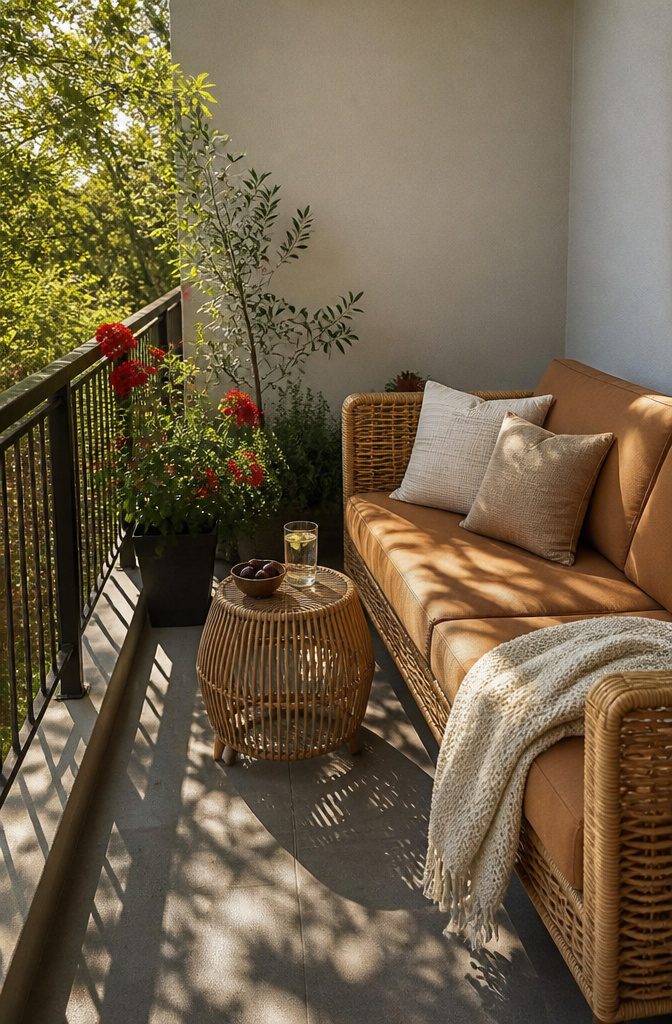
A single weather-resistant loveseat or a low-slung rattan sofa, paired with one small surface for a drink and a book, fills the space without choking it.
Greenery hangs where floor space gives out; potted begonias or geraniums on the railing add color without stealing the one square yard you have left for your feet.
"You want to fill the space with carefully considered pieces in the correct scale while also considering traffic patterns into the space."
That last part matters more than it sounds. If the door swings inward and clips the back of a chair every time you step out, you will stop stepping out.
The seating should leave a clear path from threshold to railing, even if that means one chair instead of two.
I have watched friends wedge in a bistro set that looked perfect online, then stack the extra chair in their bedroom for six months because the balcony could not absorb both at once.
For renters, built-in benches are usually off the table, but a folding chair that hangs flat on a wall hook inside solves the storage problem between uses.
The budget lands where most weekend projects do: a few hundred dollars for the seat, a rug to soften the concrete, and whatever pots you already own.
The goal is a corner that invites you to stay, not a showroom that impresses for five minutes and then collects pollen.

Flexible Modular Patio Sofa: This 2-piece patio furniture set includes two armrest chairs that can be freely combined. Use them as separate single seats or connect them into a cozy loveseat. The modular sofa design allows you to adapt layouts for patios, balconies, porches, or poolside spaces with ease

All-Season Durability: Heavy-duty rust-proof steel frame and top-grade all-weather PE rattan resist harsh sun, rain and wind, retaining its sleek look for years. It includes 2 single chairs (20.5”W x 21.3”D x 31.5”H), a loveseat bench (38.2”W x 21.3”D x 31.5”H), and a (28.0”L x 16.5”W x 15.2”H) tempered glass coffee table

ERGONOMIC ROCKING MOTION FOR ULTIMATE RELAXATION: Enjoy soothing, gentle rocking motion with a deep, ergonomic seat design. The wide seating area and plush cushioning provide cloud-like comfort for unwinding after a long day or enjoying your morning coffee on the patio
2. Outdoor Dining Space
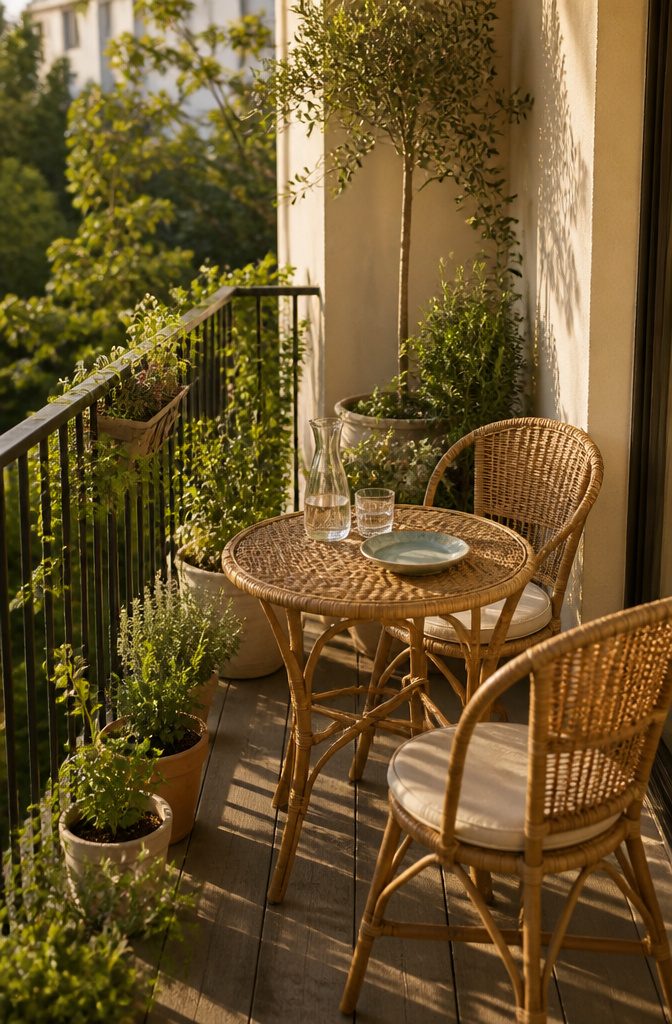
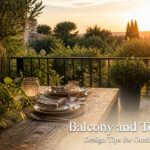
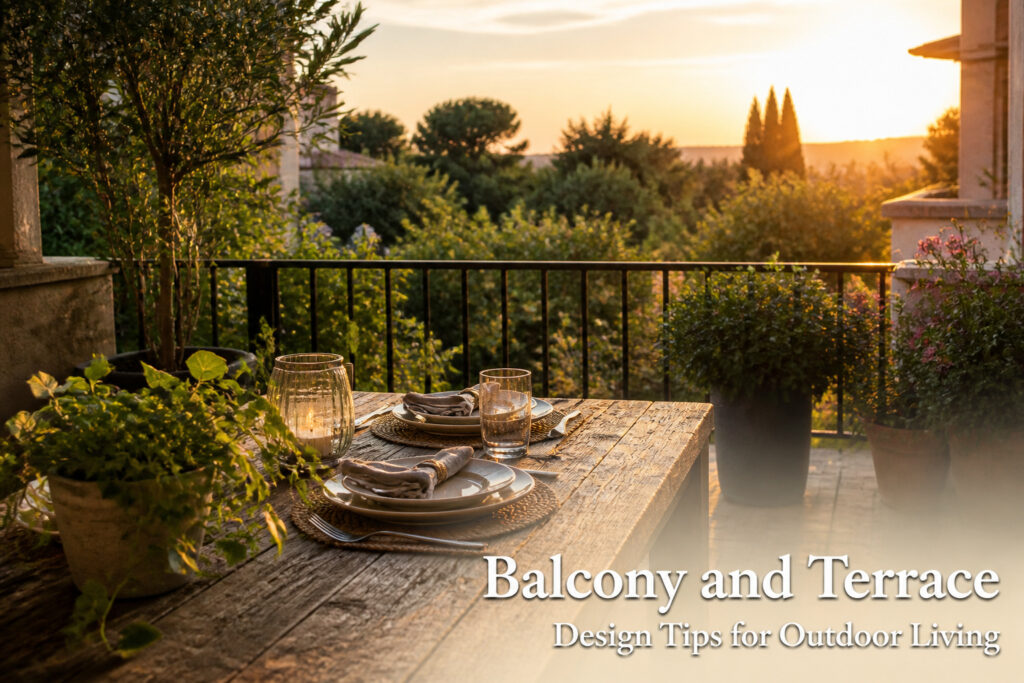
A bistro table that seats two takes up roughly the same footprint as a lounge chair, which is the first thing to measure before deciding whether your balcony can hold a meal at all.
Most run 24–60 square feet, and once you account for the door swing and a path to the railing, the usable patch shrinks fast.
On my own small terrace, the choice came down to eating upright at a ledge or committing half the floor to a rattan set that actually lets people face each other.
Rattan furniture wins here for two reasons the manufacturers rarely spell out: the natural weave reads warmer than metal or plastic in tight quarters, and the open construction lets light pass through so the space does not feel boxed in.
Synthetic rattan, which is what most retailers stock now, survives UV and moisture without the seasonal hauling and covering that natural rattan demands.
Glazed windbreaks or retractable panels extend the season without sealing the balcony off completely; you keep the air moving and lose the insects.
The weekend build is mostly assembly and placement. A folding rattan table and two chairs ship flat, go together in an hour, and can stack against the wall when you need the floor back.
The real judgment call is whether you will use a dining spot enough to justify the square footage it consumes.
If the balcony is under 40 square feet, a wall-mounted drop leaf with one stool pulled up only when needed leaves room to breathe.
A 60-square-foot terrace can fit a four-person rattan set without choking the passage, but anything smaller and you are choosing between dining and lounging, not accommodating both.

Maximize Storage Efficiency: This folding chair storage rack is designed to optimize space utilization, offering an integrated solution for organizing chairs, garage equipment, and gardening tools while keeping areas clutter-free

Efficient Space Organizer - Folding chair hangers for garage won't take up too much space for you, but they can help you achieve the effect of storage and can be installed wherever you need for use.

【SPACE SAVING】The 12.2 inch long utility storage hooks can store up to 6 folding chairs each. Ideal for storing lawn chairs, beach chairs, camping chairs, yard chairs and patio chairs etc.
3. Multi-Zone Terrace
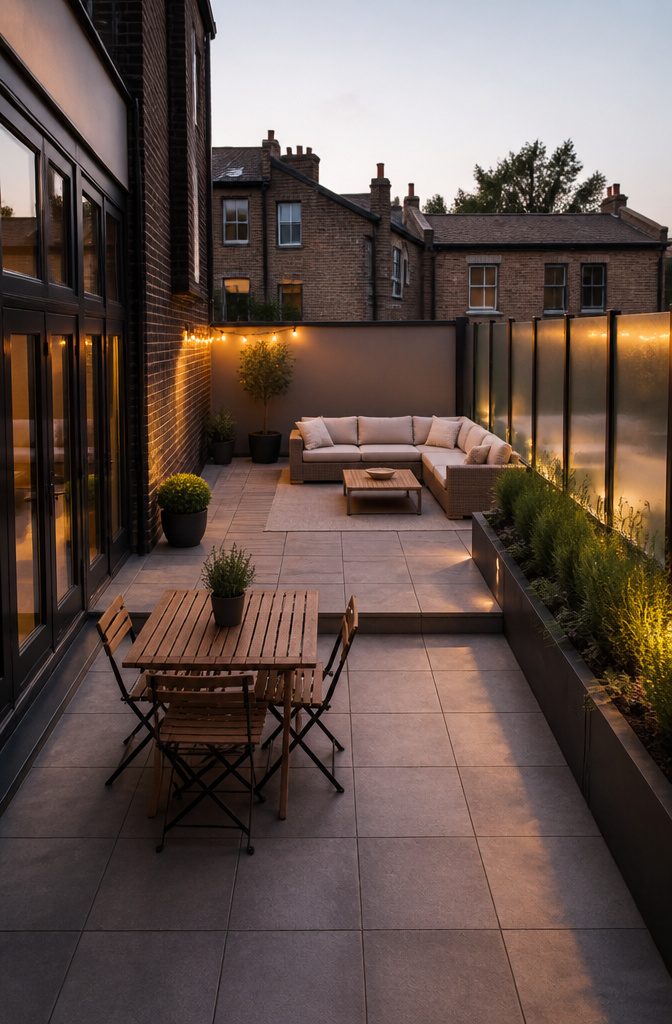
A terrace with real square footage lets you stop choosing between a dining spot and a lounge spot and just assign each its own territory.
The sources describe this as outdoor dining and entertaining alongside lounging and social gatherings, all within one space. That only works when the zones have enough breathing room to function independently; otherwise you are dragging a chair through someone’s lunch.
I learned this by trying to force the idea onto a 40-square-foot balcony.
One corner held a fold-down table, the other a single chair and a pot of mint. The result was not two zones.
It was one obstacle course, and the mint got kicked every time someone stood up. Zoning needs at least enough floor space for each activity’s furniture plus the path between them.
On a genuine terrace, the division can be as simple as a shift in flooring or a low planter that stops the eye without blocking movement.
The sources mention glazed terraces as one way to extend comfort across seasons while keeping that outdoor atmosphere; the same glass walls can become the implicit boundary between a dining area and a softer seating arrangement.
Families with diverse needs benefit most, since one person can read while another finishes coffee without either activity colonizing the whole space.
The mistake is treating zone planning as a license to fill every inch.
Leave the paths generous. A terrace that flows beats one that fragments.

【Exquisite Handwoven Wicker】 This bistro table and chairs set of 2 is made of premium PE rattan, which gives the look & texture of natural wicker with the durability, weather and UV resistance, woven exquisitely by hand featuring sturdy powder-coated steel frame which offer extra support to stand tough against the elements for years of long-lasting use

Simple & Practical: Closed armrest and leg design makes the chair simple but modern and no need to worry about the rattan falling off when they are used after a long time.

Luxury Handwoven Design: Crafted with intricately handwoven PE rattan, this bistro set exudes luxury with clean lines and natural tones. The wide, streamlined armrests enhance ergonomic comfort, while the round tempered glass tabletop adds modern sophistication—perfect for blending nature-inspired style into patios, balconies, or gardens.
4. Urban Balcony Retreat
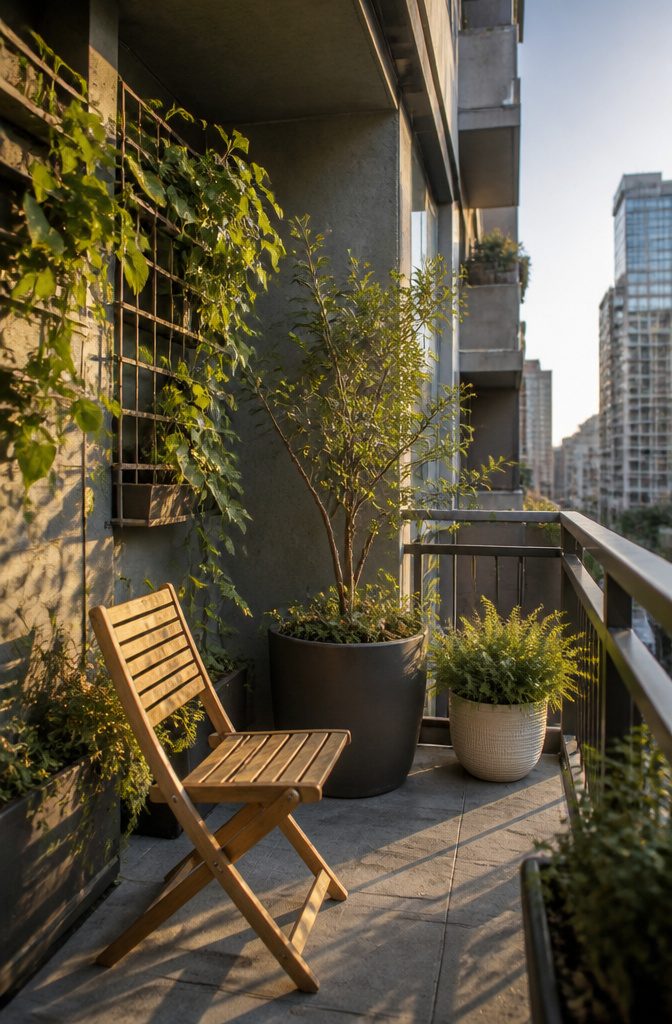
A compact balcony still reads as storage unless you deliberately slow it down. The first thing that helped mine was refusing to treat the floor as the only surface.
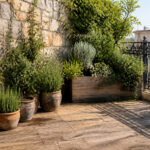
Wall-mounted planters, a simple trellis for climbing herbs, and the vertical panel I eventually added turned an 8-foot rectangle into something that felt tended rather than tolerated.
The money went sideways on a single chair. I spent $340 on a lounge-style piece that looked right in the photos, and it dominated the space so completely I had to walk around it to reach the railing.
For a few hundred to a thousand dollars total, that one purchase ate the budget and delivered nothing functional.
Swapping it for a folding teak seat from a secondhand listing left room for weather-resistant cushions, the panel system, and terracotta pots I could actually lift.
Vertical planting reads as expensive but mostly costs patience. The modular panels attach with standard hardware; the drama comes from letting the vines fill in over a summer, not from the purchase price.
A reader facing a rental drill-bit restriction can lean a freestanding trellis against the wall and get most of the same effect, just with a little more sway in wind.
What separates a balcony that gets used from one that stores bikes is whether sitting there feels like being outdoors or like being near outdoors.
The plants do that work. The chair does not.
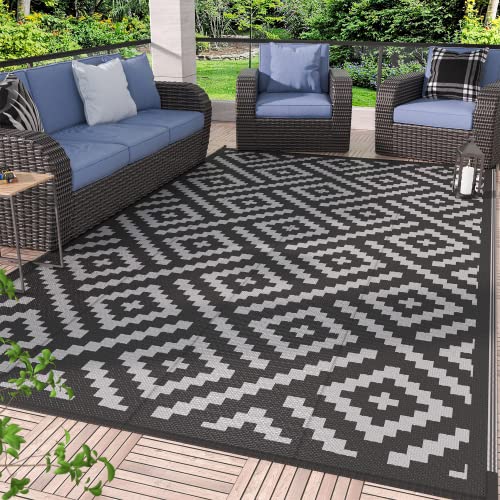
Extended Lifespan · Dual-Sided Wear Resistance: The GENIMO outdoor rug features a reversible design with two classic geometric patterns, doubling its lifespan through alternating use. The dark-toned surface effectively conceals dirt and stains, maintaining a pristine appearance even in rugged environments. Perfect outdoor patio rugs, rv mats and camping rugs for indoor-outdoor transition zones—effortlessly switch sides for practicality and timeless elegance
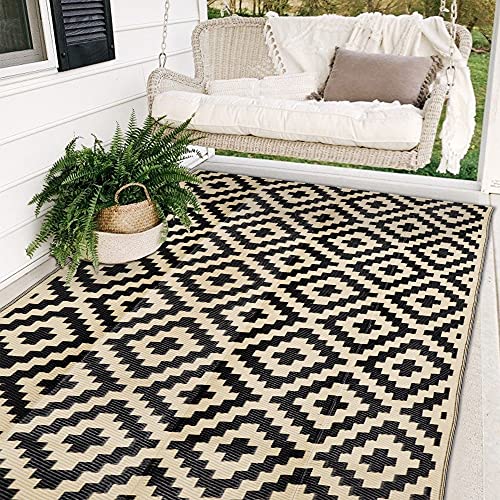
REVERSIBLE MATS: With timeless design, this plastic patio rug is elegant as it is functional, use on your patio with outdoor furniture and accessories to show off your personal style.

REVERSIBLE MATS: With timeless design, this plastic patio rug is elegant as it is functional, use on your patio with outdoor furniture and accessories to show off your personal style.
5. Relaxation Corner
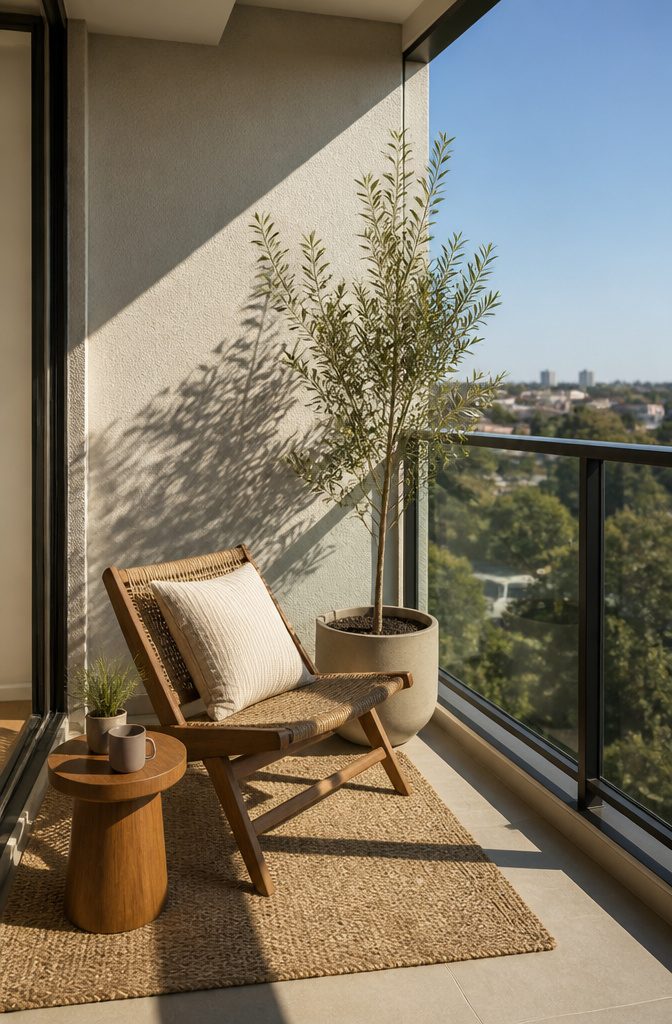
A single chair angled toward the light is usually enough for a balcony relaxation corner.
Two years back I stacked a bench, a side table, and a tall plant stand into the back corner of my own terrace, proud of the "room" I’d built.
The stack blocked the door from opening past forty degrees, and the first time I needed to haul a trash bag through in a hurry, the whole arrangement came apart in my hands.
Now I keep it to one low seat with a flat pillow I already owned, set diagonally so the railing stays in view and the path stays clear.
The pillow stores inside when rain threatens, which takes ten seconds and no plan. A corner meant for quiet should not require quiet to build.

Package includes 2 black railing plant holders, each overall measures 8.6" / 22 cm dia. x 7.1" / 18 cm H; Inner size is about 8" / 20.4 cm top dia. x 6.7" /17 cm bottom dia. x 4.3" / 11 cm H. Suitable for rail width less than 2.2" / 5.6 cm, please measure your rail before purchase.

Designed to fit traditional 2"x1" and 2"x4” (1.5"x.75" and 1.5"x3.5") railings with the included stabilizers.

【Universal Fit for Most Railings】Stop worrying if it will fit! Our adjustable railing planter boxes bracket (made of sturdy, powder-coated iron) securely mounts on any railing from 1.6" to 4.9" wide. This no-drill design protects your property, giving you a stable, custom fit for your balcony, deck, or patio fence.
6. Vertical Gardens
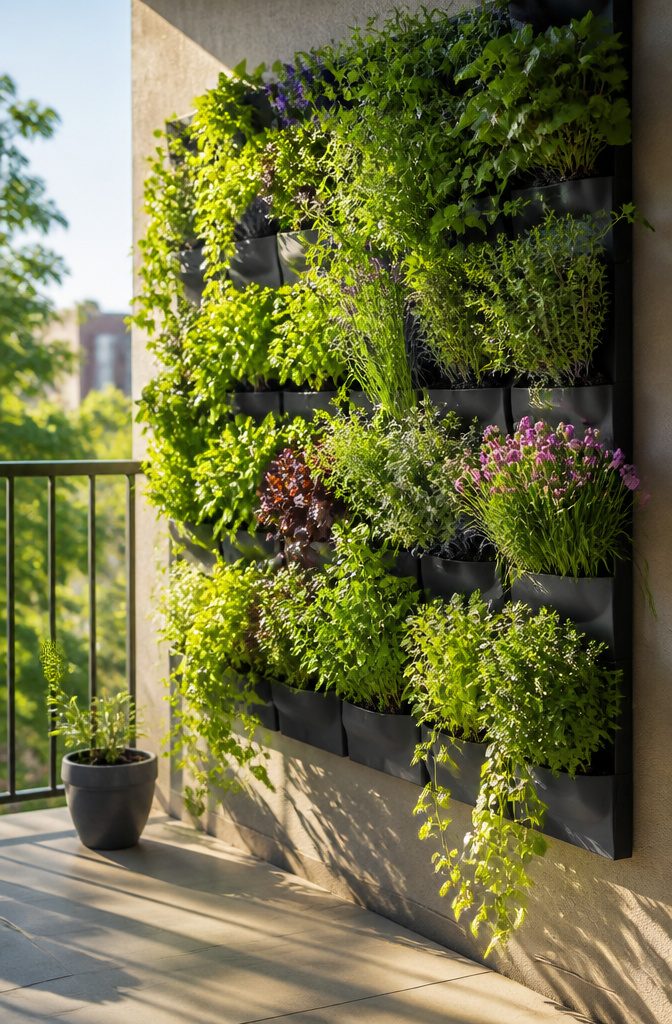
Wall space on a balcony is usually the most underused real estate in the whole unit.
Two years ago I mounted a simple wooden trellis on my own railing wall, mostly because pots kept crowding the floor until sitting down felt like gardening around furniture.
What changed the setup completely was switching to a vertical garden in modular planters: the floor opened up, and the greenery became something I looked at instead of stepped over.
Start with your light before you buy anything. A south-facing rail that gets six hours of sun wants herbs and flowering varieties; a wall in shadow needs ferns and succulents.
When I chose wrong the first time, the basil legged out desperately for light and the lavender rotted where the corner stayed damp.
Herbs are the best balcony plants for cooks, but only if your wall gets the sun hours they need. Climbing vines on a trellis do double work for privacy, adding softness without the boxed-in feel of a solid screen.
The air quality improvement is genuine, though in a small outdoor space the bigger payoff is visual: plants at eye level feel like a garden, not a collection of pots you happen to store outside.
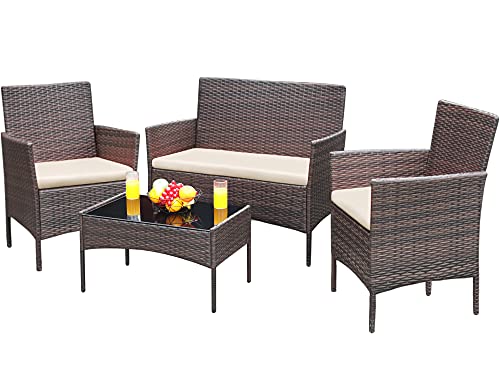
Modern and comfortable rattan wicker construction with soft cushions for a stylish and relaxing outdoor experience

All-Season Durability: Heavy-duty rust-proof steel frame and top-grade all-weather PE rattan resist harsh sun, rain and wind, retaining its sleek look for years. It includes 2 single chairs (20.5”W x 21.3”D x 31.5”H), a loveseat bench (38.2”W x 21.3”D x 31.5”H), and a (28.0”L x 16.5”W x 15.2”H) tempered glass coffee table

Patio Sofa Set: It is the best choice for outdoor spaces such as patio, deck, garden, backyard, yard and balcony, let you enjoy leisure time with friends and family
7. Lighting Solutions
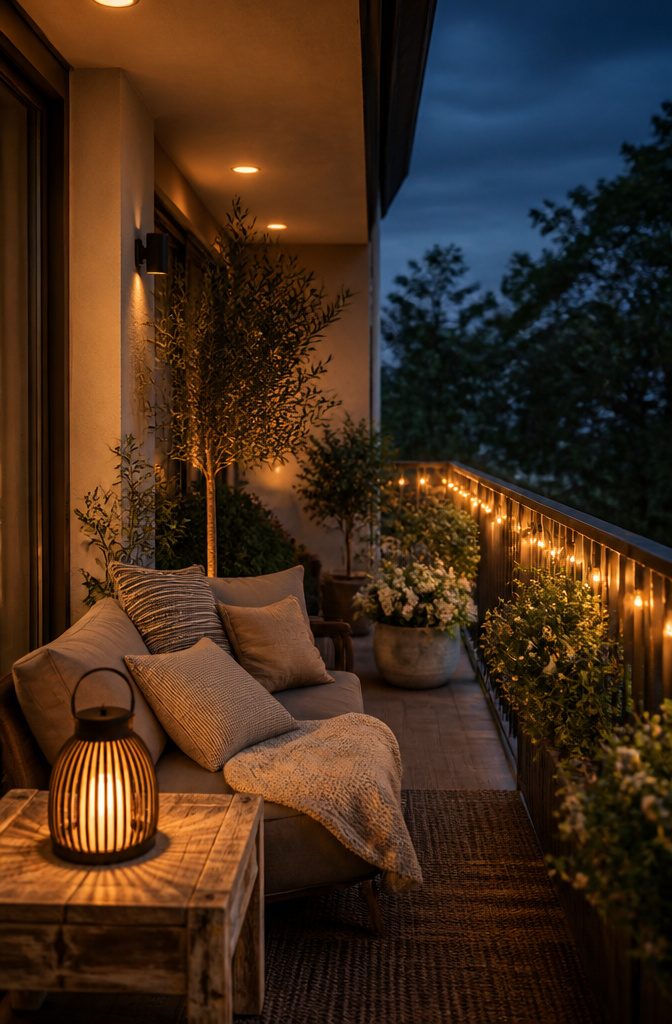
String lights are the obvious starting point for balconies and terraces design tips, but the voltage reality of rental outlets stopped me from using the outdoor-rated set I already owned.
My balcony only had one GFCI outlet, and running an extension through the sliding door killed the seal against mosquitoes and my AC budget.
I bought a small solar panel with an attached battery instead, thinking summer sun would cover me through October.
It did not. By late September the charge dipped too low by 7 p.m., and by October the whole string was decorative in daylight only.
What actually worked was layering. Solar on the railing for early evening, battery-operated puck lights under the eave for after dark, and a single rechargeable lantern I carry out with me.
The puck lights were cheap, use AA cells I already stock, and survive the move inside when frost hits.
For renters, anything that runs on standard batteries beats hardwiring or relying on landlord-grade outlets; your balcony’s electrical limits matter more than the lumens number on the box.

ADJUSTABLE STORAGE SOLUTION— The best part of the garage storage system is that the hooks can snap on the rail and move around on it to meet your actual needs

Folding chair storage rack: Our innovative folding chair storage rack is adjustable according to the width of the chair and can accommodate 4-5 chairs, making it perfect for all types of chairs, whether you are storing folding chairs, beach chairs, camping chairs, or more

【Camping Chair Storage for Garage】This camp chair storage for garage comes with floating shelves and 4 hooks, providing larger capacity, saving floor space, getting camping chairs off the floor from your garage and onto the unused wall space. Stylish and simple desgin is the first choice for home garage decor as well as garage storage system
8. Furniture Choices
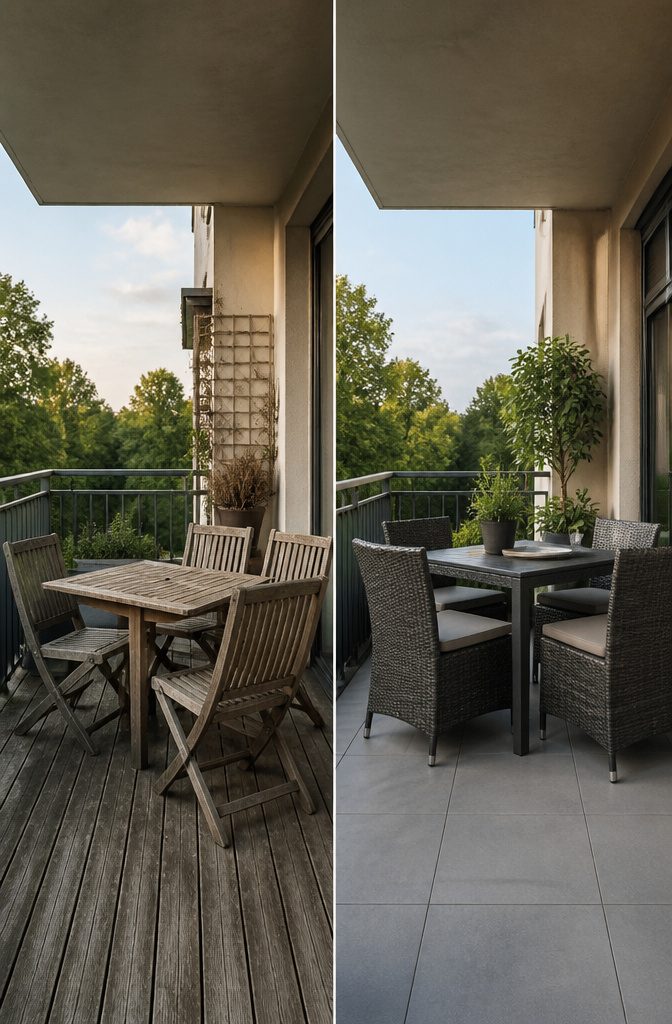
I bought a folding bistro set my second summer renting, and by August the mesh seats had faded to the color of dishwater.
The metal frame stayed sound, but the fabric was never meant to live outside. That is the piece most people miss: weather-resistant does not mean every part of the piece was built for the same abuse.
Synthetic rattan holds up better than natural, and cleans easier, which matters more than the look when you are dusting off construction grit from the building next door.
Matte-finish tiles with anti-slip properties keep the surface under that furniture grip-worthy even after rain; some options like CRV Bruciato Hazel double as scratch resistance if pets use the space too.
A sofa or sectional reads as counterintuitive on a narrow balcony, but fewer large pieces simplify the layout and maximize actual seating compared to four chairs lined against a rail.
Waterproof upholstery extends that into fall; waterproof, not water-resistant, because the latter means damp cushions for three days after a storm.
Store what you can when the season turns, or invest in covers the manufacturer specifies for UV and moisture together, not just one or the other.

【4-Piece Complete Set】 Includes 1 cozy loveseat, 2 ergonomic armchairs, and 1 glass top coffee table. An ideal conversation set to upgrade your garden, patio, backyard, or poolside.

Super Value Bistro Set: FHFO upgraded patio bistro set includes 2 wide and deep armchairs with cushions and 1 coffee table. The thicker outdoor rattan chairs set of 2 leg with adjustable feet makes patio chairs set more stable. The beige patio chair backrest is ergonomically designed to bring you comfort.The patio wicker set great for any space, such as porch, backyard, balcony, deck, poolside, small patio area, while adding a modern fashion to your leisure time. Its stylish design will perfectly match any outdoor/indoor

Stylish and modern 3-piece patio set includes 2 armchairs and 1 glass coffee table
9. Seasonal Adaptability
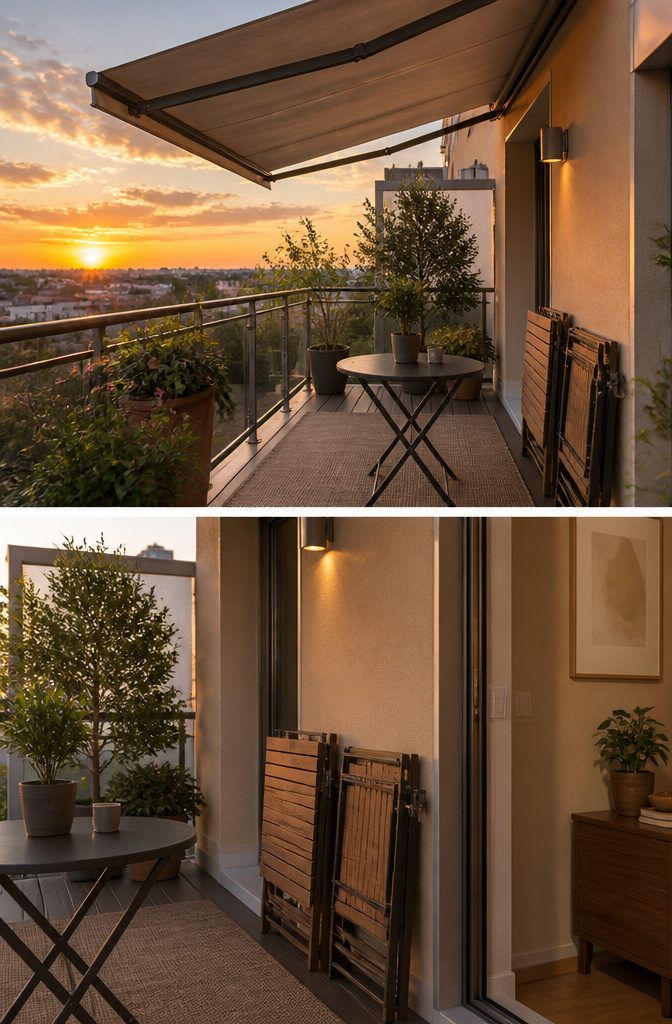
A balcony that works in June and January starts with what you can fold and what you can roll away.
My first set of terrace chairs were wrought-iron bistro seats, beautiful and completely wrong: they sat there taking up space through three seasons I barely used them, and the one weekend I needed floor room for a planter project, I was stuck.
Folding chairs, the kind that collapse flat against a wall, would have solved it in one motion.
Summer shade needs the same philosophy.
Pergolas, umbrellas, and bamboo screens all come down or tilt away when the angle of the sun shifts in fall. Fixed awnings look permanent and cost permanent money; removable shading lets you decide week by week.
Winter is where I see the most waste. Fire pits read cozy, but on a rented balcony with a wooden underside, they are often banned or simply unsafe.
A portable heater and a basket of blankets you can store inside a bench do the same emotional work without the permit check.
The blankets live in the living room closet from April to October; the heater slides behind the sofa.
What stays out year-round: one small table, weather-resistant cushions with zip-off covers, and a rug rated for moisture. What goes: anything that rusts, anything that warps, and anything that pretends to be furniture but cannot fold.

These are the original Mad Mats, the Gold Standard for lasting quality and artful design.

Quick Dry: Dries quickly, making it ideal for high-traffic or outdoor environments.

𝐏𝐑𝐄𝐌𝐈𝐔𝐌 & 𝐃𝐔𝐑𝐀𝐁𝐋𝐄 𝐀𝐂𝐀𝐂𝐈𝐀 𝐖𝐎𝐎𝐃: Made from 100% natural acacia wood with a deep-oil finish, these interlocking decktiles are sturdy, water-resistant, and built for outdoor conditions. Sanded smooth for a premium wood grain look, a smooth-finished surface, and a noticeably smoother barefoot feel - comfortable for families and pets.
How Aesthetic Cohesion Works
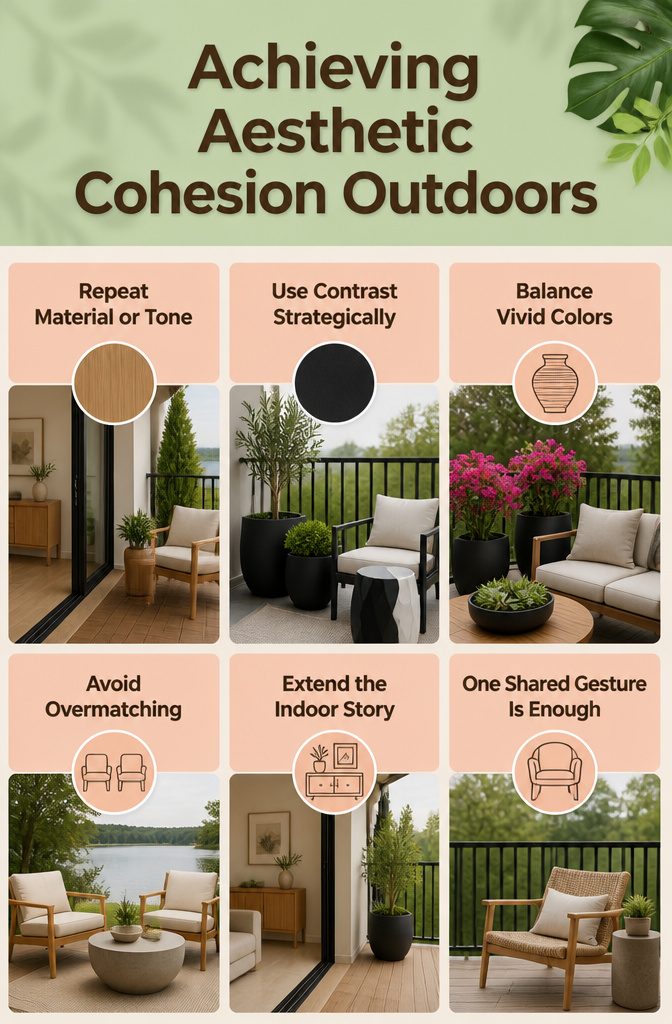
A balcony that ignores what is happening inside reads like a leftover corner, not a room. The cohesive move is to repeat a single material or tone from indoors rather than copy the whole setup.
In my own reading through dozens of these projects, the ones that feel intentional almost always pull one element across the threshold: a warm wood finish, a matte black accent, a weathered texture that already lives on an indoor console.
Designer Paulina Hospod uses repetition and contrast exactly as she would indoors, grounding vivid flowers with repeated matte black planters and tying warm wood tones back to interior finishes.
The result is curated, not cluttered. Ashi Waliany takes a similar approach, anchoring a small balcony with sculptural shapes and textural pottery that echo what sits inside, then adding a faceted black-and-white stool for contrast.
Neither designer demands matching furniture; both treat the outdoor space as an extension.
The limit here is not to overmatch.
Samson’s lake house works because the smooth lines and light wood of the outdoor chairs rhyme with almost every indoor room without duplicating them. One shared gesture is usually enough.

FITS DIFFERENT RAILS – Accentuate your home or business with a planter that works with decks and balconies with wood and metal railings that are 1.25” to 3.875” wide (2x1, 2x4 and 2x6 railings traditionally) wide. The included fasteners help stabilize the planter over the rail.

Designed to fit traditional 1” metal railings and 2x4 (1.5x3.5”) railings with the included stabilizers.

Material: Hanging fence planter made of metal iron. Durable and lightweight. Balcony flower pots are not easy to rust or damage, and have a long service life
What Privacy Looks Like in Practice
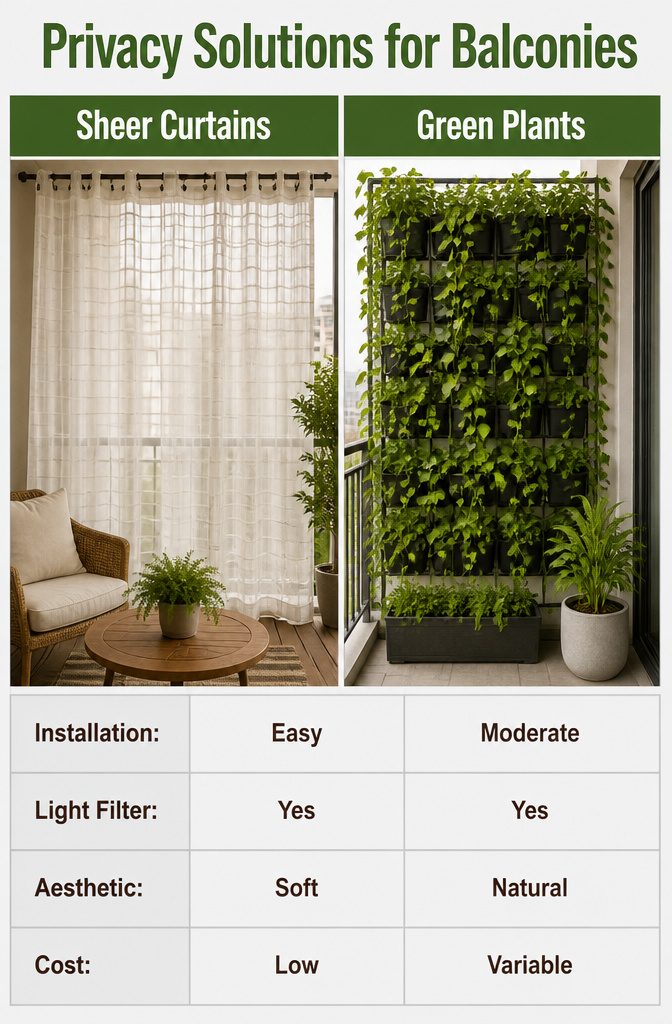
Privacy on a balcony or terrace usually starts with the problem your neighbors can see in.
A sheer curtain hung on an outdoor rod adds that layer without building anything permanent, which matters if you’re renting and can’t drill into someone else’s siding.
The grid-patterned drapes one designer used give texture while still letting light through, so the space doesn’t feel boxed in.
Plants do the same job with more green. Wall-mounted planters or a modular panel trained with climbing vines will soften the edges and block sightlines from adjacent units.
A vertical garden draws the eye upward and gives you that sense of enclosure without the claustrophobia of a solid screen, which is why it works on the smaller balconies where every inch counts.
Wood screening on the ceiling and floor plane can also double as privacy, especially when the balcony is fully enclosed.
It turns the whole surface into a warm, cohesive shell rather than bolting on an obvious add-on. The tradeoff is cost and commitment: curtains move with you, wood cladding does not.
Smart Storage I Actually Use
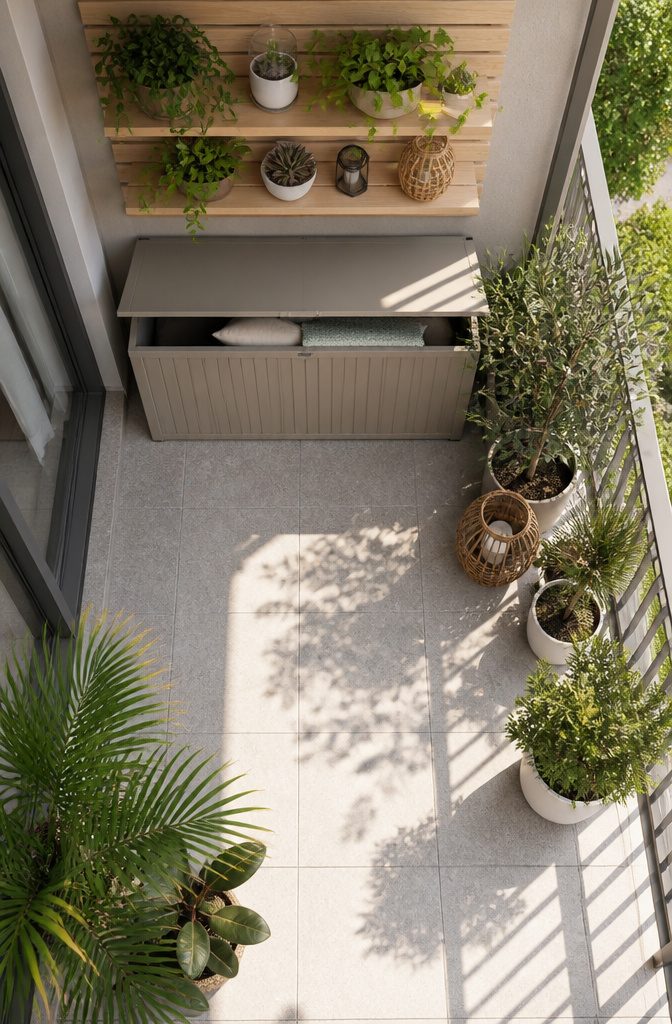
Storage ottomans and benches with hidden compartments do the heavy lifting on my balcony. The cushions live inside a storage box that doubles as extra seating when someone shows up unexpected, which keeps the floor clear for actually walking around.
Wall-mounted shelves fill the gaps above, holding the small stuff that otherwise migrates to every flat surface.
Foldable furniture tucks away when the weekend project spreads out, and lighter colors on what stays out make the walls feel farther apart than they are.
The real test is whether you can put everything away in under five minutes before weather hits.
Bohemian, Minimalist, and What I Settled On
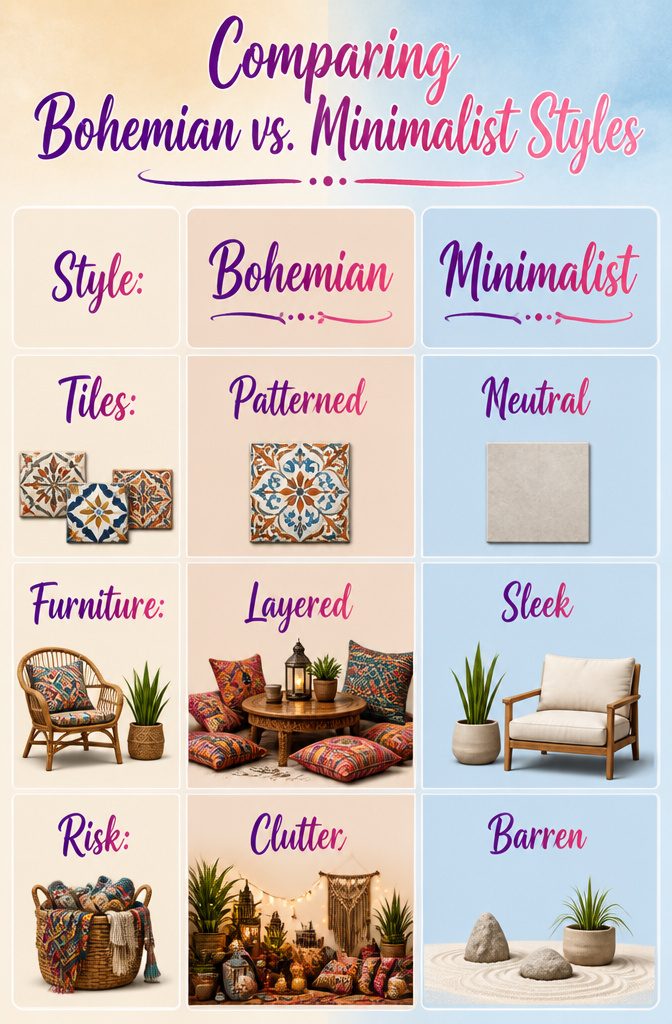
Bohemian style piles on patterned anti-slip tiles, vibrant cushions, and macrame hangings until the space feels layered rather than matched.
Floor cushions and a low-rise coffee table complete the look, with string lights hung wherever a hook will hold. The risk is clutter: without some restraint, a small balcony starts to feel like storage for someone else’s festival.
Minimalist Zen takes the opposite path.
Neutral-toned porcelain tiles, a few potted plants, and sleek furniture leave the eye somewhere to rest. A small wooden bench or a rock garden does most of the work; the calm comes from what you leave out.
I tried both.
The bohemian version swallowed my six-by-eight balcony in textures I never sat still enough to enjoy. The Zen version felt borrowed, not lived-in, like a hotel spa I was waiting to check out of.
What settled in between: the neutral tile base from the minimalist approach, one bold patterned cushion as the bohemian nod, and a single macrame hanging that moves when the wind does.
The lantern stayed, but only one. The floor cushions left; they were always in the way of the door.
For renters, this middle ground has a practical edge.
The neutral hardscape stays within most lease terms. The personality lives in the soft pieces you take with you.
Materials That Last Past Labor Day
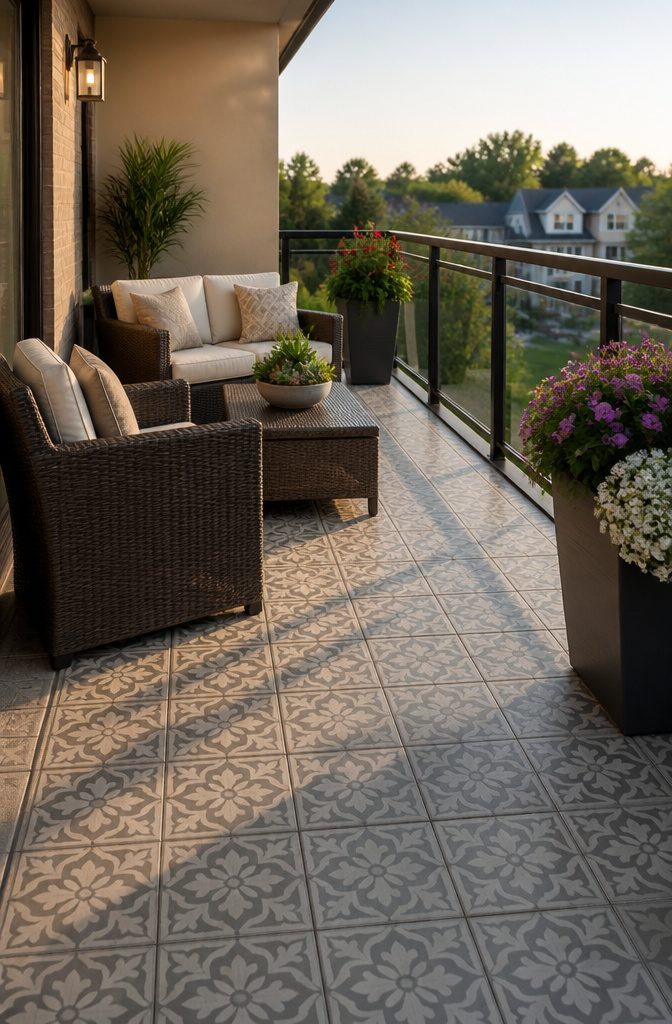
Porcelain tiles handle the freeze-thaw cycle better than standard ceramic, which matters more than most people think until they spot a crack running across the floor in March.
I learned that distinction the hard way after assuming "outdoor rated" meant the same thing for both. It doesn’t.
For furniture, synthetic rattan outlasts the natural kind by years and cleans with a hose. The real material looks warmer in the store, but six months of UV exposure turns it brittle and gray.
UV-resistant finishes and anti-slip surfaces are the two details worth checking on the label, not just the manufacturer’s "intended use" claim. Matt or textured tiles give you the grip you’ll want on dewy mornings without looking industrial.
Waterproof upholstery extends the usable season past Labor Day even on open terraces.
Pair that with frost-resistant flooring and you’ve bought yourself weekends in October you wouldn’t otherwise get. The upfront cost difference runs modest; replacing water-damaged cushions and cracked tile in spring costs far more.
Frequently Asked Questions
What are some small balcony design ideas?
Small balconies work best as either a lounge zone with one larger piece like a low-slung rattan sofa, a dining corner with a wall-mounted drop-leaf table, or a relaxation spot with a single chair angled toward the light.
Add vertical greenery on walls or railings so plants do not steal the limited floor space. Keep a clear path from door to railing or the setup becomes an obstacle course you stop using.
How can I maximize space on my balcony?
Choose fewer, larger furniture pieces instead of cluttering edges with slim chairs, and use foldable items that hang flat on wall hooks inside between uses. Vertical gardens, wall-mounted planters, and floating shelves move greenery off the floor.
Smart storage like a box that doubles as extra seating keeps cushions and small items out of the way. Light-tone or large-format flooring also helps the space read larger.
What plants are best for a balcony?
Herbs suit cooks but only if your wall or rail gets the sun hours they need, typically six hours on a south-facing exposure. Flowering varieties and succulents fill sunny vertical planters; ferns and shade-tolerant species work for dim walls.
Climbing vines on a trellis add privacy while softening edges without boxing the space in. Match the plant to your actual light conditions or you will end up with leggy basil and rotted lavender.