
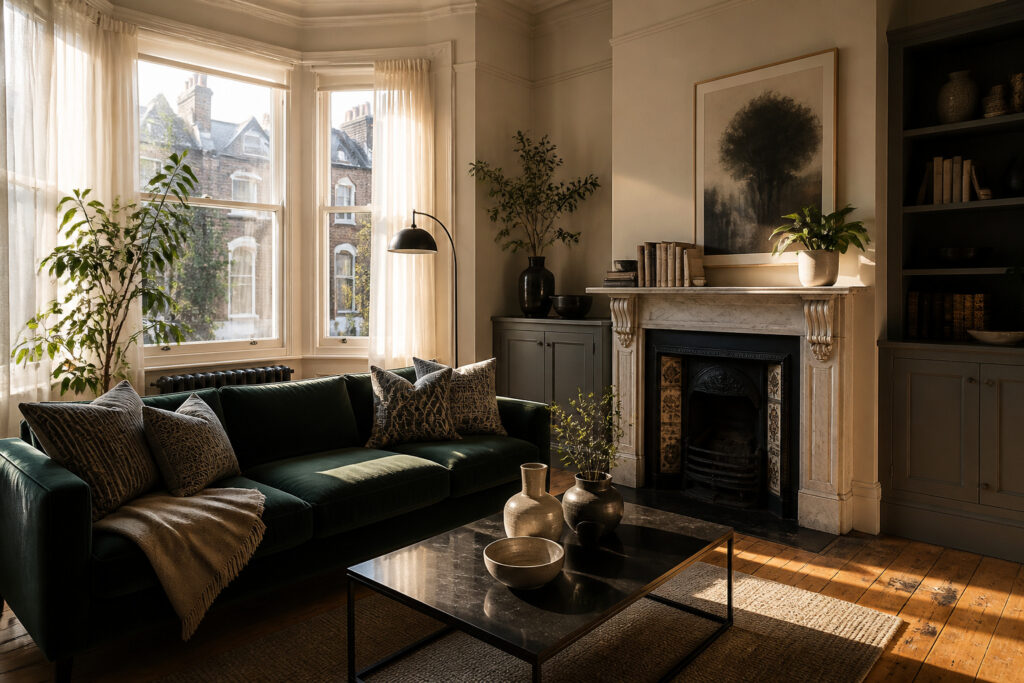
Decorating a Victorian terrace in 2026 runs from $80 weekend paint jobs to full kitchen refreshes near $3,800.
What separates the projects that stick from the ones that feel like stage sets is whether you are working with the narrow footprint and tall ceilings or against them.
Georgina Smith’s Buckinghamshire three-bedroom proves the point: Raw Cashmere on panelled walls and Flax Seed overhead turned a dark dining room into a deliberate, cocooning space rather than a failed attempt at brightness.
The cost of getting that wrong is not money. It is rooms that read cold no matter what you spend.
1. Warm Neutral Color Palettes
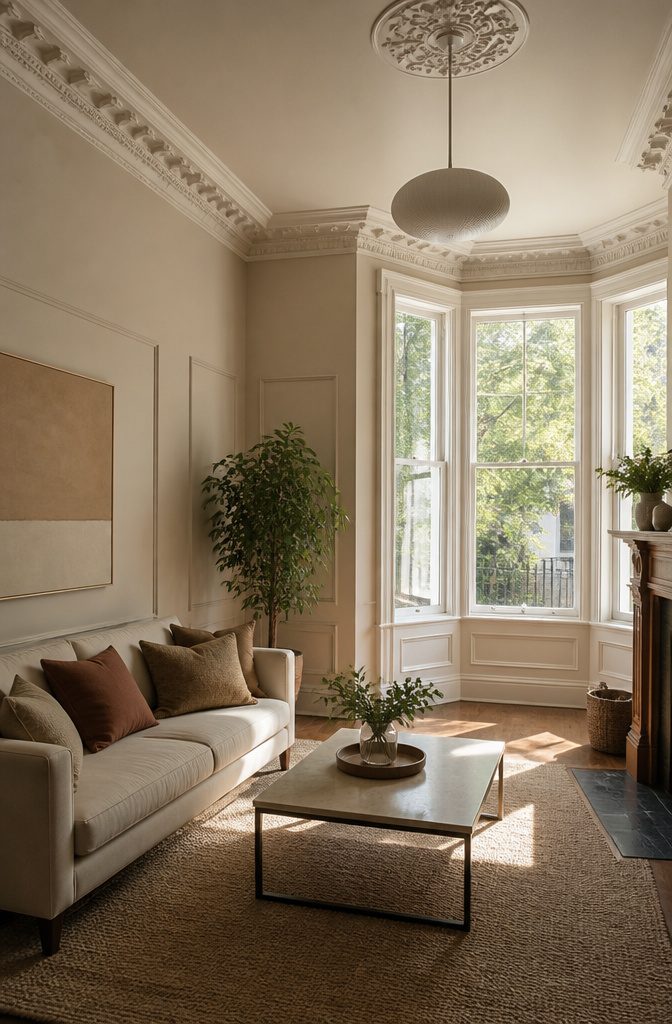
High ceilings and original fireplaces in a Victorian terrace can feel cold fast if the palette drifts too cool or too bright.
Georgina Smith, who renovated her three-bedroom terrace in Buckinghamshire on a strict budget, solved this with Raw Cashmere and Flax Seed by Dulux Heritage, two warm neutrals she used to panel walls and paint ceilings respectively.
The combination creates a cocooning base that works with period architecture rather than against it, letting the existing details read as character instead of contrast.
She adds bolder blues and greens as accents, but the muted foundation keeps the rooms feeling grounded.
For anyone mid-project with a few hundred dollars and a weekend, this approach is renter-friendly too: painted paneling comes down or gets touched up far easier than stripped wood or bold wallpaper.

ALL SEASON PAINT & PRIMER-IN-ONE: Cascadia XL is a 100% Acrylic Latex Paint & Primer-in-One with advanced technology for rain protection and a superior finish

ENAMEL FLOOR PAINT: Provide your floors with an extremely durable and long-lasting finish using California Paint ALLFLOR Porch, Patio and Floor Enamel Paint.
2. Bold Accent Colors
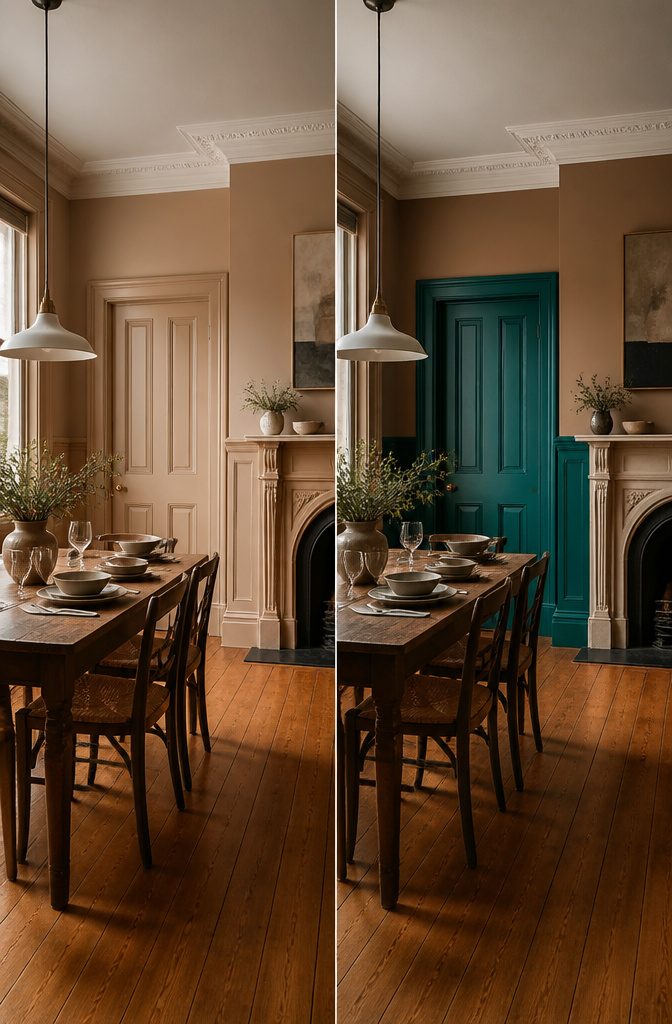
Warm neutrals on the walls leave room for one strong color hit without fighting the narrow rooms typical of a Victorian terrace.
In my own reading through dozens of these projects, the ones that stick land that hit on a single fixed element: a painted door in deep teal, a fireplace surround in ochre, a back wall in aubergine.
The rest stays quiet.
Georgina’s approach in that Buckinghamshire terrace offers a useful model. She wrapped her dining room in a pinky brown to embrace the darkness, then let the architecture do the work.
"I wanted to embrace the fact that the room is dark, and wrap the walls in warmth, so I went for a pinky brown, which fills me with joy."
For most renters and first-home owners, the braver move is smaller: one painted door against warm white walls costs a weekend and a quart of paint.
A whole accent wall works only where the room has natural stopping points, usually beside a chimney breast. Skip the feature wall in a through-lounge; the long rectangle fights it.

BUTTERY SMOOTH, ULTRA DURABLE PAINT: Adds a beautiful ultra-matte finish to furniture, doors, cabinets, décor and more

🏠DETAILS: Size 15.8 x78.8 Inch , total 8.65 sq.ft(40cmX2m), Self adhesive (no extra glue needed). Made of durable vinyl. Dark teal wallpaper, Peel and Stick, Matte, Waterproof, Removable.

High quality printed artwork stretched to fit on durable and shrink-resistant canvas.
3. DIY Projects for Home Improvement
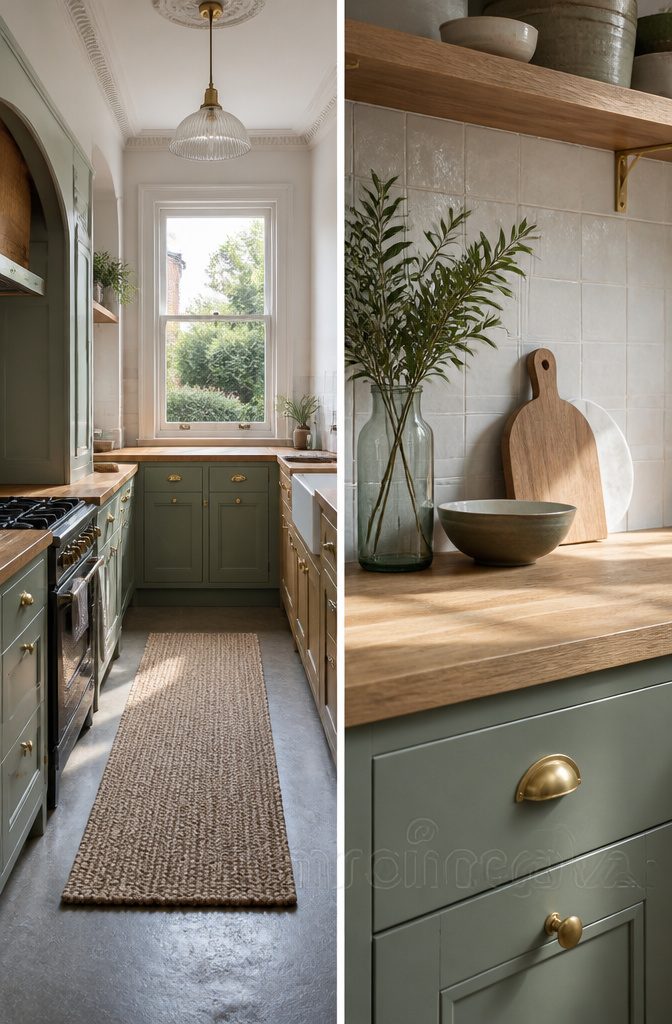
Painting cabinets yourself is the fastest way to pull a dated kitchen into this decade without tearing anything out.
I did mine in a weekend with a friend: two coats of Benjamin Moore Advance in a soft green-grey, new brass hardware from Amazon, and the room felt like a different house.
The whole job ran about $400 in materials against the $8,000–$12,000 a full replacement would have cost.
Wall paneling hits that same sweet spot for Victorian terraces specifically. MDF beadboard or simple shaker-style boards run about $30–$50 per sheet, and with a brad nailer and construction adhesive you can finish a hallway in a Saturday.
Paint it the same color as the walls above and it reads as architecture, not add-on.
The worktop swap is where I nearly stalled. Laminate runs $200–$600 installed; I went with a butcher-block remnant from a local supplier for $380 and sealed it myself.
Between the cabinets, the worktop, and a $90 tile backsplash I cut and set, my kitchen refresh landed around $3,800 total. That is roughly £3,000 converted, and it bought me a kitchen that photographs like a renovation costing three times as much.
The mistake to avoid: skipping the deglosser on cabinet paint. My first door started peeling in six weeks.
Strip it back, scuff with 220-grit, degloss, prime, then paint. The extra hour saves a full redo.

ALL-IN-ONE Paint - NO Sanding, NO Priming, NO Top Coat Required

ENAMEL FLOOR PAINT: Provide your floors with an extremely durable and long-lasting finish using California Paint ALLFLOR Porch, Patio and Floor Enamel Paint.

WATER-BASED & LOW ODOR Water-Based Interior Paint – Low-odor formula designed for everyday indoor painting and refresh projects. Creates a comfortable application experience while providing a clean matte finish for interior walls and ceilings.
4. Texture Through Fabrics and Accessories
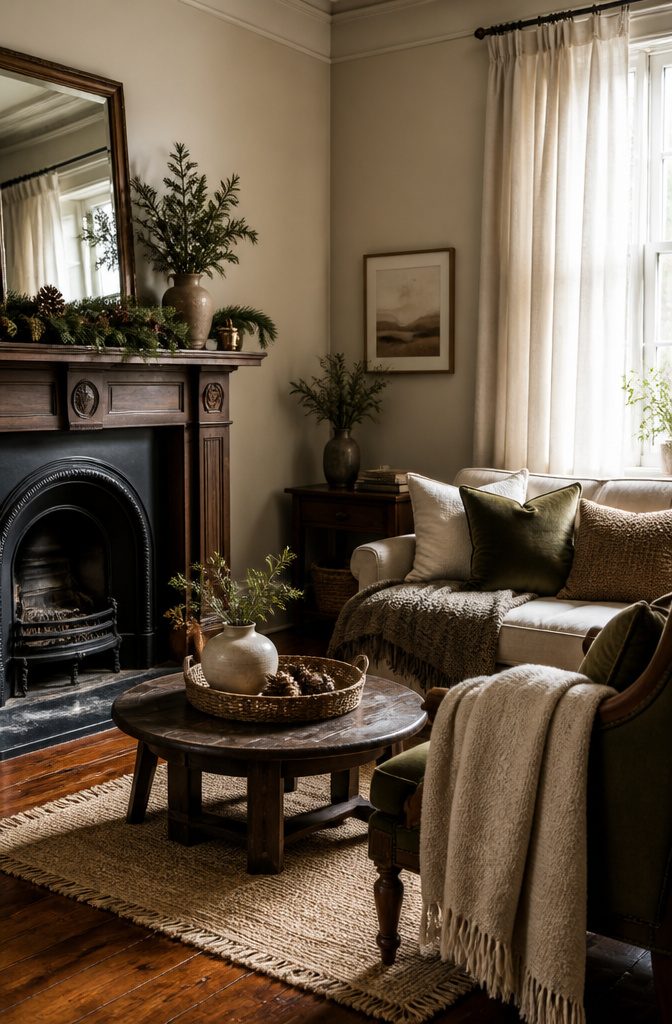
A room without texture feels slippery, like walking into a showroom instead of a home. Victorian terraces need that friction, especially with their tall ceilings and long rooms that can read cold no matter what color you paint them.
The fix is layering fabrics you actually want to touch. On my sofa, a heavy linen throw sits under a softer cotton blanket, and the contrast does more than either would alone.
Cushions mix velvet with nubby weaves, nothing matching too carefully. The rule is three distinct textures in any single sightline, minimum, or the eye slides right past.
Placement matters more than quantity. Drape throws over the arm of a reading chair, not folded at the foot of the bed where they go stiff and decorative.
Let cushions sit slightly askew; the lived-in tilt catches light differently and keeps the room from feeling staged.
For Victorian mantels specifically, sources describe working with layers of greenery, then adding pinecones, dried hydrangeas, and burlap ribbon.
That same principle transfers to everyday surfaces: a woven tray under a ceramic vase, a frayed-edge runner across a polished table. The hard surfaces of original Victorian woodwork, especially, need soft interruption or they dominate.


Nuvo is a D.I.Y. one-weekend cabinet makeover process that does not require any cabinet removal or priming Get professional-looking results with just a roller and brush

𝙉𝙊𝙏𝙀: Intentional headspace allows room for stirring, dipping, and transit. The stated paint quantity remains unchanged. If you have any questions, please contact our customer service team.
5. Vintage and Second-Hand Furniture
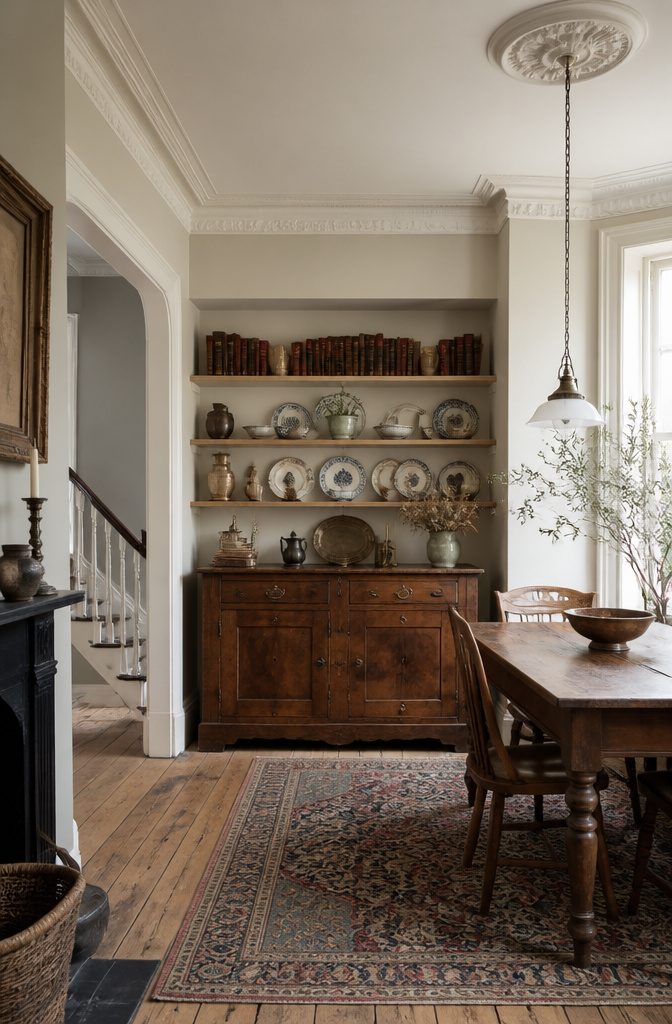
Facebook Marketplace and eBay are where most of my Victorian terrace pieces have come from, and the savings over new reproduction furniture run about half to two-thirds off.
A heavy oak dresser with the original brass handles, picked up for $180 last spring, now anchors the dining alcove in a way a flat-pack unit never could.
The weight alone tells you it was built to survive a century of use.
Look for dovetail joints and solid drawer bottoms when you are messaging sellers for photos; plywood backs and stapled corners mean the piece is newer veneer and will not take another move well.
Castors on chair legs, original keyholes in sideboards, even the wear pattern on a stair runner you are cutting up for upholstery, all of these read as character in a Victorian space because they match the age of the house itself.
The risk is water damage or woodworm, so ask specifically about musty smells or holes, and budget $30–50 for a furniture wax and a weekend of elbow grease before the piece comes inside.
My best find was a Victorian pine washstand, missing its marble top, that I use as a bathroom storage unit with a simple piece of honed limestone cut to fit.
The mismatch of stone and wood is exactly what makes it look gathered over time rather than bought in a set.

COLORS CRAFTED BY ANNIE SLOAN: Old Ochre is a darkened, dusty, cream with warm undertones that makes a great foil to other colors. A great neutral for creating a relaxing environment.
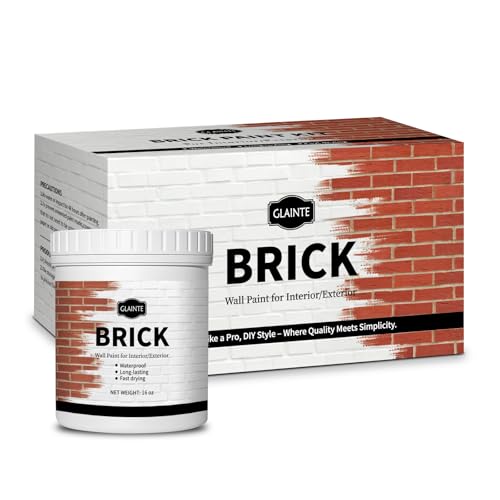
Multifunctional White Paint Set:Without the need for tedious polishing and priming steps, Brick Paint can be applied directly to a wide range of surfaces such as concrete, brick, wood, etc., and is universal for both indoor and outdoor use. It has excellent sun and waterproofing properties and can withstand harsh weather for a long time after drying. NOTE: For outdoor use, please choose a sunny time to work, avoid rainy days operation (undried paint may dissolve in contact with water, but completely dry will have waterproof properties)

Multifunctional White Paint Set:Without the need for tedious polishing and priming steps, Brick Paint can be applied directly to a wide range of surfaces such as concrete, brick, wood, etc., and is universal for both indoor and outdoor use. It has excellent sun and waterproofing properties and can withstand harsh weather for a long time after drying. NOTE: For outdoor use, please choose a sunny time to work, avoid rainy days operation (undried paint may dissolve in contact with water, but completely dry will have waterproof properties)
6. Wall Paneling for Character
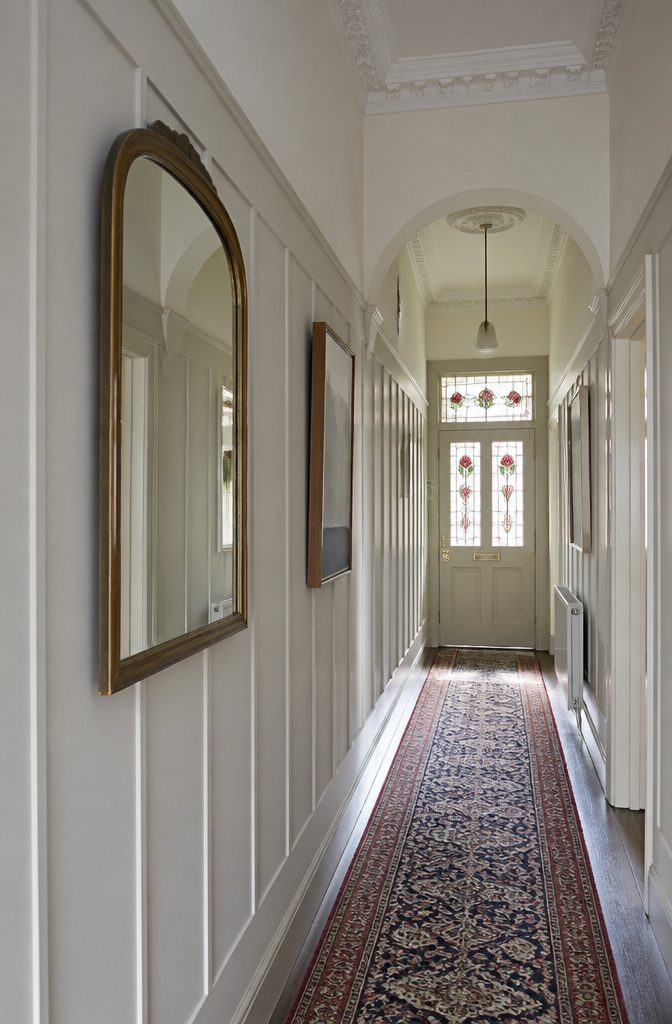
Wall paneling reads as original detail in a Victorian terrace even when it is not. The boards are thin, the shadow lines are tight, and from a few feet back the eye registers 1890s craft rather than 2020s DIY.
That is the point: you are not faking history so much as continuing it in the same grammar.
MDF beats solid wood for most renters. It takes paint smoothly, weighs less, and the suppliers now mill profiles that match period archives closely enough.
I would not use it in a bathroom where steam cycles daily, but in a bedroom or hallway it performs indistinguishably from the pine it replaces.
For a sitting room with a working fireplace, moisture-resistant MDF or poplar holds up where the old stuff cupped and cracked.
Installation is a weekend of measuring twice and a brad nailer. Start at the skirting, work up to the picture rail if the room has one, and let the existing architecture do the framing.
Rooms with high ceilings and original cornices benefit most; the paneling draws the eye down to human scale without sacrificing the vertical space. A narrow hallway, too, gains depth from the repeated rhythm.
The mistake is over-paneling.
One treated wall per room is usually enough. Two, and the effect becomes scenery instead of structure.
7. Layered Decor for Cozy Atmosphere
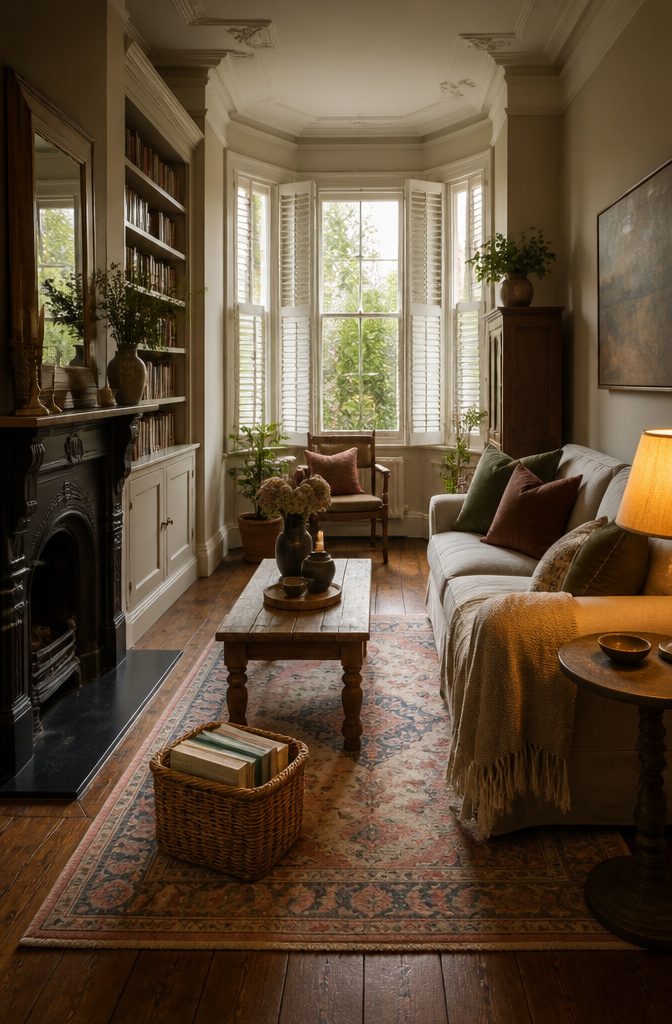
Layered decor builds warmth in Victorian terraces the same way Georgina Smith built hers in Buckinghamshire: by stacking soft elements until the room stops feeling "slippery," as The Nester calls that bare, untouchable quality.
In a narrow terrace, this means rugs over original floorboards even where the boards are handsome, because one flat plane reads as a corridor no matter the ceiling height.
The rug breaks the sightline and gives your eye a place to rest.
Curtains over blinds does the same vertical work. Georgina used warm neutrals like Dulux Heritage Raw Cashmere on panelled walls with Flax Seed on the ceiling, and that muted palette let her add bolder pops without chaos.
The layering principle applies to surfaces too: books grouped with a small object, not marched in a row, create depth that distracts from limited width.
A circular mirror, like the Perch & Parrow piece in her sitting room, catches light between those groupings and keeps the stack from feeling heavy.
What I took from studying these rooms is that texture matters more than color for coziness. A fuzzy wreath or a rattan side table, like The Forest & Co piece Georgina chose, gives your hand a reason to reach out.
The mistake is treating layering as clutter control; it is spatial control. Each layer should answer the narrow room’s tendency to feel like a tube, not just fill it with more stuff.

Opulent silk-like texture: Woven with refined faux-silk microfibers that deliver a velvety-smooth, ultra-soft hand feel underfoot. The subtle luminous sheen catches natural and ambient light gracefully, instantly elevating bedroom bedside and dressing vanity.

【100% MACHINE WASHABLE DESIGN】 Life gets messy, but your rug doesn't have to. Featuring a flexible, foldable design, this rug can be easily machine washed, saving you time and money on professional carpet cleaning services.

【100% MACHINE WASHABLE DESIGN】 Life gets messy, but your rug doesn't have to. Featuring a flexible, foldable design, this rug can be easily machine washed, saving you time and money on professional carpet cleaning services.
8. Personalization Through Art and Accessories
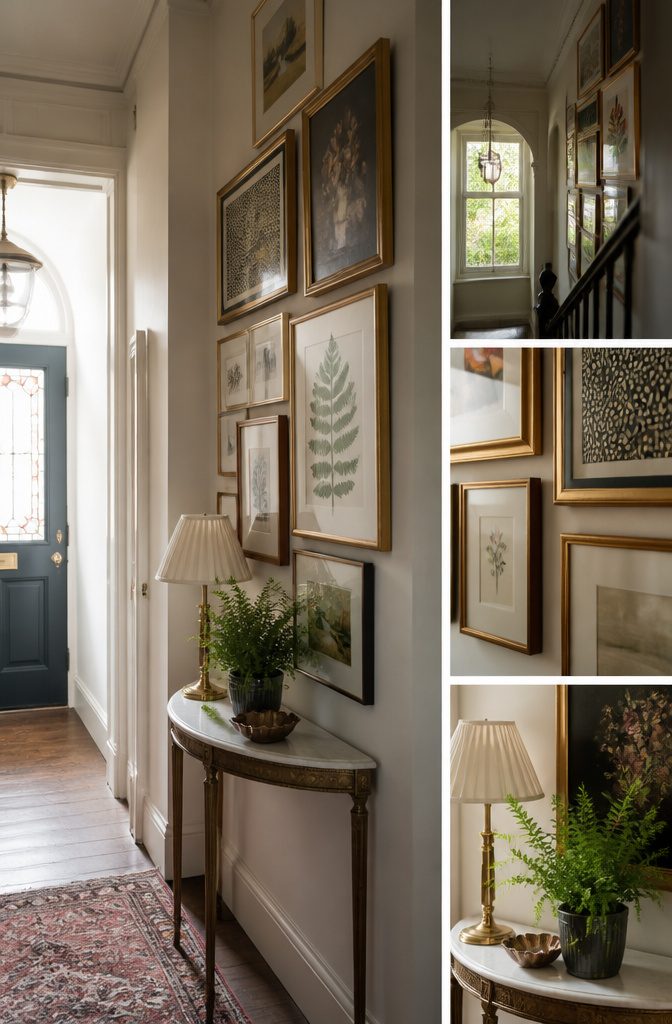
Narrow walls in a Victorian terrace look wrong with a single small frame floating in the center.
The ceiling height wants something that draws the eye upward, so a vertical stack of two or three pieces, hung with only a hand’s width between them, fills the wall without crowding the floor space below.
In my own hallway, the wall is barely three feet across; two mismatched portraits stacked that way, one in a thin brass frame and one in rough wood, read as one column rather than clutter.
Mixing frame styles keeps a gallery wall from looking like you bought it in a single afternoon.
The trick is holding one thread constant: all warm metals, or all pale woods, or all black if the room has other black accents.
Break that rule once, not three times. A gilt frame next to a raw maple one fights; a gilt frame among four black ones becomes the intentional accent.
Building slowly is the only way this stays affordable and personal. One piece from a flea market, one from a friend who was clearing out, one print you bought because the color matched the sofa that Tuesday.
The collection tells the story of the house because it tells the story of the years in it. Sets from a catalog never manage that.

【Easy to Use】Simply open the lid and stir thoroughly before applying Lambskin Wall Paint; no complicated methods needed to refresh your home. 【Decorative...
9. Functional Spaces That Fit Your Life
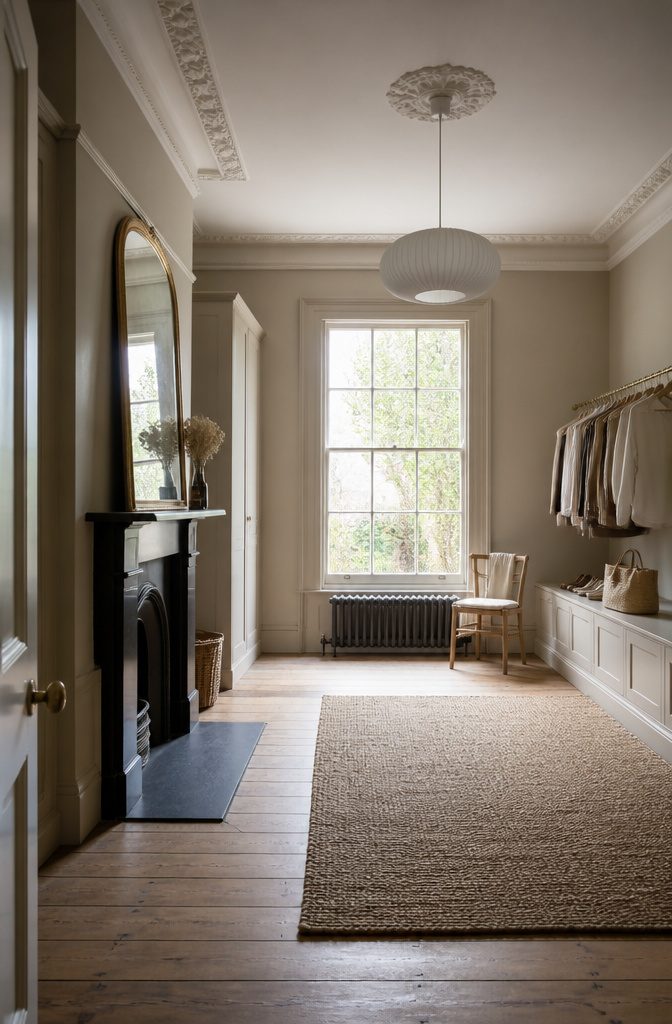
The front room gets labeled a parlor because the fireplace is original, but Georgina Smith and her husband Joe use theirs as a dressing room with a statement ceiling in Flax Seed.
That choice cost them the formal seating arrangement anyone expects in a Victorian terrace. It gained them a private space with panelled walls in Raw Cashmere that actually fits how they live.
Their downstairs bathroom had already moved upstairs when they bought the place, which meant no structural budget had to go toward plumbing relocation. That is the trade-off worth hunting for: original layout versus cash freed for daily function.
Three bedrooms sounds generous until you realize the middle one is often railroaded between front and back, narrow enough that a double bed blocks the door swing.
The previous owners of that Buckinghamshire house had already solved the worst bottleneck, so Georgina and Joe could spend their weekend hours on paint and styling instead of walls.
A Victorian terrace rewards the room you actually enter first. If that is the kitchen back door off the alley, the "front" parlor becomes dead space you walk through once a week.
Reassign it. The period fireplaces stay put whether you sit in a circle around them or back a desk against the hearth.


Sophisticated Grey Hue: Driftwood offers a chic, sophisticated grey tone that effortlessly adds a touch of elegance and modernity to any cabinet.

【WATER BASED & LOW ODOR】DWIL Cabinet Paint features a water-based, low-odor formula for a more comfortable indoor painting experience. It is ideal for updating kitchen cabinets, bathroom vanities, and wood furniture without the strong odor commonly associated with oil-based paint.
Color Schemes That Actually Work
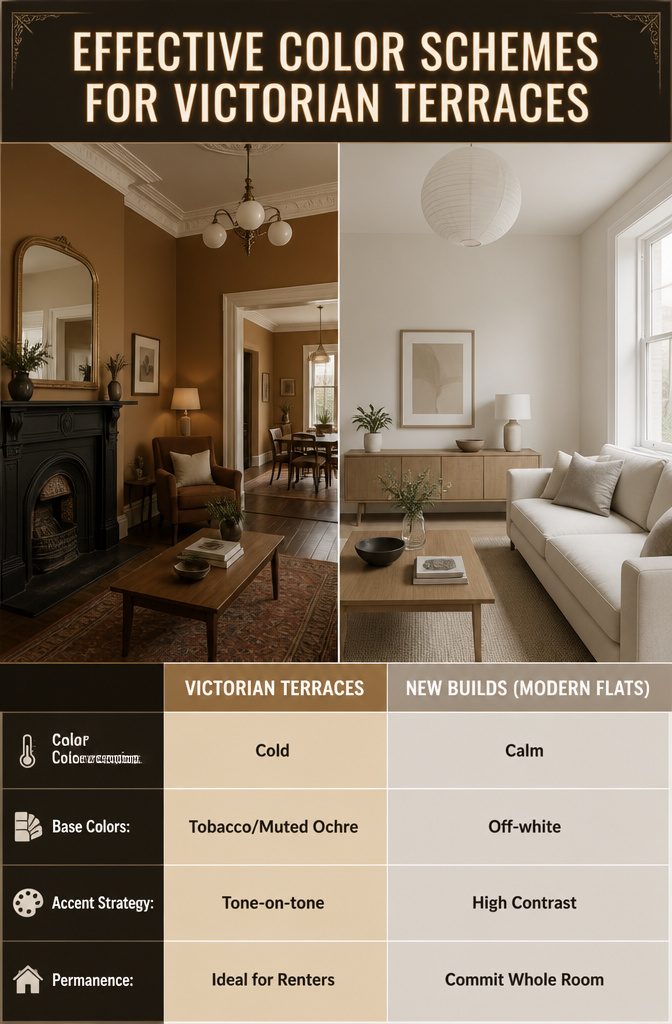
Victorian terraces swallow color differently than new builds. The tall ceilings and long sightlines through connecting rooms mean a flat beige reads cold and unfinished, while the same tone in a modern flat feels calm.
I learned that the hard way in my first rental, painting the living room a safe oatmeal that turned institutional once the north light hit it.
Warm neutral bases with depth solve this. Think tobacco, stone, or a muted ochre rather than off-white.
These colors catch the period details, crown molding and fireplace surrounds, without shouting over them. The trick is choosing something with enough pigment that it shifts across the day instead of sitting flat.
For accents, you have two workable paths.
Tone-on-tone keeps the same family through adjacent rooms, a hair darker in the dining space, lighter upstairs, so the eye travels without jarring. It suits renters who cannot repaint every wall or owners who want the architecture to lead.
High-contrast bold does the opposite: a single saturated wall, deep teal or aubergine, against that warm base. It risks looking like a feature wall from 2012 unless you commit the whole room, woodwork included.
My preference after living with both: tone-on-tone for permanence, one brave dark room for spaces you pass through quickly, a hallway or powder room, where the drama does not tire.

ALL-IN-ONE BRICK FIREPLACE PAINT KIT: A complete DIY fireplace makeover kit with a multi-tone painting system that keeps the natural texture of your brick. Includes 2 base coat sealers, 3 color layers and a glaze layer, plus a paint tray, painters tape, paint brush, 3 rollers with a roller brush, a texturizing sea sponge and easy step-by-step instructions.

Includes 30 featured and newest released color card. Sprayed on color to see our colors in your homes lighting for more accurate color choices.

1200F flat black brush-on paint will restore the beauty of your old stove or grill, or bring a great look to a new project
Sourcing Vintage Furniture

The best vintage pieces for a Victorian terrace rarely come from curated shops with markups that triple the price. Facebook Marketplace and eBay are where the actual deals live, but the hunt takes a sharper eye than scrolling and hoping.
On Marketplace, search beyond your immediate radius; sellers in smaller towns often price solid wood dressers at what city dealers ask for particleboard.
The listing photo matters less than the seller’s responsiveness. Someone who answers "yes" to "Are the drawer bottoms original and unbroken?" without a follow-up photo is usually hiding water damage or a glued split.
Ask for a video of each drawer sliding open, and walk away if the runner joints are nailed rather than dovetailed; that repair costs more than the piece is worth.
eBay rewards patience with saved searches. A Victorian pine washstand listed as "old bathroom cabinet" sits for days while buyers miss it entirely.
Shipping runs steep for furniture, so filter to collection-only and plan a Saturday route. Red flags there include stock photos, vague dimensions, and sellers who won’t schedule a viewing.
Restoration math is simple but unforgiving.
Reupholstering a single club chair starts around what you’d spend on a new sofa from a mid-range chain. A wobbble in a table leg means joint regluing, which is a weekend project.
A split tabletop means finding a specialist. Know which side of that line you’re on before you bid.
Weekend DIY Projects With Real Costs
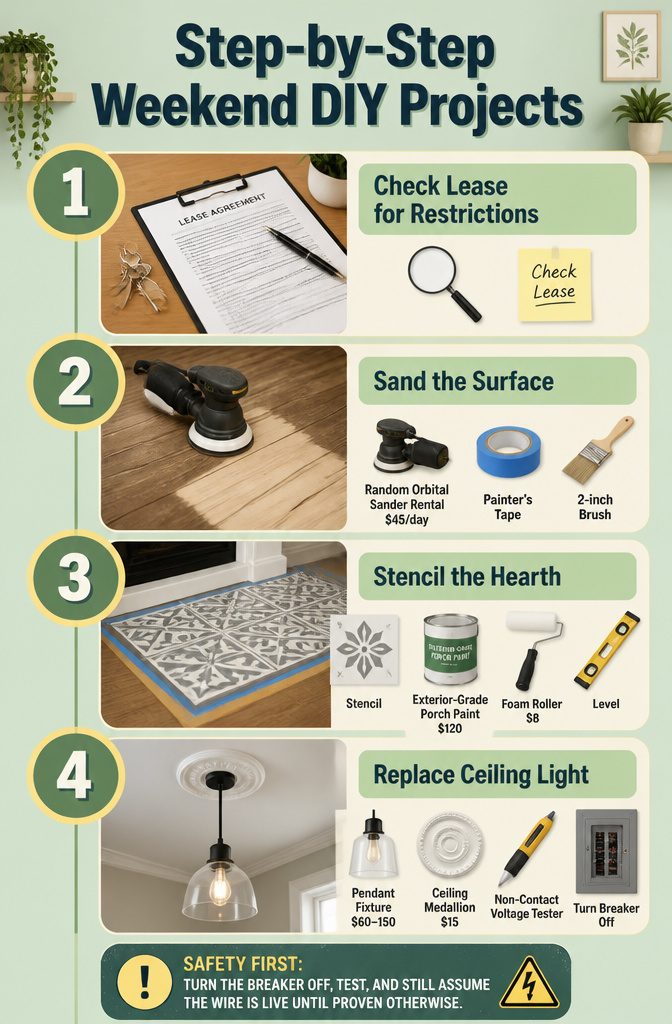
A fresh coat of paint on the floorboards runs about $80 in supplies and one long Saturday, but the real cost is the prep. In my first terrace, I skipped the sanding, and the porch paint lifted in ribbons by October.
Renters should check their lease before pulling up carpet staples; some landlords require professional refinishing for "improvements." The tools are basic: a random orbital sander rental at $45/day, painter’s tape, and a decent 2-inch brush for cutting in along the baseboards.
Stenciling a faux tile pattern on the kitchen hearth took me a full weekend and roughly $120.
I used exterior-grade porch paint for durability, then immediately wished I’d bought the $8 foam roller instead of trying to cut costs with a frayed one from the garage.
The pattern went wobbly where the nap shed. A level and patience matter more than artistic skill here.
The third project is replacing a standard flush-mount ceiling light with a simple pendant.
Materials run $60–150 depending on the fixture, and the job itself is twenty minutes if your junction box is already centered. It often isn’t in these old houses.
My box sat six inches off, requiring a $15 ceiling medallion to cover the gap rather than rewiring. Turn the breaker off, test with a non-contact voltage tester, and still assume the wire is live until proven otherwise.
Victorian Terrace Architecture to Know
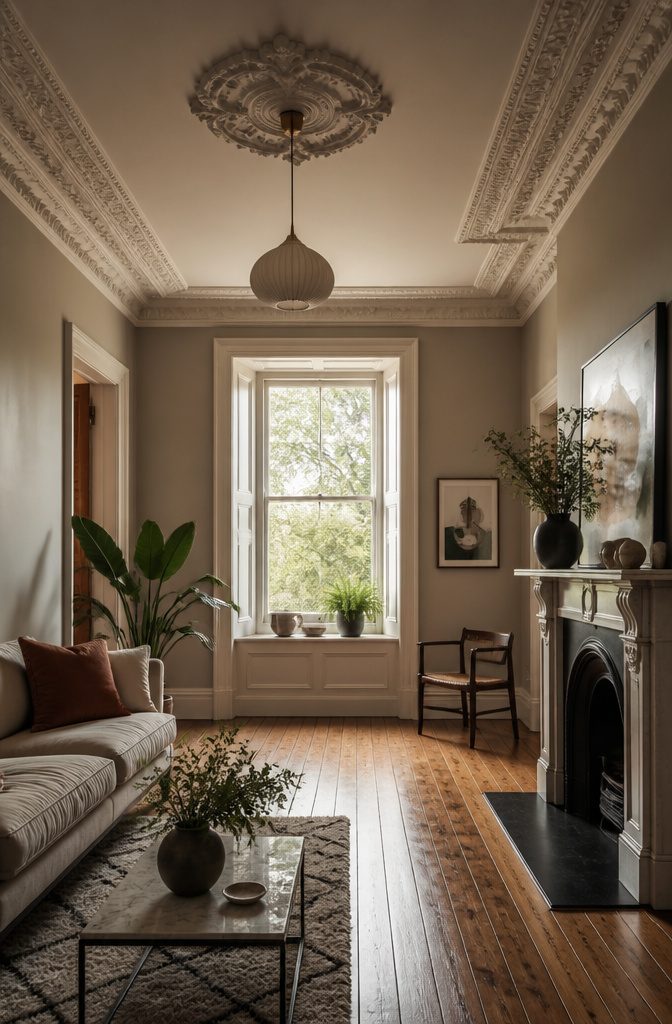
Victorian terraces carry a specific DNA that shapes every decorating choice you make.
The tall ceilings and long, narrow footprint are the first things to work with, not around; a room that stretches back from the street demands furniture placement that leads the eye forward rather than blocking the middle.
Original sash windows, often with deep reveals, give you generous sill space that reads as either storage opportunity or display stage depending on what you set there.
The plasterwork tells you the era’s priorities. Ceiling roses and cornices were mass-produced by the 1890s, so even modest terraces got decorative treatment that higher ceilings could carry.
Paint them the same color as the ceiling if you want them to recede, or contrast them if the proportions can handle the weight.
I have learned to check the condition before committing either way; cracked cornice is not a weekend fix, and covering it with a different colour draws the eye straight to the damage.
Fireplace openings, even when stripped of original fittings, give you a natural focal point.
Boarding them over wastes the architecture. A working insert or a well-fitted shelf turns that recess into the room’s anchor.
Frequently Asked Questions
How to decorate a Victorian terrace?
Start with warm neutrals like tobacco or stone rather than flat beige, which turns cold under north light.
Add one bold accent on a fixed element such as a painted door or fireplace surround, and layer textures through fabrics, vintage finds, and DIY paneling to keep narrow rooms from feeling like corridors.
What color schemes work best for Victorian terraces?
Warm neutral bases with real depth, such as muted ochre or stone, catch period details without competing.
Tone-on-tone palettes through connected rooms keep the eye moving smoothly, while a single brave dark room in a hallway or powder room adds drama without tiring.
How can I incorporate vintage furniture into my decor?
Source solid wood pieces from Facebook Marketplace and eBay, checking for dovetail joints and original drawer bottoms before buying.
A heavy oak dresser or Victorian pine washstand anchors a room with weight and history that flat-pack furniture cannot match, and typically costs half to two-thirds less than reproductions.
What DIY projects can I undertake to improve my space?
Paint cabinets with proper deglossing and primer for about $400 in materials, install MDF wall paneling in a hallway for roughly $30–$50 per sheet, or stencil a faux tile hearth for around $120.
Each project takes a weekend and adds architectural character without structural work.