
Match your cleaning routine to your climate first. Dry regions need weekly brushing to stop grit from scratching surfaces, while wet areas demand mold prevention after rain. Spray cushions with Exterior Scotch Guard once per season so water beads up, and keep weatherproof covers ready for 30-second deployment when storms hit. For daily upkeep, sweep debris with a soft brush, wipe spills with damp cloth and mild soap, and spot-clean cushions using 1/4 cup Dawn per gallon of warm water. Dry poly, resin, and aluminum with towels; never power wash. Store cushions in breathable bags, never plastic, before winter freezes arrive. The specifics below will show exactly how to handle each material and season.
Climate-Smart Outdoor Furniture Cleaning: Prep for Your Region
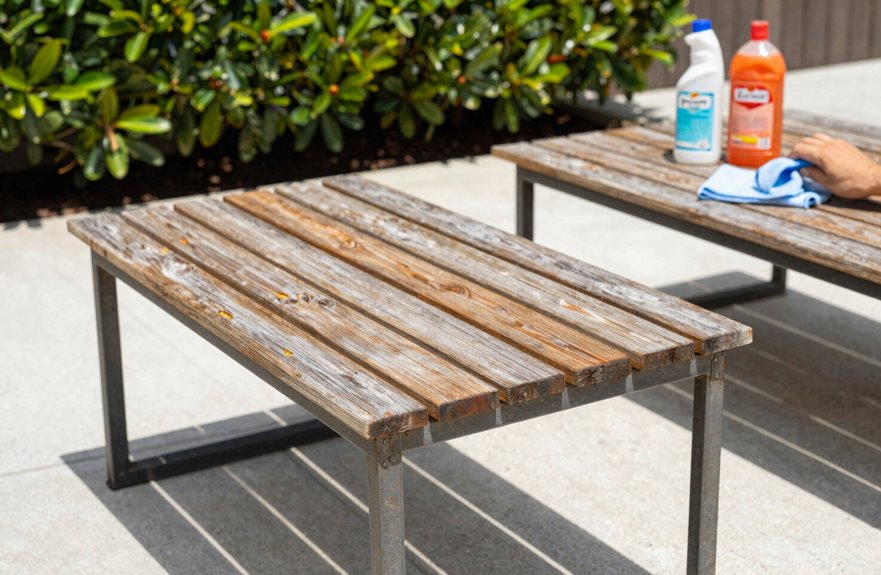
Where you live changes everything about how you clean outdoor furniture.
- Scan your climate first. In dry, windy regions like desert Idaho, dust and debris accumulate daily. Brush surfaces weekly and remove morning dew before it mixes with grit.
- Check your UV exposure. Strong sunlight fades light fabrics, so adjust cleaning frequency and add protection accordingly.
- Watch for moisture. Wet climates bring mold; clean more often after rain or snowmelt.
- Plan your storage. Harsh winters require storage units, as freezing temperatures and moisture damage unprotected furniture.
- Build regional routines. Arid zones need dust-removal and protective coatings; damp areas demand vigilance against mildew. Matching your cleaning to local patterns preserves your outdoor space throughout the year.
Stop Stains Before They Start: Protective Treatments That Work
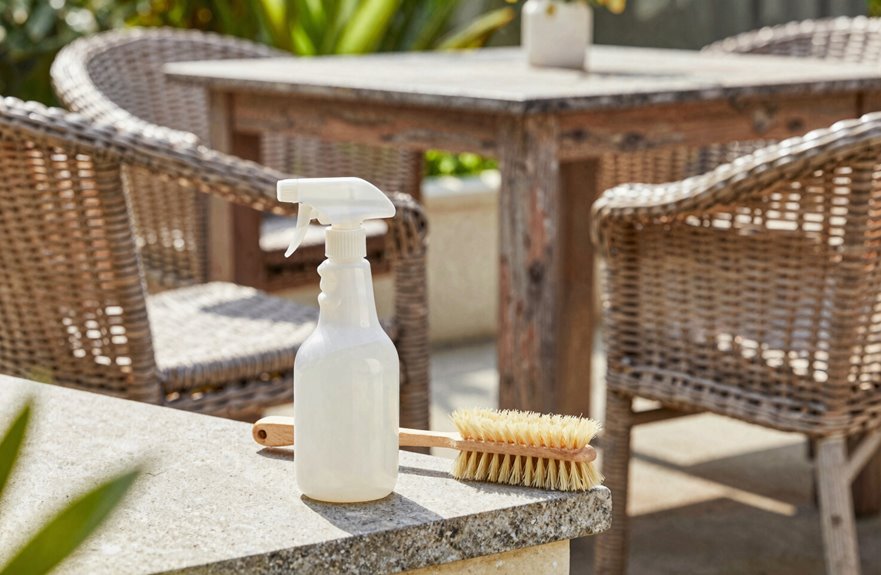
I start every season by spraying my cushions and fabric surfaces with Exterior Scotch Guard, applying one even coat so water beads up instead of soaking in. When storms roll through, I pull out fitted covers and stash loose cushions in waterproof boxes. This simple routine cuts my deep-cleaning time in half. These two habits, applied consistently, keep my outdoor pieces looking fresh with minimal maintenance required.
Scotch Guard Application
An ounce of prevention beats a pound of scrubbing regarding outdoor furniture. I rely on Scotch Guard as my first line of defense for outdoor fabric protection.
My method:
- I apply one coat of protective spray to cushions and outdoor-specific items, ensuring even coverage across all surfaces.
- This creates water repellency that beads moisture before it soaks in, making cushions cleaning far easier later.
- I reapply regularly, typically each season, to maintain consistent protection against wear.
- Sunlight helps fade minor imperfections on protected light-colored fabrics over time.
This maintenance routine extends fabric life significantly. For thorough outdoor furniture care, I treat sofas and chairs annually. The investment reduces scrubbing and produces longer-lasting materials that withstand diverse climates.
Weatherproof Cover Strategies
Because I’ve already sealed my cushions with protective spray, I don’t stop there when the forecast turns ugly. I grab my weatherproof covers.
- Apply protective spray first. Exterior Scotch Guard gives my outdoor furniture water resistance and makes my cleaning routine easier later.
- Cover before storms hit. I stretch weatherproof covers over sofas and frames within 30 seconds per piece. This protects fabric integrity immediately.
- Store cushions properly. I move removable cushions to waterproof storage, not just under the table.
- Repeat treatments. I reapply protective spray every 6-8 weeks during heavy-use seasons.
- Mind the sun. UV protection matters. Light-colored fabrics fade slower when covers stay on during peak hours, 11 AM to 3 PM.
This system keeps everything ready for company.
Daily Outdoor Furniture Cleaning: Essential Tools and Routines
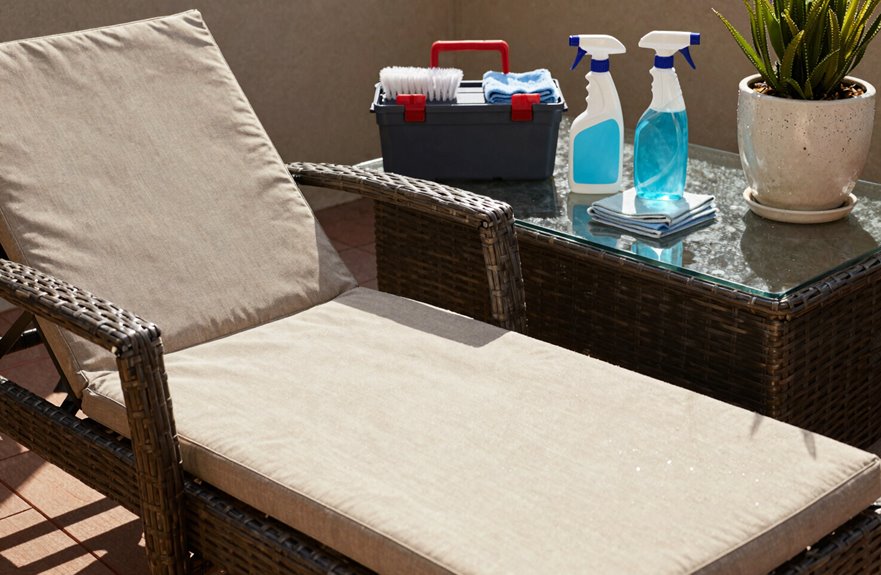
I start each morning with a quick sweep of my patio set using a leaf blower or soft brush to knock off overnight pollen and leaves before they settle in. When I spot a fresh spill on cushions, I grab a damp cloth and a mix of 1/4 cup Dawn dish soap in one gallon warm water, tackling it right away so I don’t have to wrestle with full cushion removal later. These two habits, daily dusting and immediate spot cleaning, keep my furniture looking sharp and reduce weekend maintenance time.
Quick Daily Dusting
Why let dust settle when five minutes of effort keeps your outdoor space looking sharp. I make daily dusting my ritual because it transforms maintenance from a chore into a habit that protects our shared investment.
Here’s my simple routine:
- Grab a damp cloth and wipe down every surface before coffee cools
- Sweep cushions with a soft brush to lift away overnight debris
- Mix mild soap with warm water for deeper weekly refreshes
- Let everything air dry completely before stacking
You’ll notice the difference immediately. Furniture lasts longer, colors stay true, and guests feel welcomed into a space that shows care. Skip this step, and dust becomes grime that demands heavy scrubbing. We don’t need that. Five minutes today saves an hour tomorrow, and that’s time better spent actually enjoying the outdoors together.
Spot Cleaning Essentials
Sometimes a full wash isn’t practical, and that’s where spot cleaning saves the day. I keep this method handy for small messes that need fast attention.
My trusted method: mix ¼ cup Dawn dish soap with 1 gallon warm water. It’s gentle but effective. I dip a soft cloth or soft brush into the solution, apply it to the stain, and let it sit for a few minutes. The waiting period allows the soap to break down the stain.
Then I scrub lightly and rinse thoroughly with plain water. This step is essential; residue left behind attracts dirt and leaves streaks.
For drying and mold prevention, I stand cushions on their side and ensure good airflow. Quick, thorough drying prevents mildew and keeps furniture fresh for the next use.
How to Clean Poly, Resin, and Aluminum Outdoor Furniture
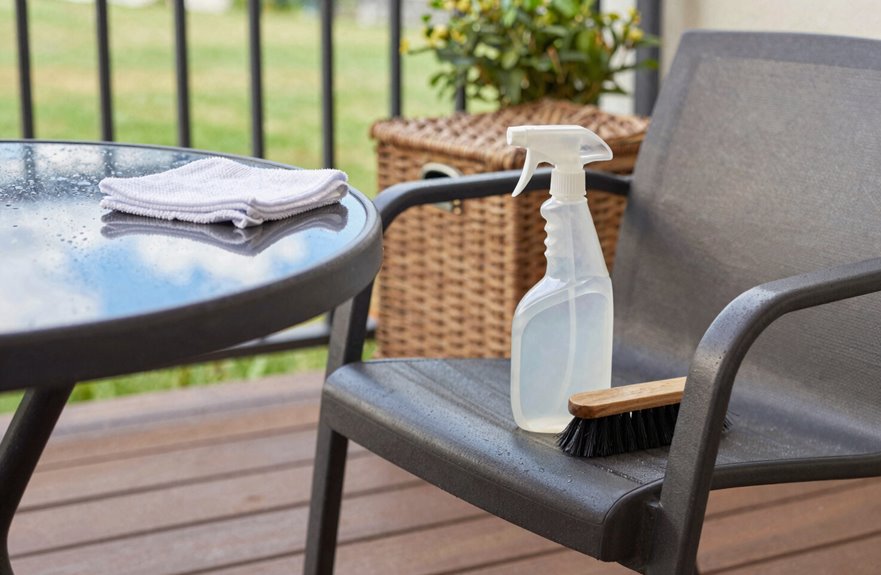
Poly, resin, and cast aluminum furniture typically requires different care than wood or fabric pieces, so check the material before reaching for any cleaner. For outdoor furniture cleaning, start with the basics:
- Poly furniture gets mild soap and warm water with a scrub brush; rinse, then dry completely
- Resin furniture follows the same gentle routine. No power washing, just careful rinsing and drying
- Aluminum furniture needs mild soap too, with a vinegar-water mix for stubborn spots
- Always finish with WD-40 on cast aluminum after drying, skipping bleach on non-white pieces
This approach keeps your patio set looking fresh without damage.
Clean Outdoor Furniture Cushions: Wash Covers or Spot Treat?
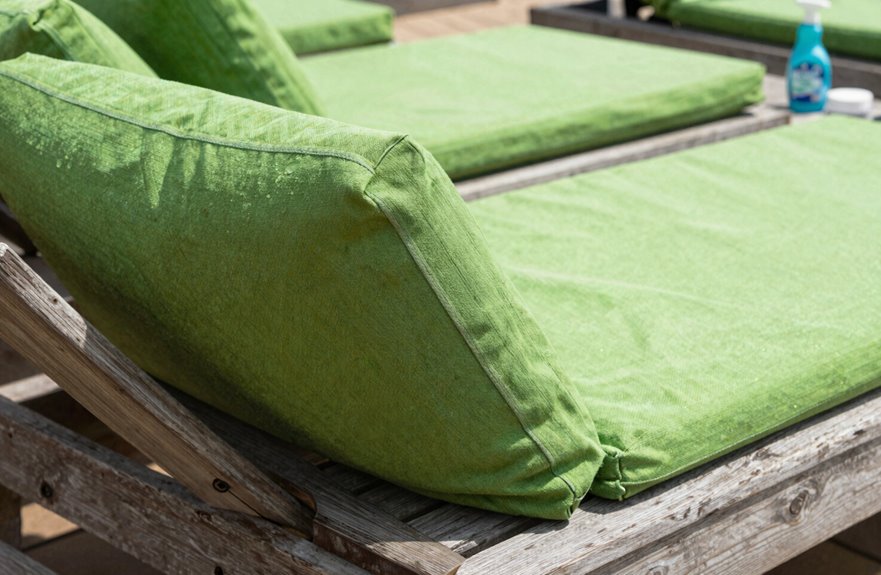
When deciding how to clean outdoor furniture cushions, start by assessing the dirt level and cover type. My World Market sofa has removable covers, but reattaching them is cumbersome, so I usually try spot cleaning first. I’ll use a damp cloth and work on small stains before committing to full removal.
If spot cleaning fails and the cushions are truly filthy, remove the covers and wash them separately. This is a judgment call based on available time and mess level.
Daily, wipe cushions with a damp cloth and rotate them for even wear. Seasonally, use protective covers to block sun and dirt. This routine maintains outdoor furniture in good condition without overcomplicating maintenance.
Winter Storage: Protect Your Pieces From Harsh Weather
After caring for my cushions through spring and summer, I’m turning my attention to what happens when temperatures drop. Winter storage keeps our outdoor investment safe, and a solid plan prevents costly damage.
- Dry every piece completely before putting it away. Moisture prevention starts with zero dampness.
- Choose outdoor storage units or weatherproof cabinets to block harsh weather.
- Remove foot caps and lift furniture slightly so air flows underneath.
- Stack cushions in breathable cloth bags, never plastic, to stop mildew.
I extend my cleaning routine into prep season: wash frames, tighten bolts, apply sealants to wood. Then I secure covers rated for snow load and UV resistance. Come spring, my furniture emerges ready for another year of gatherings.