
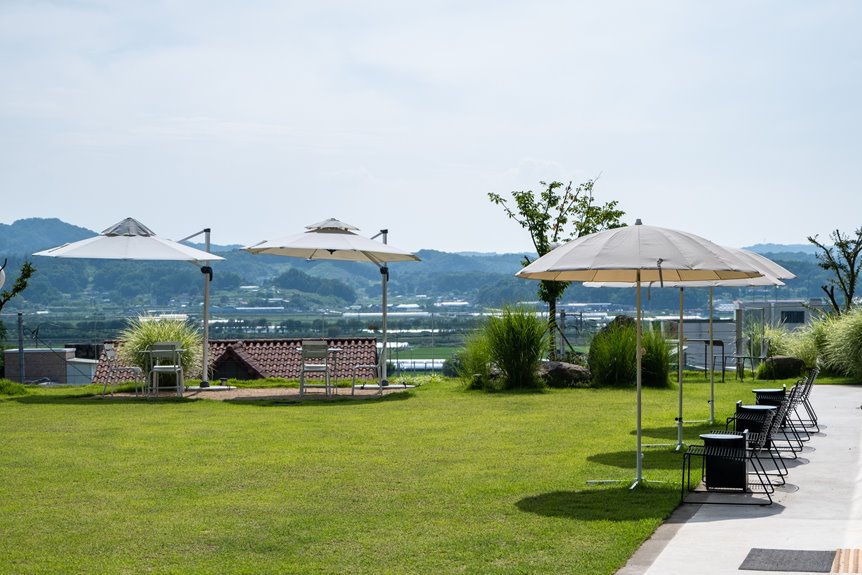
I start by measuring my table’s width and length, then add about two feet of overhang on each side for proper shade coverage. For a 48-inch round table, I pick an 8-foot canopy; for rectangular tables, I extend two feet past the longest edges.
I check that my patio has enough clearance for the open canopy and walk around to spot any walls or railings in the way. I also track where the sun hits during peak hours so I can tilt or adjust as needed.
Matching the pole height to my table, about seven feet of clearance for standard dining, keeps everyone comfortable underneath. Getting this right requires attention to both measurements and spatial planning.
Measure Your Table to Find Your Patio Umbrella Size
Where do you even begin when picking out a patio canopy? Start with table measurement. It’s the foundation of finding your perfect outdoor shade.
Start with your table. Everything else follows from there.
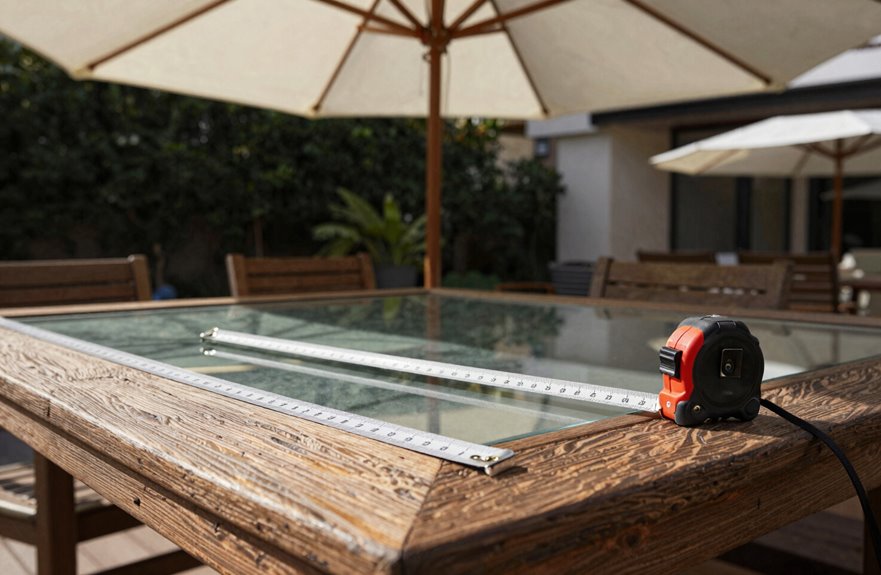
First, clear your patio space. Then grab a tape measure and record your table dimensions—width and length for rectangular tables, diameter for round ones. This isn’t complicated, but it’s essential.
Your canopy width needs coverage beyond table edges. For a round table, add about 4 feet total to the diameter. For square or rectangular tables, extend roughly 2 feet past each side. These numbers guide your umbrella size selection.
Also check height. Seven feet from ground to canopy underside keeps everyone comfortable with no ducking required.
Measure twice, choose once. Your patio umbrella should fit your life, not fight it.
Apply the 2-Foot Overhang Rule for Proper Coverage
Now that I’ve got my table measurements, I’m ready to figure out what those numbers actually mean for my parasol size. The 2-foot overhang rule is my go-to shortcut for nailing proper shade.
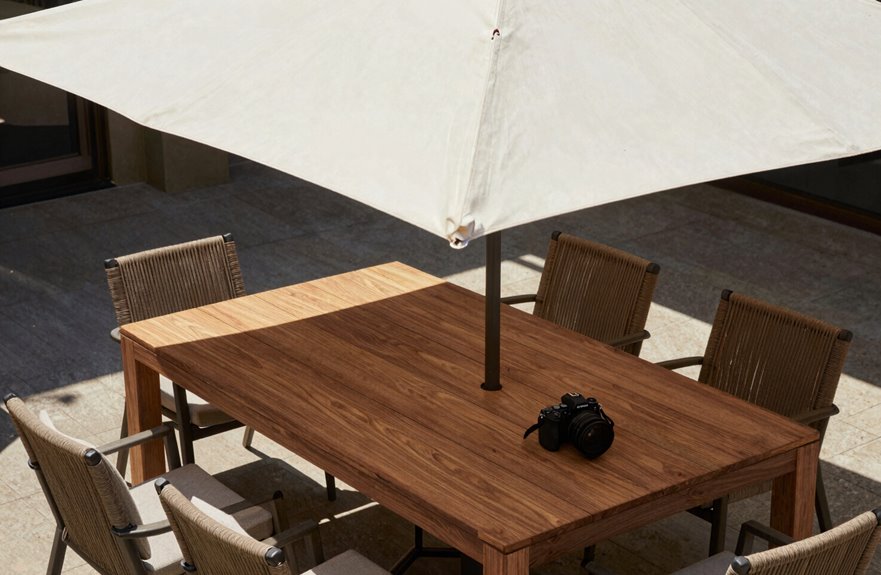
Here’s how it works: I add roughly 4 feet total to my table dimensions. For a round table, I pick an umbrella diameter that gives me 2 feet of shade coverage beyond every edge. Got a 48-inch table? I grab an 8-foot umbrella.
For a rectangular table, I focus on the longest sides and extend 2 feet past each end. This keeps my seating area cool all day as the sun shifts.
I use this rule to avoid two common problems: skimpy canopies that leave guests without adequate shade, and oversized umbrellas that create wind resistance issues. The 2-foot overhang provides adequate protection while maintaining structural stability.
Check Your Patio for Umbrella Clearance and Fit
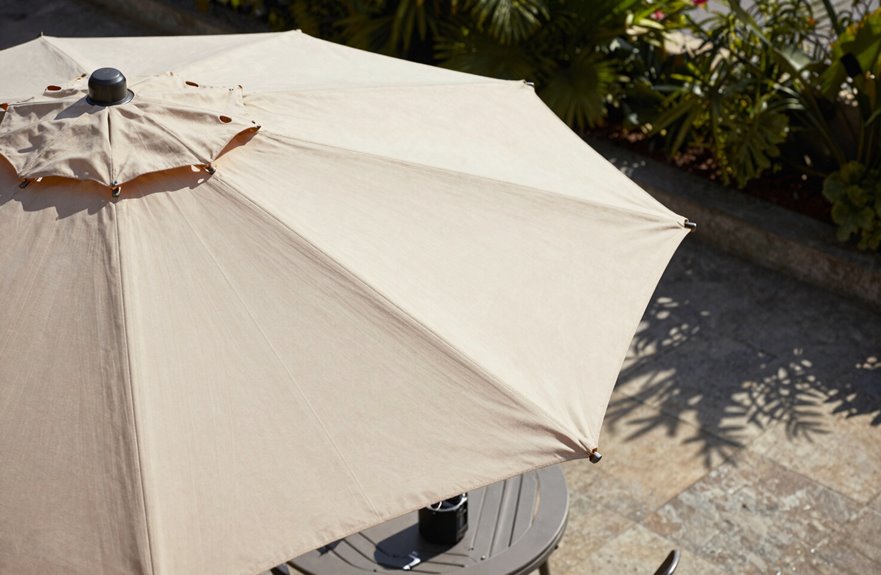
How do I know my perfect canopy will actually fit where I need it. I start by measuring my table diameter, then I match it to the right cover size. My 48-inch table needs a 7.5–8 foot shade for proper sun protection.
Next, I check my patio fit carefully. I measure twice: once for the open canopy, once for the base height. My canopy clearance must extend two feet past my table edges, but I also need movement space around chairs. I walk the perimeter, checking for walls, planters, or railings that block the arc.
If my space is tight, I consider cantilever canopies, which reach over without crowding the center. I verify my base height aligns with my table so the pole doesn’t obstruct views. A properly fitted canopy prevents guests from feeling cramped by furniture and obstructions.
Track Sun Movement to Optimize Your Shade
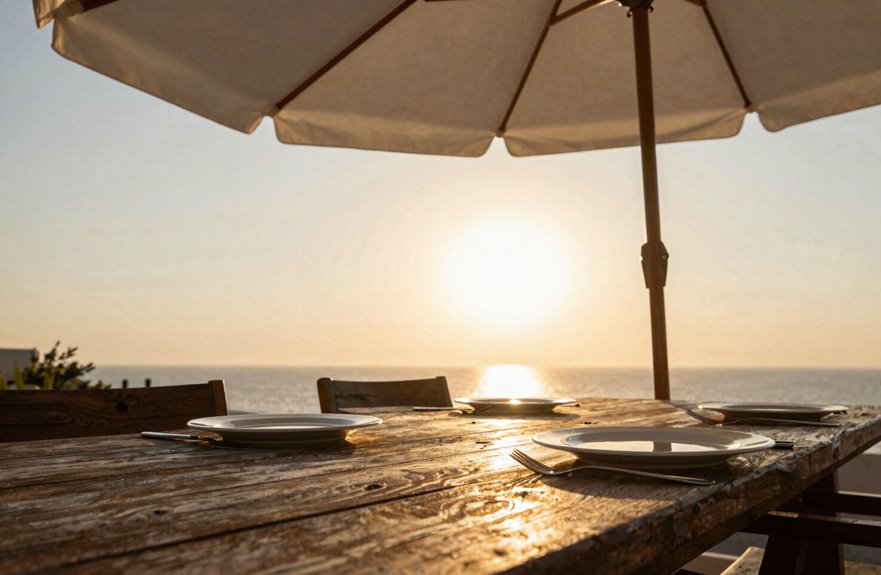
Why guess where your shadow will land when you can plan for it? Tracking sun trajectory transforms how you choose your patio umbrella size.
First, map where sunlight hits your table during peak hours. This shows you exactly how much canopy extension you need, at least two feet beyond the table edge, to maintain edge-to-edge shading as angles shift.
Second, prioritize tilt capabilities. They let you adjust shade coverage throughout the day without moving furniture.
Third, consider a cantilever umbrella when your space needs flexible shade distribution. It adapts to sun movement without repositioning your table.
Planning with sun patterns ensures your outdoor space stays welcoming. Your guests will remain comfortable from lunch through sunset when shade coverage is properly positioned.
Match Your Umbrella Pole to Your Table Height
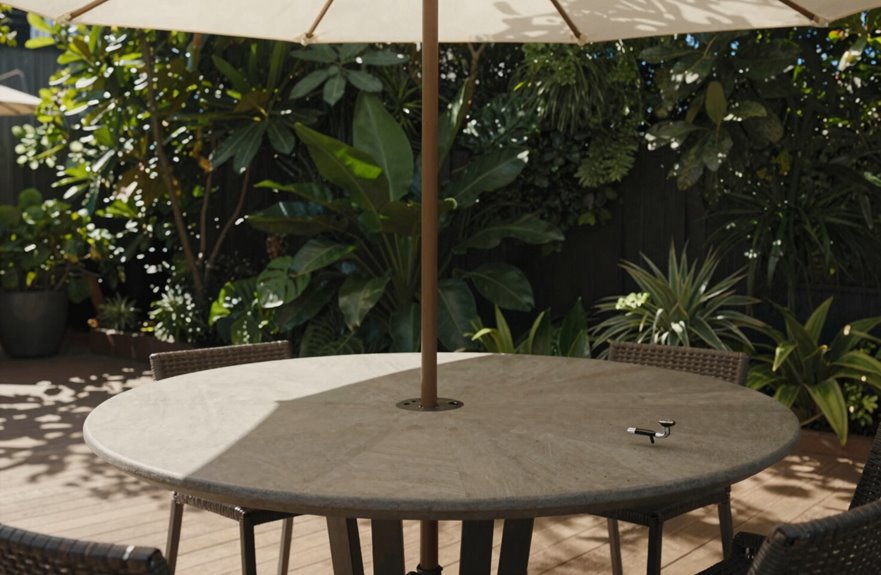
For most dining tables, you’ll want about seven feet of clearance from ground to canopy so people can stand and sit without bumping their heads. If you’ve got a taller bar set, you’ll need a pole extender or a taller base to keep that canopy high enough, or switch to a cantilever umbrella to skip the center pole problem entirely.
Standard Table Heights
Getting your umbrella height right starts with knowing your table’s measurements. Standard table heights for dining tables typically run about 30 inches, and this affects your umbrella size selection.
Here’s how to match them up:
- Check your dining table height first. Most standard sets sit at 30 inches.
- Pick market umbrellas between 6 to 9 feet. Use 6–7.5 feet for two-person setups and 9 feet when hosting four to six people.
- Aim for canopy clearance of about 7 feet from the ground. This prevents the need to duck while seated.
- Match your pole height to your table. Your shade coverage stays even and proportional to your seating area.
Getting these basics right ensures your outdoor space functions well for everyone.
Bar Height Solutions
Bar-height tables sit taller than standard dining sets, so your shade setup needs to change too. I’ve learned this the hard way.
First, check your table height. For standard bar-height tables at 40–42 inches, you’ll want a 9–11 foot shade size with a high-capacity base. This keeps the canopy above your guests without crowding their space.
Second, if your bar-height table reaches 42–48 inches, consider a cantilever shade with extended reach. It clears the center entirely and spreads shade evenly.
Third, confirm pole compatibility with your base or table hole. Taller setups catch more wind, so wind stability is critical. Use a detachable post if your table offers little anchoring.
A properly configured shade transforms your bar area into the preferred gathering spot.
Choose a Base Heavy Enough for Your Umbrella Size
When you’re picking out an umbrella, it’s easy to focus on the canopy and forget what holds it down. A wobbly base compromises stability and wind resistance.
- Match your base weight to your umbrella size. Use 20–30 lb for small umbrellas under 7.5 ft, 30–40 lb for 7.5–9 ft, 50 lb or more for 9–11 ft, and at least 70 lb for anything larger.
- Cantilever umbrellas need extra heft. Their off-center weight requires 70–90 lb for 8 ft, 200–220 lb for 8–9 ft, and 280 lb plus for bigger spans.
- Pick your style. A freestanding base with wheels moves easily, while a fillable base lets you add weight as needed. Heavier bases deliver better wind resistance and stability, especially when you’re using a table hole that can’t handle gusts alone.
Skip These 5 Common Patio Umbrella Sizing Mistakes
I’ve spent enough time on bases, so let’s look at what actually goes wrong when people pick the wrong canopy size.
- Stop at the table edge. You’ll regret it when shading coverage shrinks midday. Extend 2 feet past all sides for adequate coverage.
- Skimp on base weight. A 9–11 ft canopy needs 50–75 lb minimum. Lighter stands tip over regularly.
- Ignore table shape. Round canopies hang awkwardly over rectangular tables. Match them, or someone sits in sun.
- Forget sun trajectory. Morning shade moves by afternoon. A tilt canopy tracks the light, keeping you covered longer.
Cantilever stability demands even more: 70–330 lb bases for offset designs. Size smart, and your patio functions reliably throughout the day.