I use potting mix instead of garden soil, since dirt compacts in pots. First, I blend one cup of compost per gallon to feed roots. Second, I keep pH between 5.5 and 6.8 so plants absorb iron; if it climbs, I add a teaspoon of sulfur. Third, I mix in one part perlite to three parts mix if water pools. Following these steps builds a strong base for healthy strawberry growth.
Best Soil for Strawberries in Pots: 3 Store-Bought Options
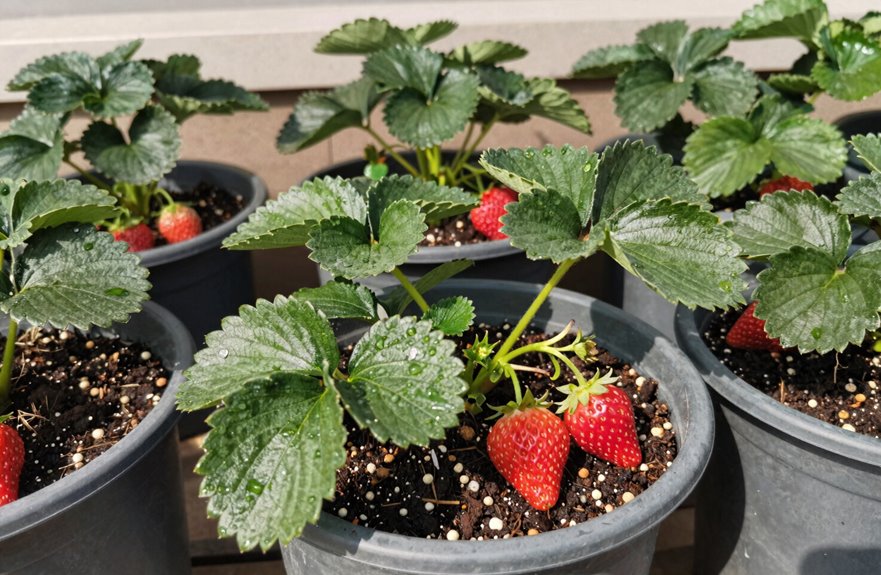
Why do strawberries in pots need special soil instead of regular garden dirt? Container gardening demands a potting mix built for the job. Garden dirt compacts, chokes roots, and invites trouble.
- Pro Mix Organic is a reliable choice. It’s formulated for pots, gives strawberries room to spread, and carries organic matter that feeds roots without fuss.
- Miracle-Gro divides gardeners. Some growers amend it successfully; others warn it’ll disrupt soil life. If you choose it, blend in compost for balance.
- Any quality container potting mix works when you add compost yourself. Aim for 8–12 inches of depth, wide pots, and solid drainage.
Check that your mix handles moisture without drowning roots. Strawberries grown in properly prepared soil produce stronger growth and sweeter harvests.
What pH Do Strawberries Need in Container Soil?
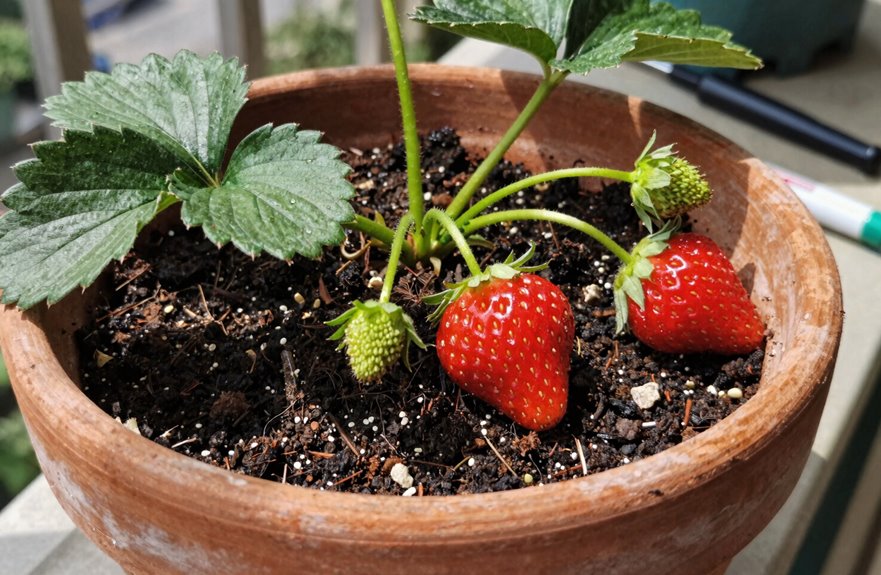
I keep my container strawberries happiest when the soil pH stays between 5.5 and 6.8, which lets the plants soak up iron and manganese without trouble. Before I fill any pot, I always test the mix first. This quick step prevents yellow leaves and skimpy harvests. Grab a simple soil test kit, check your numbers, and add a little lime only if you’re running too acidic. This approach produces sweet, healthy berries.
Ideal pH Range
How do you keep container strawberries happy? It’s all about the soil pH. First, maintain a slightly acidic environment for your berries, specifically a pH range between 5.5 and 6.8. This range helps roots absorb all necessary nutrients. Second, monitor the soil pH carefully. When it climbs above 6.8, problems develop. Calcium uptake drops, and magnesium uptake weakens. This results in softer fruit and stressed plants. Third, choose a quality container strawberry potting mix, since it naturally maintains a pH near your target range. Staying slightly acidic keeps iron available and prevents the pale, yellow leaves that commonly occur. Maintain that 5.5 to 6.8 range, and your potted berries will thrive.
Testing Soil Acidity
Before I plant my strawberries, I always test the soil pH first. This step prevents problems later. Strawberries thrive when soil pH sits between 5.5 and 6.8, so getting this right matters for container gardening success.
Here’s how I handle soil acidity testing and pH adjustment:
- I grab an inexpensive pH test kit or meter from my local garden center. I mix a small sample of my strawberry soil with distilled water, then dip in the tester.
- If my reading falls below 5.5, I add garden lime, about one tablespoon per gallon of potting mix raises pH gradually. If it’s above 6.8, I work in elemental sulfur instead, roughly one teaspoon per gallon.
- I retest after one week, then plant once I’ve hit that sweet spot.
Container gardening requires regular monitoring since watering leaches nutrients and shifts acidity. Check monthly during growing season.
Pro Mix Organic or Miracle-Gro: Which Works for Strawberries?
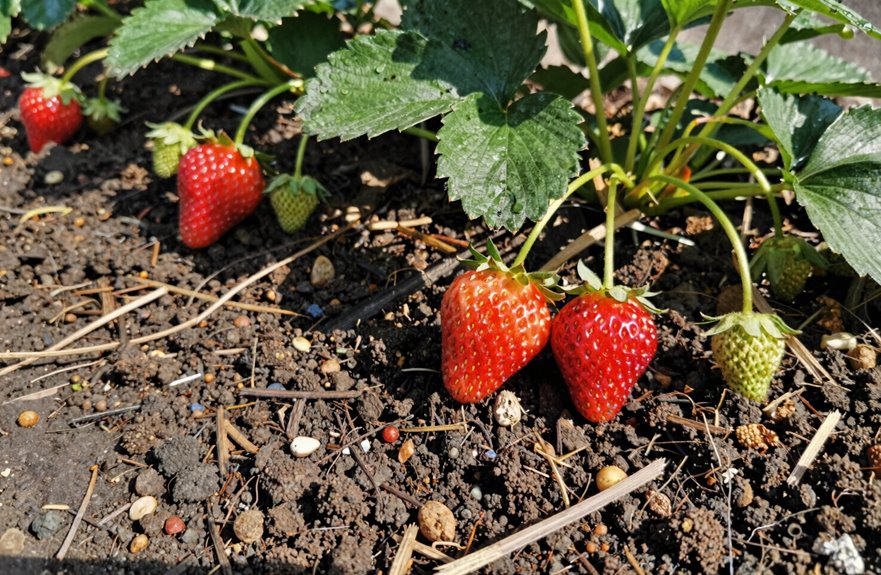
When you’re picking soil for your strawberry containers, the choice between Pro Mix Organic and Miracle-Gro requires careful consideration of your growing conditions and amendment strategy.
- Pro Mix Organic earns solid praise from growers like Robert Brunnhofer, who recommends this specific container-growing mix with proper pot sizing.
- Miracle-Gro splits opinions sharply. Sharon Lawrence saw real success using it with soil amendments for her container strawberry plants. Yet Subrina Farmer warns it harms worms and disrupts soil ecosystems.
- Your soil formulation decides everything. Container growing demands container mix, not general potting soil.
- Soil amendments bridge gaps. Miracle-Gro works amended; Pro Mix Organic works straight.
Test both options, track results, and assess which performs better in your specific growing setup.
How to Fix Cheap Potting Mix for Strawberry Plants
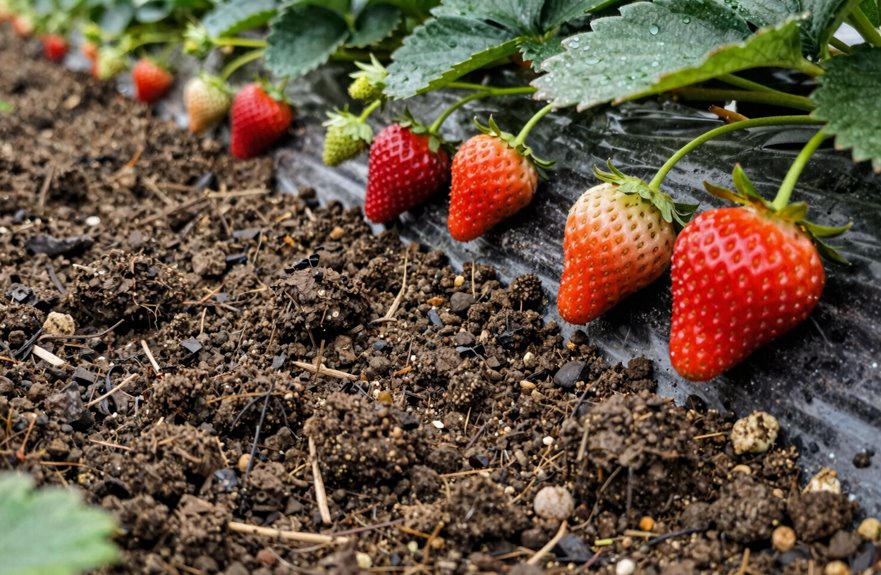
Why spend extra on premium mix when you can fix the cheap stuff yourself. I’ve tackled this problem, and together we’ll turn bargain potting mix into a growing medium that performs well for strawberries.
- Check the drainage. Water your potting mix deeply. If water pools, add one part perlite or vermiculite for every three parts mix.
- Boost nutrients. Blend in compost, about one cup per gallon of potting mix. This feeds roots without drowning them.
- Balance the pH. Strawberries crave pH 5.5-6.8. Test your mix, then adjust with sulfur if needed.
- Test again. Water thoroughly. Good drainage means moisture escapes in seconds, not minutes.
With perlite, vermiculite, compost, and attention to pH 5.5-6.8, your cheap potting mix will support healthy strawberry growth.
Pot Size and Drainage: Getting Your Container Right
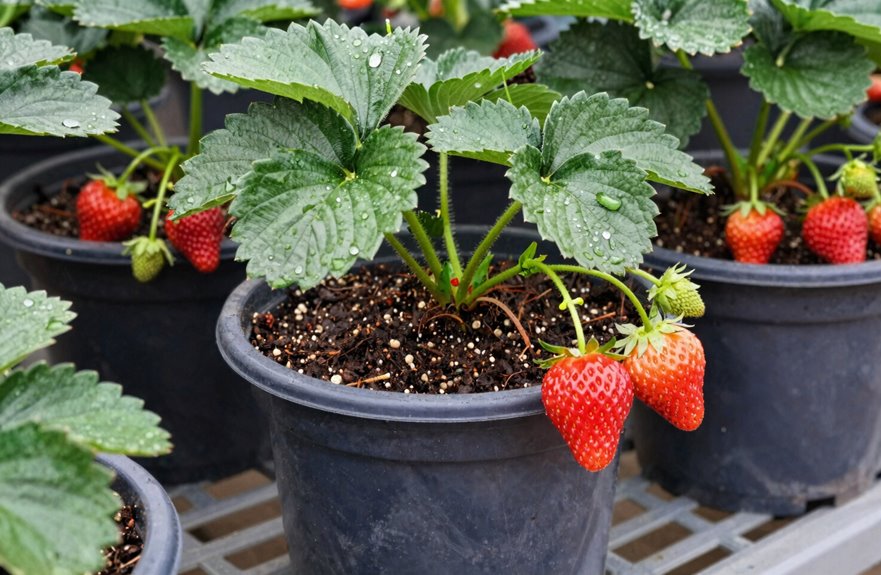
The right container makes all the difference between struggling plants and a harvest worth bragging about. First, check container size. Pick pots with eight to twelve inches of soil depth for best root health. Next, ensure drainage by drilling holes so potting mix won’t stay soggy and drown roots. Then, fill the pot with quality potting mix instead of garden soil. Wide pots improve moisture stability. Finally, use proper plant spacing, setting each strawberry eight to twelve inches apart with the crown right at soil level to avoid rot.
| Feature | My Rule |
|---|---|
| Container size | 8–12 inches deep, wide base |
| Drainage and soil depth | Drill holes; use 8–12 inches |
| Plant spacing | 8–12 inches apart |
Strawberry Soil Mistakes That Reduce Your Harvest
How often do we blame the plant when the real culprit is hiding right beneath our feet? I’ve watched too many of us sabotage our harvest with simple strawberry soil errors. First, we grab heavy garden dirt for pots, but container gardening soil is essential because it gives us the drainage roots need. Second, we ignore soil pH. Keep it between 5.5 and 6.8, or plants can’t feed properly. Third, we misjudge crown depth and bury it too deep. Set it right at the surface, or rot sets in fast. Fourth, we skip organic amendments. Work in well-rotted compost to build structure and hold moisture. Fix these four issues, and you’ll harvest the berries you planned for.
DIY Strawberry Potting Mix: A Simple 4-Ingredient Recipe
A great potting mix makes all the difference when growing strawberries in containers, so I’ve stopped buying bagged blends and started mixing my own. My strawberry potting mix needs just four ingredients. First, I use three parts peat-free potting mix as the base. Second, I add one part compost and a small handful of worm castings for gentle, slow-release nutrients. Third, I mix in one part perlite for aeration. Fourth, I add one part coarse sand for drainage. I never use garden soil for container-grown strawberries because it compacts, impairs drainage, and causes root rot. I check the soil pH too, aiming for 5.5 to 6.5. This blend stays light, drains well, holds moisture without waterlogging, and produces healthier berry plants.
When to Add Compost and Fertilizer to Strawberry Soil
Let me show you my two-stage plan. First, I mix roughly two bucketfuls of well-rotted organic matter into every square meter of bed a few weeks before I set out any roots, so it’s fertile and ready. Second, I follow a seasonal feeding plan, using a balanced fertilizer at planting and switching to a potassium-rich feed every two to three weeks once flowering begins, which keeps fruit development strong and doesn’t trigger excess leafy growth.
Pre-Planting Compost Schedule
When should you prep your strawberry bed? I recommend starting several weeks before you plant.
First, work two bucketfuls of well-rotted compost into every square metre of soil. This early addition improves drainage and moisture retention where your strawberry roots will grow. Next, conduct a simple soil test to check the pH. You’ll want a range between 5.5 and 6.8; add lime if your ground’s too acidic. If you’re growing in containers, blend a high-quality potting mix with a small amount of compost to boost nutrients. Adding organic matter now allows it to break down and integrate more fully into the soil structure. This preparation creates the fertile foundation your plants need to grow productively.
Seasonal Fertilizer Timing
How do you keep your strawberries fed right through the year? Smart fertilizer timing makes all the difference in strawberry beds.
First, test your soil pH. It needs to sit between 5.5 and 6.8, or plants struggle to absorb nutrients. If it’s off, adjust with organic matter weeks before planting.
Second, work in two bucketfuls of compost per square meter early. This boosts drainage and gives roots room to spread.
Third, hold back on heavy feeding until flowering starts, then increase gently as fruits form. For poor harvests, switch to high-potassium feed.
For containers, skip garden soil entirely. It compacts and ruins drainage. Instead, use quality potting mix with a little compost mixed in.