I’ve found that strawberry plants flower in spring once their buds, which formed the previous late summer or early fall, wake from winter dormancy.
June-bearing varieties send up one concentrated bloom in late spring for a heavy 2–3 week harvest, while everbearing types produce multiple waves from early summer through frost.
Your region matters hugely: Florida growers see February blossoms, but northern gardeners wait until June.
The key trigger is soil warming above 50°F, plus those buds need 12+ hours of daylight back in August and September to form properly.
To maximize your harvest, protect those flowers from surprise frosts and extend your growing season by implementing proper frost management techniques.
When Do Strawberry Plants Flower?

When exactly do those strawberry plants burst into bloom? Bud formation begins in late summer or early fall, right after harvest and renovation. Those tiny flower buds develop through winter, waiting for warmer temperatures.
Here’s how flowering timing works in practice:
- Watch your calendar. Most varieties bloom in spring, but Florida plants fruit by February while northern gardens wait until June.
- Know your type. June-bearing varieties produce one concentrated crop in late spring. Others stagger their production.
- Water matters. Keeping soil moist during bud formation directly boosts future blooms and fruit development.
- Be patient with new plants. Pinch off first-year flowers so roots establish strong. You’ll harvest more in year two.
Your climate and variety choice determine flowering success.
How Day Length Triggers Blooms
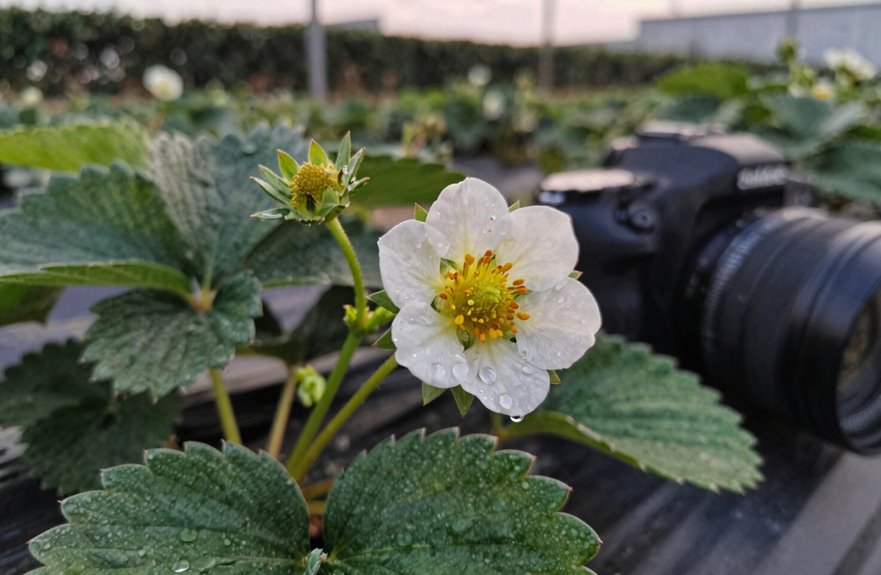
You already know strawberry buds start forming after harvest, but there’s another piece I watch just as carefully: how much daylight my plants get each day.
Day length controls when my strawberries switch gears toward flowering. I make sure they catch 12+ hours of light exposure during bud formation, when those tiny future berries get their start. Longer days push my plants toward blooming, while shorter ones hold them back. It’s like a calendar they can’t ignore.
My strawberries need 12+ hours of daylight to switch gears toward flowering; shorter days only hold them back.
What I’ve learned to watch for:
- I plant where trees won’t steal afternoon sun
- I track sunset times in late summer when buds begin forming
- I choose varieties that match my region’s natural day length
- I note that frost protection matters once flowering starts
Get the light right, and you’re halfway to spring harvest.
Temperatures That Kickstart Strawberry Flowers
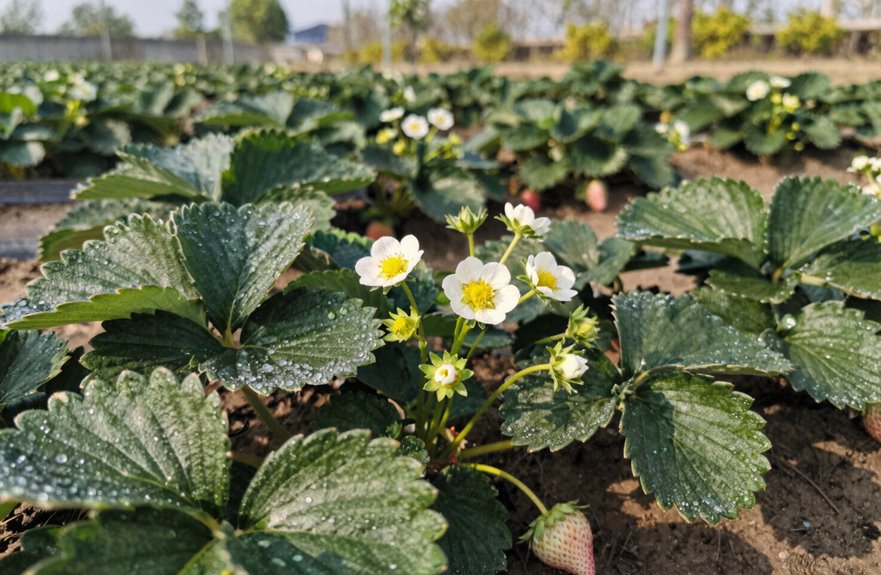
How do I know my strawberry plants are finally ready to bloom after winter dormancy? I watch for three signals that indicate my strawberry flower buds are waking.
First, I check temperatures. When soil warms above 50°F, my plants shift from dormancy into growth. Those buds formed last fall start pushing open.
Second, I protect against chill and freezing. Even light frost at 32°F kills open blossoms, so I keep row covers handy. I water deeply before cold snaps because moist soil holds warmth better than dry dirt.
Third, I verify light exposure. My strawberries need 12 or more hours of sunlight to finish bud development. Without enough light, the buds stall no matter how warm it gets.
Watch these conditions closely, and you will spot blooms soon.
June-Bearing vs. Everbearing Flowering Schedules
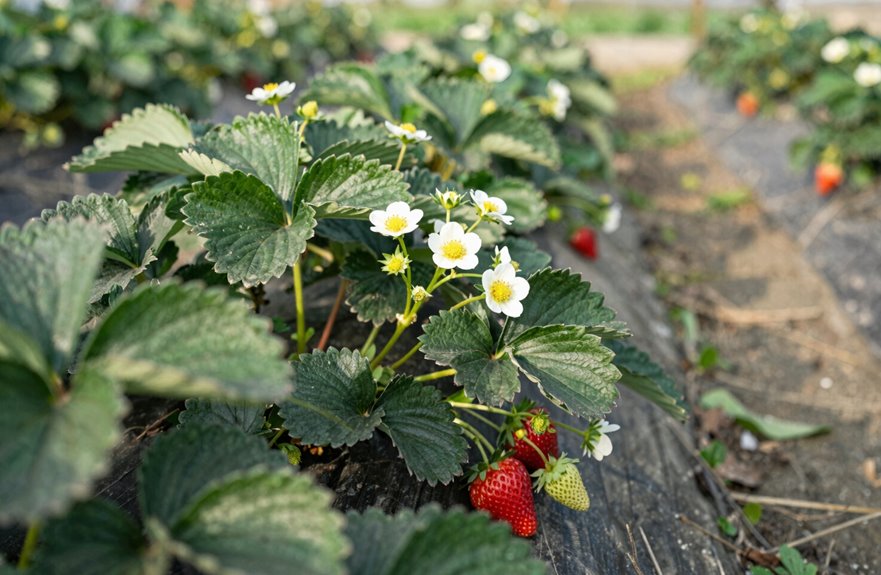
I want to break down exactly how June-bearing and everbearing strawberries handle their flowering schedules, since choosing between them changes your entire harvest calendar. June-bearing varieties push out one concentrated burst of blooms in late spring, giving you a heavy two-to-three-week crop, while everbearing types keep sending up flowers in smaller waves from early summer straight through to frost. Understanding this difference helps you plan whether you want a single freezer-filling harvest or fresh berries scattered across four or five months.
June-Bearing Bloom Timing
When exactly do June-bearing strawberries bloom, and what makes their schedule different from everbearing varieties?
June-bearing plants produce one concentrated flowering period, not scattered harvests.
Here’s what happens in my garden:
- I plant in early spring, and the planting season matters for success
- I pinch off year-one blossoms so roots grow strong for next year’s crop
- My June-bearing plants flower heavily in late May, then fruit for 2–3 weeks
- After July, I let late blossoms develop if my region’s climate allows
The flowering period depends on where you live. Warmer zones push earlier blooms, cooler ones delay them. That first season of sacrifice builds the discipline required to achieve a spectacular, single harvest.
Everbearing Flower Cycles
Although June-bearing strawberries give one big harvest to look forward to, everbearing varieties work on a completely different schedule that keeps gardens productive for months. Instead of one concentrated crop, everbearing plants deliver multiple fruiting flushes from early summer straight through early autumn, sometimes until the first frost hits.
Here’s how this plays out in practice: 1) Everbearing plants flower and fruit in their first season, unlike June-bearers that need pinching. 2) After the first flush finishes, these plants often push a second round of flowers. 3) Each round depends on bud formation happening after harvest, with new buds developing for the next wave.
Everbearing flower cycles require consistent care. The multiple harvests across several months provide continuous production throughout the growing season.
Seasonal Harvest Differences
Why do some strawberry beds overflow with berries all at once, while others keep producing a handful at a time for months? It comes down to your harvest schedule and the variety you’ve chosen.
- June-bearing strawberries burst into flowering all at once, giving you one big crop over 2-3 weeks in late spring
- Everbearing types keep flowering from early summer through autumn, so you pick smaller amounts for months
- In warm places like Florida, June-bearing plants start flowering earlier; cooler zones delay everything
- After fruiting, plants rest or make hidden buds, which shapes next spring’s flowering timing
Remove June-bearing flowers in year one to build roots. Everbearing lets you harvest sooner. Pick what fits your rhythm.
When Strawberries Flower in Your Region
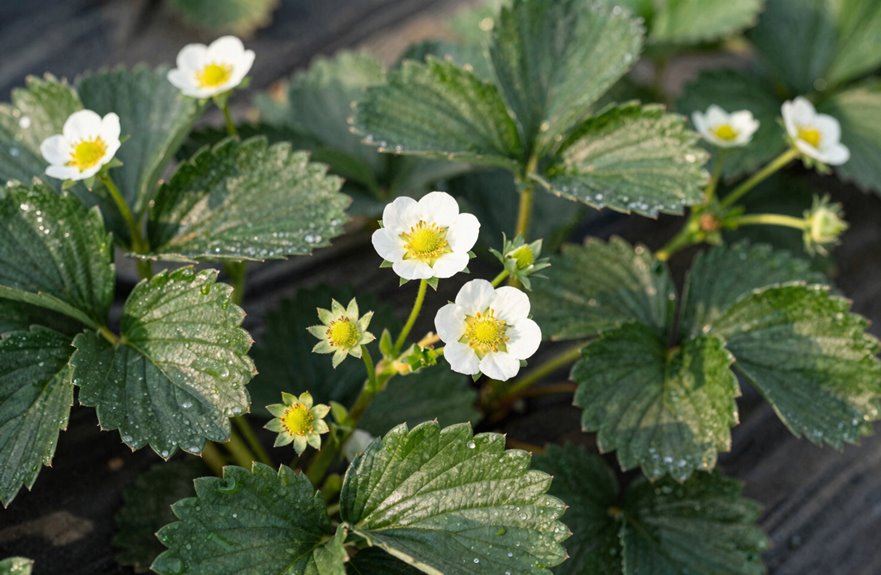
Because strawberry flowering times shift dramatically across climates, you can determine exactly what to expect where you live. Climate regional variation means your strawberry flowers could emerge in February down south or wait until May up north. Flowering timing breaks down across zones as follows:
| Region | Typical Bloom Time | Key Factor |
|---|---|---|
| Florida & Gulf Coast | February–March | Early warmth triggers bud formation |
| Mid-Atlantic & Midwest | April–May | Winter rest delays waking |
| Pacific Northwest | May–June | Cool springs slow progress |
| Northern Plains & Canada | June–early July | Frost risk extends dormancy |
Bud formation happens in late summer after harvest, so last year’s care determines this year’s bloom. Day-neutral varieties stretch the season, while June-bearers concentrate blooms. Watch your local frost dates; they provide more reliable guidance than any calendar.
Do Strawberry Plants Flower in the First Year?
How soon will your strawberry plants bloom after you set them in the ground? Understanding what to expect helps you plan for your first growing season.
First year flowering depends on your variety:
First year flowering depends on your variety: June-bearing types wait until year two, while everbearing varieties often bloom within months of planting.
- June-bearing types focus on roots first year, so you’ll wait until year two for blooms
- Everbearing/day-neutral varieties often flower within months of planting
- Warm days and plenty of light accelerate bud development
- Fall-planted runners develop buds before winter, then flower in spring
Everbearing strawberries planted in March typically bloom by June. If you chose June-bearing varieties, the first year establishes root strength for next year’s harvest.
Reasons Strawberry Plants Fail to Flower
If you’ve done everything right but still aren’t seeing blooms, there are clear reasons why strawberry plants hold back their flowers.
First, strawberry plants fail to flower when bud formation gets disrupted. Flower buds form after harvest toward late summer or early fall, and they need about 1-1.5 inches of water weekly during this window. Too much or too little throws everything off.
Second, frost damage kills flowers outright. Check forecasts and cover plants when temperatures drop below 32°F. Damaged blooms need snipping so energy goes elsewhere.
Third, nutrient and water balance matters significantly. Over-fertilizing with nitrogen-rich feeds, such as 3 tablespoons per plant, forces leafy growth over flowers. Similarly, soggy roots from poor drainage prevent blooming.
Finally, overcrowding and pests stress plants. Space plants 12-18 inches apart and watch for ant damage.
How to Encourage More Strawberry Flowers
Now that we’ve covered what stops strawberry plants from blooming, let’s turn our attention to practical steps you and I can take to boost flower production.
- I make sure my watering stays consistent during bud formation in late summer, because dry spells lasting three or more days can slash next spring’s flowers by half.
- I do some pruning by pinching off first-year blooms on June-bearing varieties. This builds stronger roots and doubles my harvest in year two.
- I plant cold-stored runners by early June so they hit that 60-day flowering window, giving me more chances for fruit.
- I keep frost protection handy for those delicate early blossoms, since one hard freeze below 28°F can wipe out an entire season’s promise.
Protecting Strawberry Flowers From Late Frosts
Why do I check the weather every evening once my strawberries start blooming? Because late frosts destroy flower buds that would otherwise produce fruit.
My frost protection routine:
- I watch forecasts closely once strawberry flowers appear. Late frosts can strike even in mid-spring.
- When temperatures drop below 35°F, I cover my plants with row cover fabric or old bedsheets before sunset. I use hoops or stakes to keep material from touching blossoms.
- I water thoroughly during afternoon warmth. Moist soil holds heat better overnight.
- I remove covers promptly each morning so bees can pollinate.
This matters because bud formation begins in late summer after renovation. Damaged flowers now mean fewer fruits later. Check your flowers after frost. Brown centers won’t produce fruit, so pinch those off and redirect energy to healthy buds.
How to Extend Your Strawberry Flowering Season
Once I’ve got my frost protection routine locked in, I start thinking about stretching that flowering window as long as I can. I focus on four habits that keep strawberry flowers producing longer.
- I water deeply during late summer bud formation, giving plants one inch weekly so they build extra buds for spring.
- I plant everbearing types beside my June bearers so my fruiting season runs from late spring through the first frost.
- I keep lightweight row covers ready to drape over beds on chilly nights, trapping warmth to protect early blossoms and steady fruiting.
- I invite bees into my patch by adding wildflower borders, because good pollination changes every open bloom into a berry.
This gives us a longer harvest and fuller garden.
Signs of Healthy Strawberry Flowers
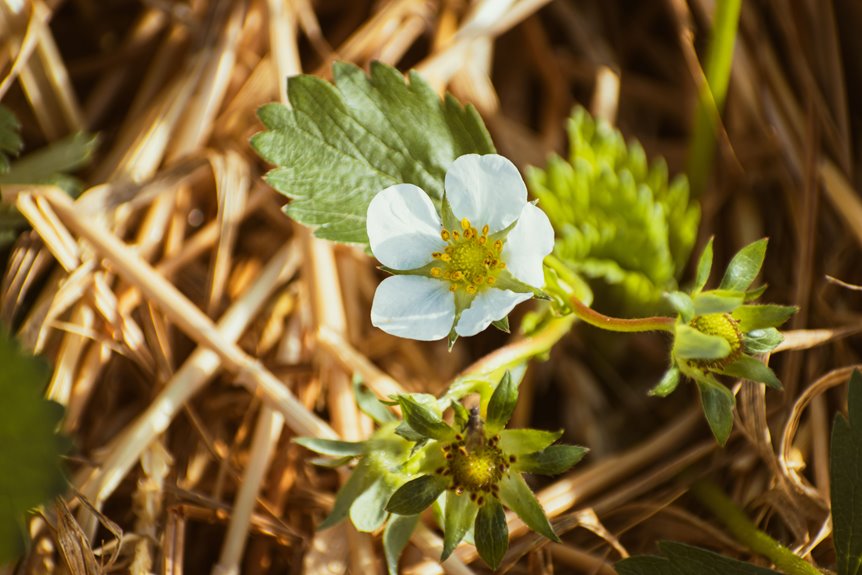
Look for three clear signs that your strawberry flowers are healthy and ready to produce. First, check for bright white petals, most true flowers have five or six, and firm green buds that formed in late summer right after renovation. Then, watch for bees visiting the yellow centers, since that indicates pollination has occurred and you’ll be picking sweet berries in 4 to 6 weeks.
Flower Color Indicators
How can I tell if my strawberry flowers are healthy? Flower color tells me everything I need to know about what’s happening in my patch.
Healthy blooms show these signs:
- Pure white petals signal strong, true strawberry flowers ready for pollination
- Pink or red hues indicate hybrid varieties, which is fine but something to keep in mind
- Brown, mushy centers warn of frost damage that needs immediate removal
- Six petals (sometimes five to eight) arranged evenly around a bright yellow center
I check my plants carefully after cold snaps. Damaged flowers won’t produce fruit, so I snip them off to redirect energy. Bloom timing matters too; buds form in late summer, then burst open in spring. Knowing these color indicators helps me protect my future harvest and contribute to successful strawberry cultivation.
Bud Formation Timing
When exactly do next year’s strawberry flowers begin? Bud formation starts after harvest and renovation, toward late summer or early fall, once temperatures cool. Your plant builds next season’s display first. Second, provide steady moisture during this window, because adequate water increases the number of healthy flower buds you’ll see in spring. Third, those flower buds rest through winter, waiting for spring warmth. The cycle follows this sequence:
| Stage | Season | Task |
|---|---|---|
| Post-harvest | Late summer | Water deeply |
| Bud formation | Early fall | Keep moisture even |
| Dormancy | Winter | Use frost protection |
| Bloom | Spring | Watch flowers open |
Following these steps with care and patience ensures optimal flower bud development and consistent strawberry harvests each season.
Pollination Success Signs
After my plants finish building buds in late summer and those buds rest through winter, I finally get to see which flowers will turn into berries. I check each bloom to spot the signs that pollination worked.
- Bright white petals that feel firm and stay fully open, which indicates the flower is ready for fruit set
- Busy bees visiting the center, since their work carries pollen and triggers strong fruit set
- Clean yellow centers without any brown frost damage, because injured flowers waste energy and won’t produce berries
- A soft brush moving pollen by hand when bees are scarce, which ensures successful fruit set
Snip off any blossoms with brown centers so your plant directs resources into healthy growth.
Common Mistakes That Stop Strawberry Blooms
Despite your best intentions, it’s easy to make mistakes that keep your strawberry plants from blooming. These common errors can be corrected.
First, check your light exposure. Strawberries need twelve hours of daylight to form buds; heavy shade stops the bloom before it starts. Second, ease up on fertilization. Too much nitrogen grows leaves but kills flowers. Third, protect early flowers from frost. A freeze wipes out buds, so cover plants when temperatures drop. Fourth, avoid over-watering. Soggy roots stress plants and reduce blooms. Finally, remember June-bearers and everbearers often skip year-one flowering if you pinch first buds to build roots. Planting in late autumn delays blooms until spring.
Follow these steps and you’ll achieve a full harvest.