I’ve tested enough chairs to know these five differences matter most.
First, resin chairs weigh about 15 pounds and crack at corners after UV exposure, while wood gives you 40-50 pounds of stability but needs staining every 2-3 years.
Second, HDPE lumber hits 35-45 pounds with 20-year color warranties resin can’t match.
Third, wood demands 8-12 hours yearly maintenance versus resin’s 2-4 hours.
Fourth, resin lasts 3-7 years; quality wood or HDPE goes 10-20.
Fifth, resin slides in wind; heavier materials stay put.
Consider durability, maintenance requirements, and weather resistance when making your choice.
HDPE Lumber vs. Molded Resin vs. Wood: What You’re Actually Buying
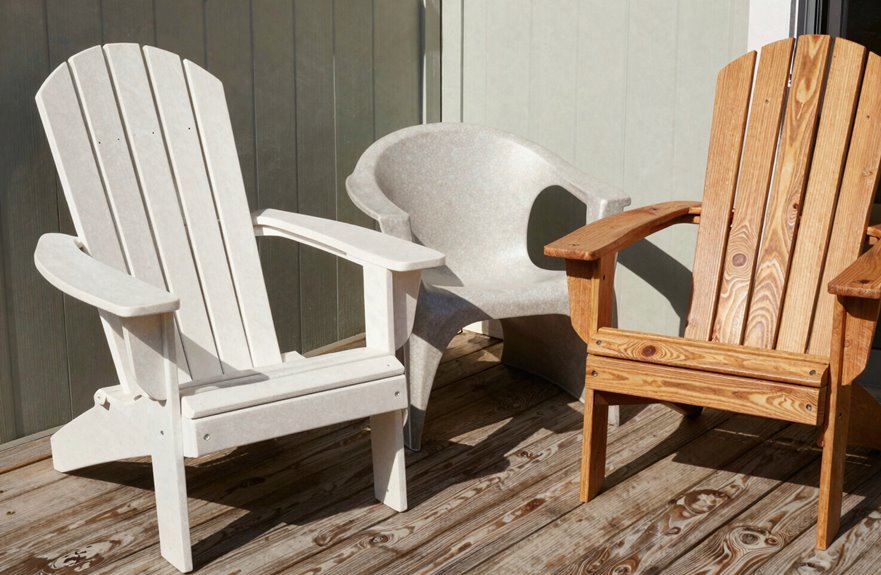
Most shoppers don’t realize they’re choosing between three completely different products when they pick up an Adirondack chair. This breakdown shows exactly what you’re buying.
Three “Adirondack chairs” line the same shelf, but only one will survive a decade of sun.
- Molded resin chairs are hollow, injection-molded shells with internal ribs. They’re feather-light, maybe 15 pounds, and can be carried with one hand. These crack at the corners after three summers of UV exposure, even with basic UV inhibitors mixed in.
- Poly lumber and HDPE lumber are the same thing: dense, extruded boards that get CNC-cut and bolted together with stainless hardware. A typical set weighs 45 pounds. The edge finishes are eased and smooth, not sharp. Premium UV inhibitors here mean 20-year color warranties, not five.
- Real wood demands its own conversation entirely.
Match Your Adirondack Chair to Your Climate and Wind Exposure
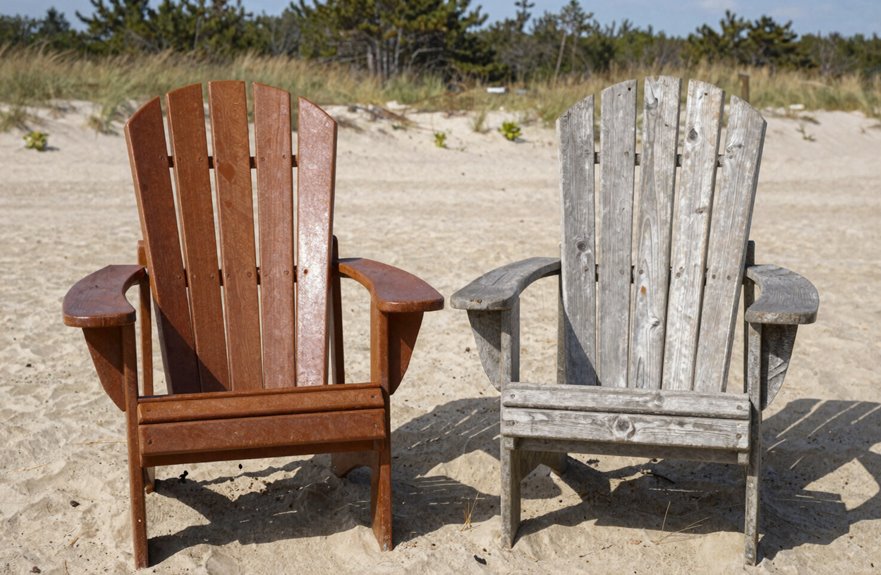
Check your wind exposure first. Lighter resin chairs slide across decks in coastal gusts. Polywood’s dense HDPE construction, about 35-40 pounds per chair, provides real wind stability.
Measure your sun hours. For UV resistance over decades, Polywood resists cracking and peeling in desert or coastal climates. Resin chairs can handle moderate sun, but extreme heat cycles wear them down faster.
Consider your winters. Both materials survive freeze-thaw cycles. Polywood’s weight keeps it grounded in open, windy yards.
Your climate durability choice determines how long your chair will remain functional and attractive. Select a chair that matches your actual environmental conditions rather than style preferences alone.
Compare Color, Texture, and Authentic Wood Grain Options
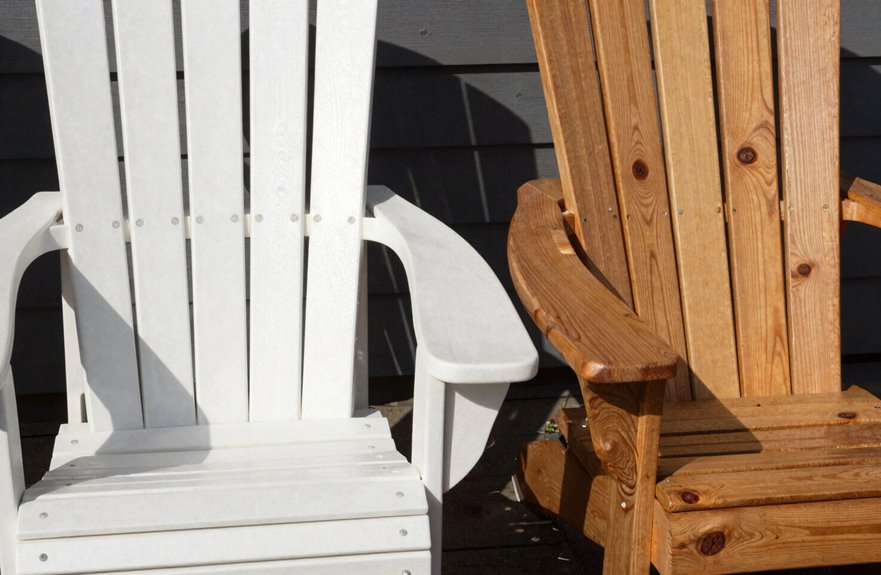
How do you want your chair to look and feel when you’re settled in with a cold drink? This consideration shapes every selection decision.
Resin chairs give you smooth, molded surfaces with solid colors that stay uniform. Polywood HDPE offers something warmer: machined edges and authentic wood grain that looks like real lumber.
Resin delivers sleek uniformity; Polywood HDPE brings the warmth of real wood grain to your outdoor space.
Let’s break down what matters:
- Color longevity — Polywood’s UV-stable finishes resist fading for decades; basic resin colors can degrade without strong UV inhibitors
- Texture — Resin feels seamless and slightly glossy; Polywood has plank-like board surfaces with real grip
- Wood-grain options — Polywood delivers wood-grain finishes in cedar, teak, and oak tones; most resin chairs stick to single-color shells
Your choice shapes your outdoor space. Select the material that matches your aesthetic preferences and performance requirements.
Calculate Yearly Maintenance for HDPE, Resin, and Wood Chairs
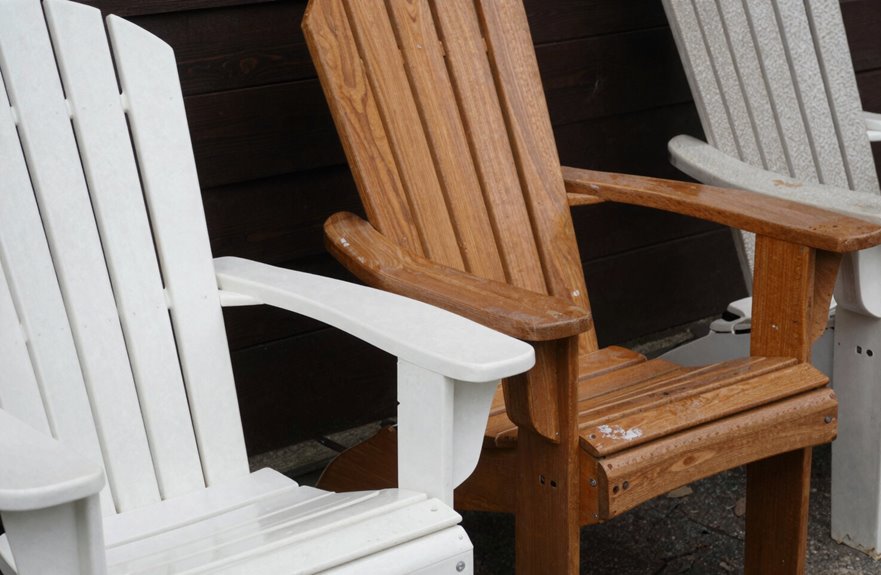
Once I’ve settled on the right look, I turn to what it’ll cost me in time and effort each year.
- HDPE chairs demand the least maintenance. I simply wash mine with soap and water twice yearly. No staining, no sealing required.
- Resin chairs need similar basic cleaning, but I watch for cracks from heat or freezing. If damage strikes, repairs add unexpected hours.
- Wood chairs consume the most upkeep. I commit to annual cleaning, plus re-staining or painting every 2-3 years to stop rot and UV damage.
My yearly tally: HDPE runs about 2 hours, resin 2-4 hours depending on condition, wood 8-12 hours including staining sessions. For busy weekends, this time commitment difference becomes significant.
10-Year Cost Reality: Sticker Price vs. Replacement Cycles
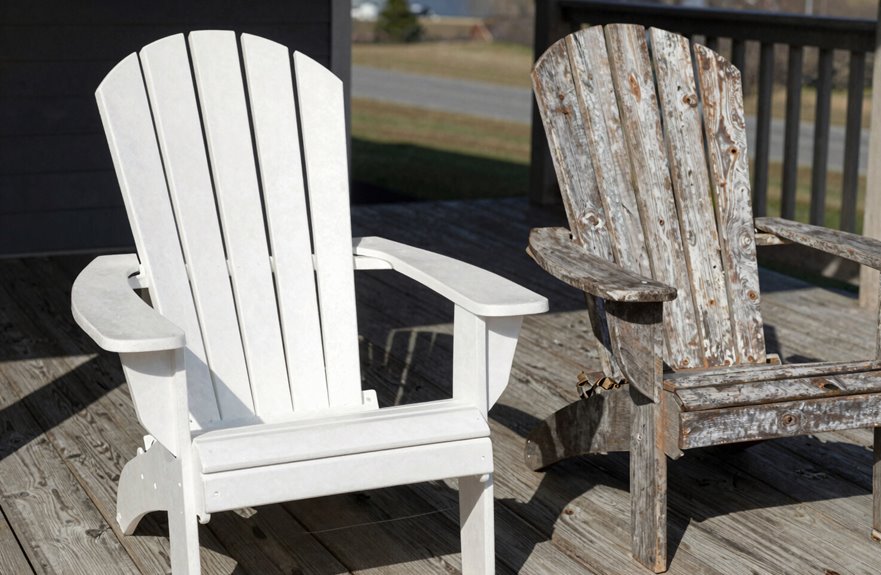
Why does that cheap resin chair end up costing more than I expected? It’s all about replacement cycles. When I compare resin vs polywood, the numbers reveal the truth: that $80 resin seat looks tempting, but I’ll likely buy 2-3 replacements in ten years. Polywood’s higher price tag actually saves me money.
What I’ve learned about long-term cost:
- Resin lasts 3-7 years; Polywood runs 10-20 years with solid outdoor furniture durability
- UV protection matters. Cheap resin fades and cracks, while premium Polywood keeps its color
- Wind stability reduces risk. Polywood’s 40-50 lb weight stays put, but light resin tips and breaks
Factor in UV protection and fewer replacements, and Polywood wins on total cost. The smarter purchasing decision involves buying once and using the furniture for decades rather than cycling through multiple replacements.