A workable terrace decoration comes down to one answerable question: do you own the structure or rent it?
Ownership opens built-in concrete seating and load-bearing roof gardens; renting forces the math toward six-cube modular benches that break down in ten minutes and freestanding planters that protect your security deposit.
I spent $340 one weekend on mortar-sealed concrete blocks, solar string lights on a galvanized cable, and sealed pallet furniture that lasted three years because the finish mattered more than the design.
1. Built-In Seating
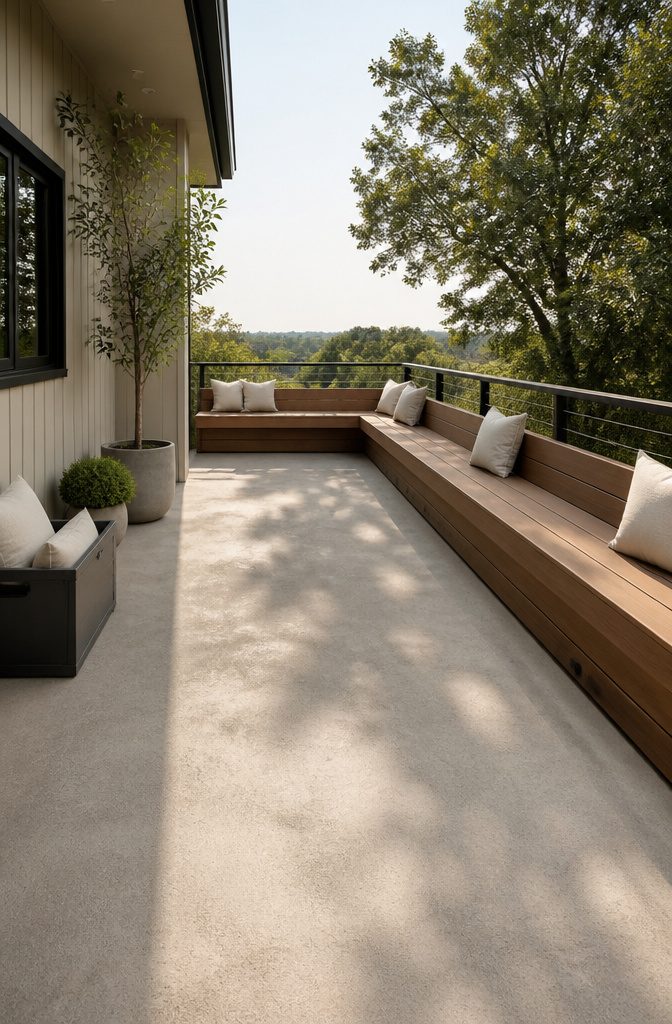
Built-in seating turns the edges of a terrace into usable square footage you did not know you had.
A bench fixed along a railing or tucked into a corner seats more people than freestanding chairs of the same footprint, and the clean line keeps a small space from feeling crowded.
Materials break into three practical camps. Concrete built-ins are permanent and best for owners; the weight alone makes them a non-starter for most renters.
Wood is lighter and can be built in modular sections, though it needs sealing every season or two. Composite boards, the kind sold for decking, resist rot without the maintenance and come in widths that make bench-depth math simple.
For renters, modular boxes screwed together from the outside are the move. Four 18-inch cubes with lids become a bench that breaks down in ten minutes when the lease ends.
Add cushions in a neutral outdoor fabric so seasonal swap-outs stay easy, and keep the palette light—cream or pale wood tones keep the area from looking visually heavy.
A storage bench beneath the seat hides cushions when rain hits, which matters more than the extra cost on a terrace with no shed.

UV FADESHIELD: Comcaver outdoor bench cushions are crafted with solution-dyed technology, which ensures vibrant color to be deeply ingrained in every fiber. Featured with UV resistant performance, these patio swing cushions can withstand 5 years of color fastness after heavy use and are more useful than other products.
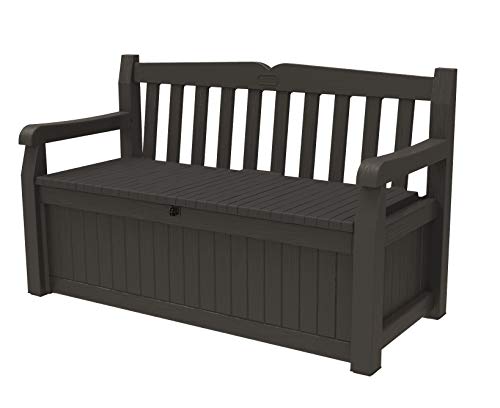
IDEAL SIZE: Exterior: 54. 6 in. L x 23. 4 in. W x 32. 8 in. H / Interior: 50. 4 in. L x 19. 7 in. W x 15 in. H
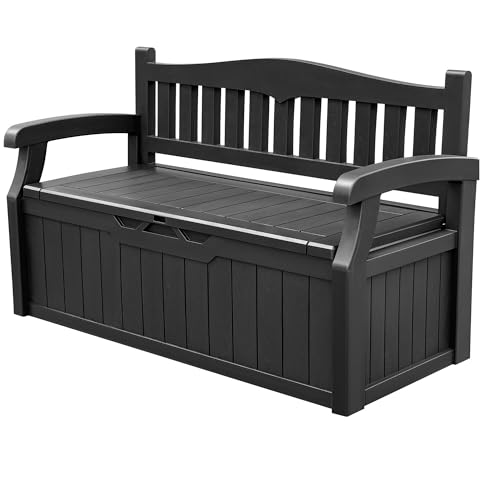
Optimal Size:Exterior: 52.8 in. L x 22.6 in. W x 32. 3 in. H / Interior: 48. 4 in. L x 22.4 in. W x 16.9 in. H, blends perfectly into a variety of patio styles, saving space without sacrificing practicality
2. Small Space Tricks
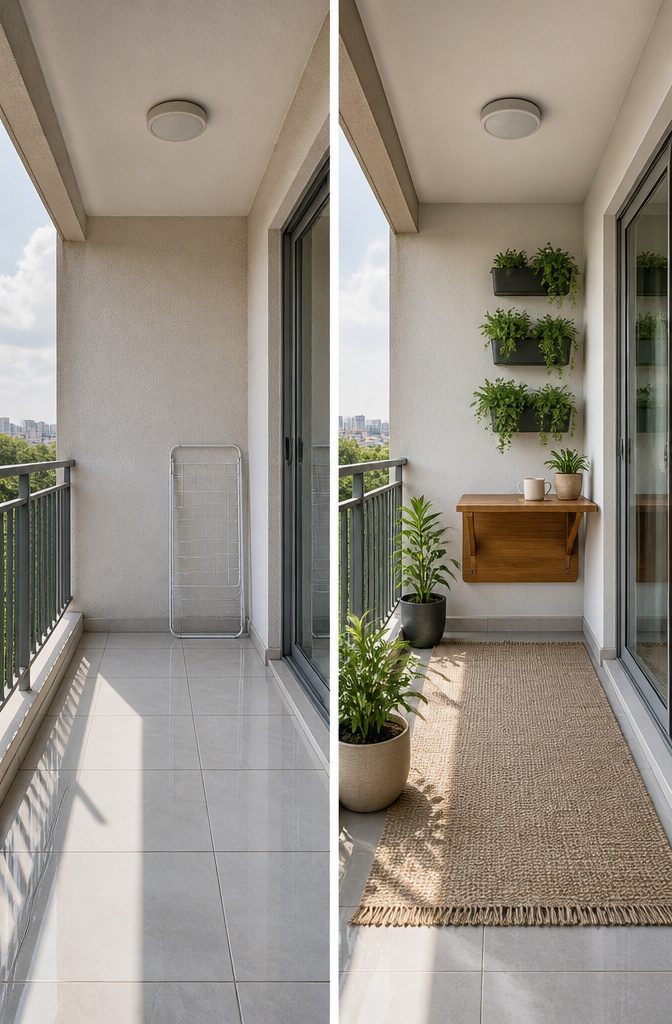
A terrace under 100 square feet teaches you fast what full-size outdoor furniture steals from you.
I learned that the hard way when a pair of regular Adirondack chairs turned my sister’s balcony into an obstacle course. She could barely open the door.
Wall-mounted planters get greenery off the floor and onto the railings. Fold-down tables let you eat outside, then reclaim the space when you’re done.
Nesting furniture stacks or tucks away the same way. Two ways to play the mirror trick: hang one flat against the wall for a single reflection, or angle it to catch actual sky.
The flat mount wins if you need to keep the wall for hooks or a narrow shelf.
Lighter colors keep the visual weight down.
Cream cushions, pale wood, restrained accessories; the eye reads more room where there isn’t any. Quarzo Silver tiles on the floor do the same work, bouncing light instead of absorbing it.
The real limit is the walking path. Keep it open, even if that means one chair instead of two, or a storage bench that doubles as seating and hides the cushions you aren’t using.

BUILD LIFE-SIZE FURNITURE: Use these modular building blocks to create usable chairs, couches, sofas, stools and more. This kit is perfect for classrooms, daycare centers, home use and more.
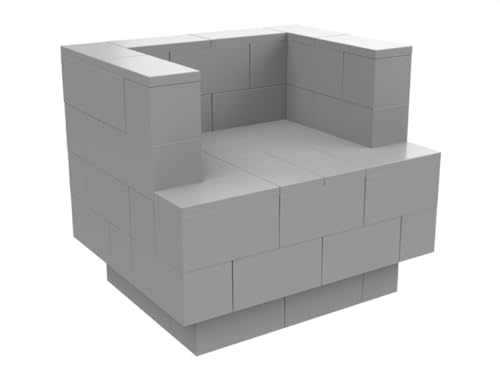
BUILD LIFE-SIZE FURNITURE: Use these modular building blocks to create usable chairs, couches, sofas, stools and more. This kit is perfect for classrooms, daycare centers, home use and more.
3. Rustic Materials
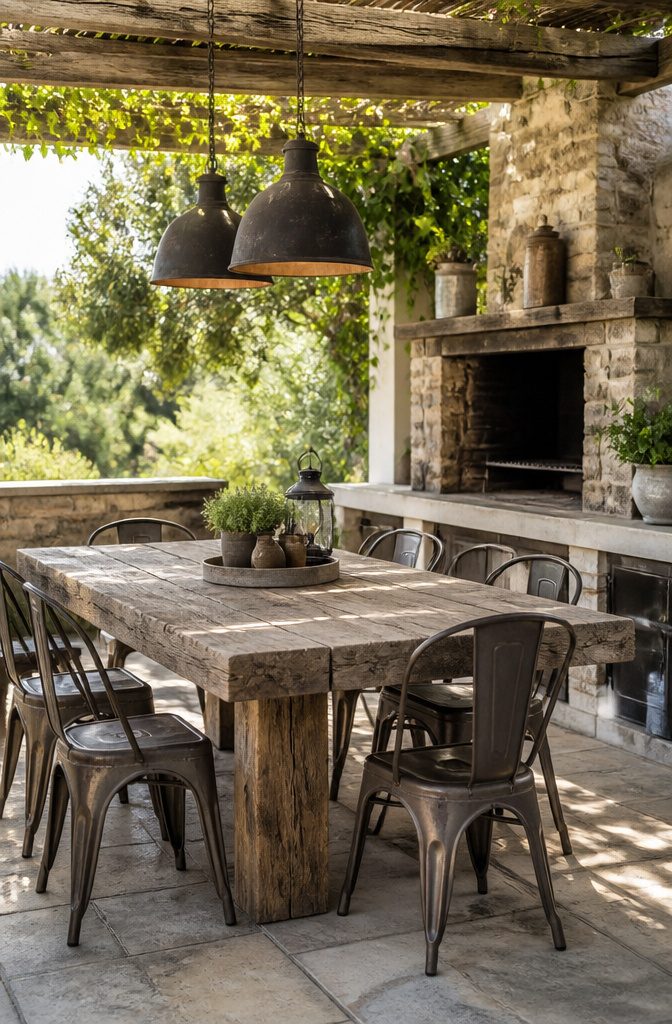
Reclaimed lumber yards and demolition salvage piles are where the real deals hide, though half the boards I brought home had nails buried deep enough to ruin a saw blade.
Weathered metal works the same way: old corrugated roofing from a farm auction ran me almost nothing, but the first piece I tried to leave raw developed a rust drip that stained the deck below it.
A single coat of clear matte exterior sealant on metal, applied with a cheap brush, stops that bleeding without killing the aged look.
Raw stone is simpler because it already is what it is; I learned the hard way that limestone flakes in freeze-thaw cycles, so granite or slate scraps hold up better for northern terraces.
Rope details are the cheapest entry point—sisal from a hardware store, wrapped around planters or railings, though it darkens and stiffens after one wet season unless you hit it with a water-repellent fabric spray.
The sealant step matters more than the material choice. I skipped it once on a "reclaimed" pallet wall, and the splintering started before summer ended.

🍋INDOOR & OUTDOOR USE: vertical wall hanging planter made of high quality durable PP resin material, safe and non-toxic, this polypropylene resin planter is a tough, lightweight , all-weather durability with UV protection for outdoor use, an alternative to clay or ceramic planters. Pull out drainage plug to allow for the removal of excess rainwater when installed outdoors. Install drainage plug when used indoors. SIZE (L*W*H): 25cmx15cmx21cm; 12 x “S” hooks of stainless steel included.

Vibrant Display: This set of 4 half round planters bring the charm of a lush garden into your home's surroundings and enjoy the delightful sight of vibrant flowers all season long

Wine barrel planters for Versatile Planting: the package includes 6 wine barrel hanging planters for outdoor plants, providing ample opportunity for creative and diverse planting arrangements, catering to various gardening needs; And each pot is about 10 x 6 x 3 inches/ 25 x 15 x 8 cm in size
4. European Coastal Look
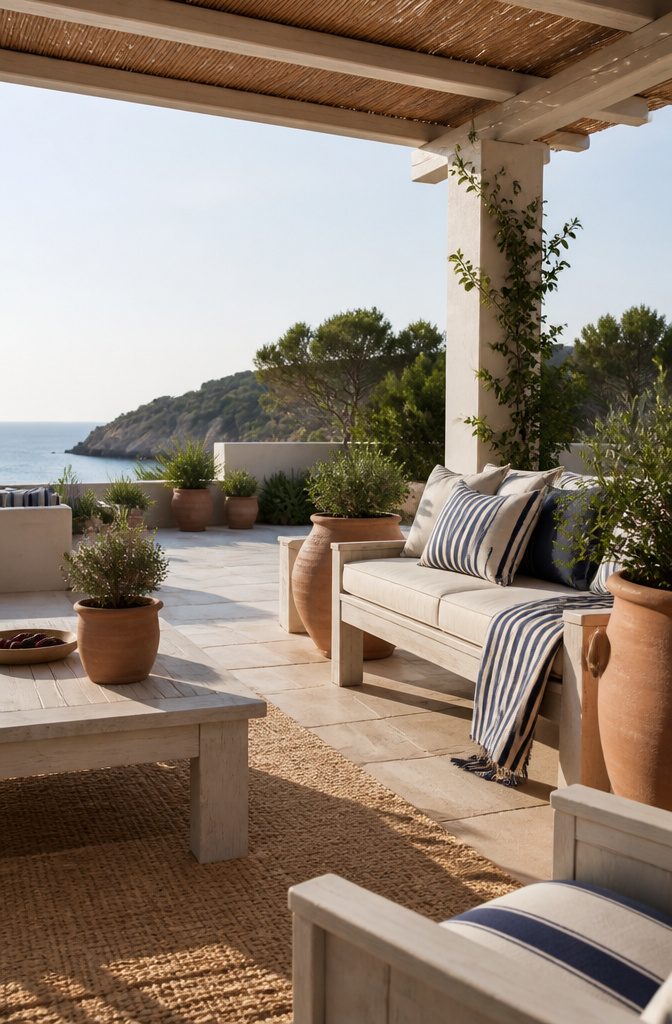
Whitewashed pine reads crisp against a southern exposure, but on my east-facing terrace it turned cold and institutional by ten in the morning.
The paint color that betrayed me was a straight titanium white with no ochre or umber mixed in, the kind of Mediterranean white that needs twelve hours of sun to look warm.
For east light, cut that white with a ratio of one part raw sienna to eight parts base, just enough to catch the amber morning glow instead of reflecting it back flat.
Terracotta pots carry the warmth the walls lose, though American garden centers stock an orange-red clay that fights the blue rather than grounding it.
Hunt for the paler, dustier Spanish or Italian import lines, or dry-brush the domestic ones with chalk paint in khaki.
Striped textiles need the same adjustment.
Navy and cream on a sun-bleached terrace reads yacht club; on shadowed eastern boards it reads guest room. Swap the navy for a washed indigo that already looks faded, or go to a narrow ticking stripe in slate and oatmeal.
The scale matters more than the pattern itself, and a stripe under two inches wide lies flatter in low horizontal light.

Folding:Storystore folding shelf brackets are made of durable stainless steel. Their smooth surface allows for effortless folding, saving space and keeping things tidy

Portable folding side table great for use at the beach, pool, campsite, tailgating, picnicking, or in your backyard; Color: Aqua
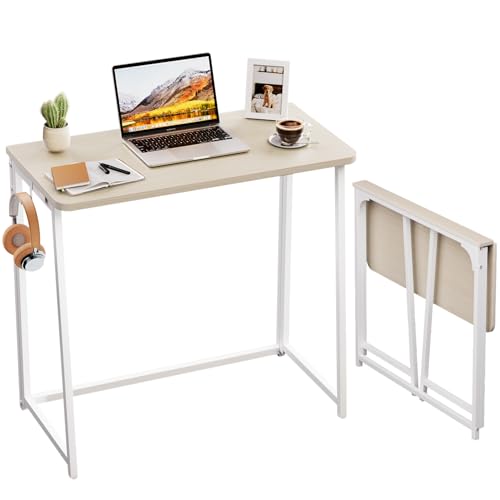
【Small Folding Desk for Small Spaces】Product dimensions is 15.75"D x 31.5"W x 29.52"H when it is unfold, which is so perfect for some small spaces, such as small home office, bed besides, room corner or caravans.
5. Minimalist Palette
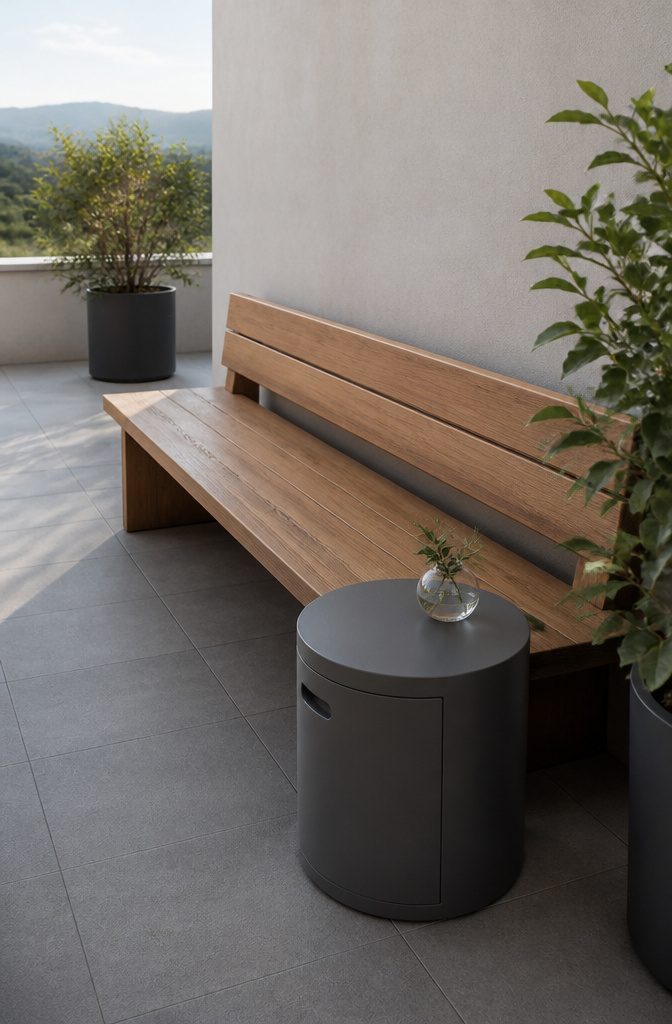
Slack Stone Grey tiles read as stone without shouting for attention, and that restraint is the whole point of a minimalist terrace.
I learned the hard way that porcelain runs roughly 20–40 percent more per square foot than ceramic outdoors, but it pays for itself the first winter freeze if you are in a zone where water gets under the surface.
Ceramic absorbs more, cracks faster, and the savings disappear into replacement labor.
A single material keeps the eye from bouncing. I stuck with one tile, one wood tone for the bench, and one metal for the frame.
Hidden storage lives inside that bench, deep enough for cushions and the hose I do not want to look at. The lid lifts on a gas strut I bought at a hardware store and fitted myself one Saturday morning.
The one choice I would undo: polished concrete for the side table. Every water spot, every leaf tannin, every splash from the dog bowl showed up like a fingerprint on glass.
In a matte finish those marks vanish. On polished surfaces they become the decoration, and not the kind anyone wants.

Boho-Chic Design: Enhance your outdoor space with these 10FT long string lights featuring 10 bulb-shaped light bodies, each illuminated by 5 warm white LEDs.

Strong metal drain clips: These light clips are made of high quality galvanized steel and manganese, with material upgrades from plastic easy to break, designed for outdoor use, the material is strong and durable, and not affected by any wind, snow, rain and hot weather.

Must Notice Before You Buy: Fairy lights in 0.2in dimameter clear thin tube, each 3.3ft with 10 LED. Not 0.5in Diameter thick tube, each 3.3ft with 24 LED. It isn't cuttable and connectable as thick tube lights. But it is more flexible than thick tube lights. And it doesn't come with remote.
6. Area Rug Anchor
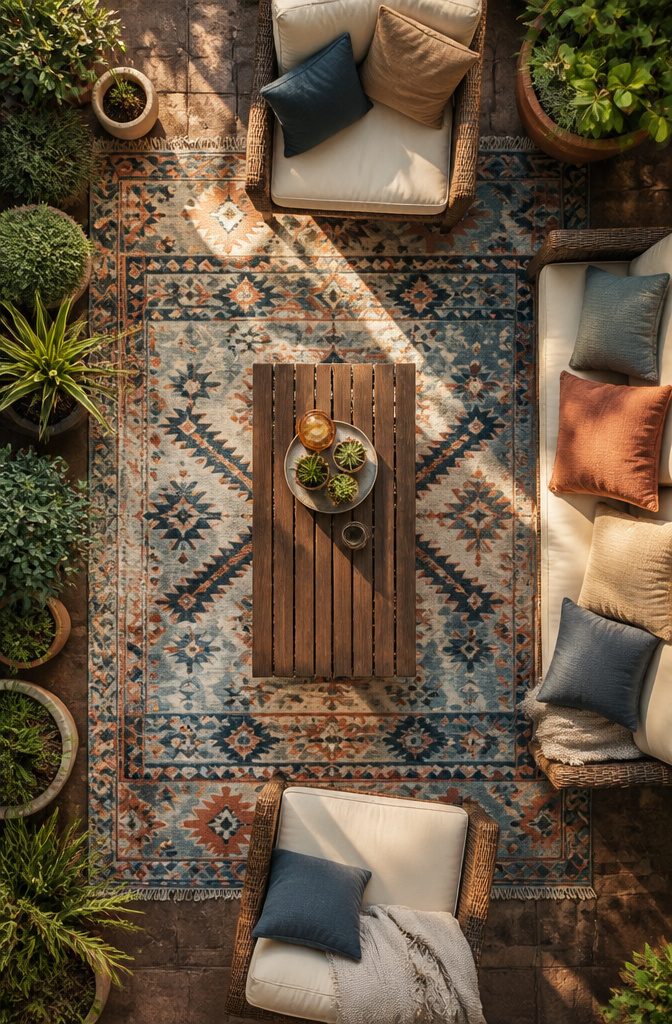
An outdoor rug can make a terrace feel like a finished room rather than leftover space. The trick is choosing one actually built for outdoors and sizing it to do real work.
Polypropylene and recycled plastic are the two materials that keep coming up. Recycled plastic runs lighter and less fragile than cement or fiberglass alternatives, so moving furniture at season’s end does not require a second person.
Polypropylene handles the same conditions and tends to sit at a lower price point. Either works, though recycled plastic usually wins if you expect to shift things around often.
For a standard 6-by-10-foot terrace, the rug should reach under all front legs of the main seating, not just the coffee table.
A 5-by-7-foot rug often leaves the arrangement feeling disconnected, while an 8-by-10 swallows most of the floor. The usable middle ground is closer to 5 by 8 or 6 by 9, enough to anchor the pieces without crowding the edges.
I learned the hard way that "outdoor-safe" is not a suggestion.
Three weeks of morning dew on a leftover indoor flatweave grew mildew into the backing that never fully washed out. The rug looked fine on day one.
By day twenty-two it smelled like a basement. Now I check the tag for the material before anything else.

Extra Soft Cushion - Compared with other types of deck boxes only for storage usage, we provide extra cushion for you to sit on. 2.3” thickness will make your seating more comfortable

Optimal Size:Exterior: 52.8 in. L x 22.6 in. W x 32. 3 in. H / Interior: 48. 4 in. L x 22.4 in. W x 16.9 in. H, blends perfectly into a variety of patio styles, saving space without sacrificing practicality

【Size Selection】 Outdoor Bench Cushion includes 1 seat cushion measuring 48"W x 18"D x 5"T. (Measure the seating area of your furniture to make sure the cushion size is right). Our Window Bench Cushions are suitable for benches, swings, couches, window seats, and other outdoor & indoor furniture. Ideal decoration for garden, patio, home, yard, and other indoor and outdoor scenes
7. Mix-and-Match Furniture
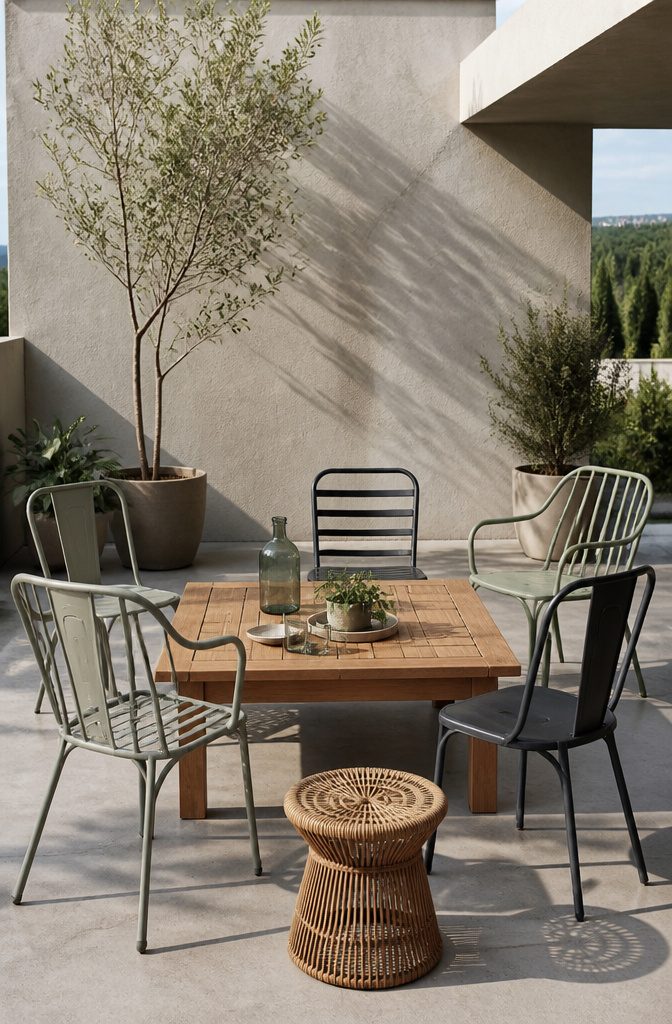
Keep it to two rules, and a mix of eras reads intentional instead of accidental. The first is scale: a thrifted metal chair beside a low teak table works because both pieces carry similar visual weight.
A spindly 1960s wire chair next to a slab-sided modern bench looks like you ran out of money, not like you planned something.
My second rule is the finish story. Spray paint on outdoor metal can hold for seasons if the prep is right: clean with degreaser, etch with a light sanding, prime, then paint in thin coats.
Brush paint on the same chair peels inside a summer from pooled edges and flex at the joints.
I learned that on a set of folding patio chairs that looked sharp for about six weeks, then flaked like old nail polish. Now I buy the finish as it sits, or I know I am committing to spray.
Wood does not need to match the metal era, and it should not try: the warmth of teak near cool gray powder coating is the point, not the problem.
One woven texture, like a rattan stool or a rope ottoman, threads the two together without forcing a set.
A neutral floor or wall behind it, like terra-cotta or pale concrete, quiets the background so the furniture can argue politely without shouting.
8. Pop of Color
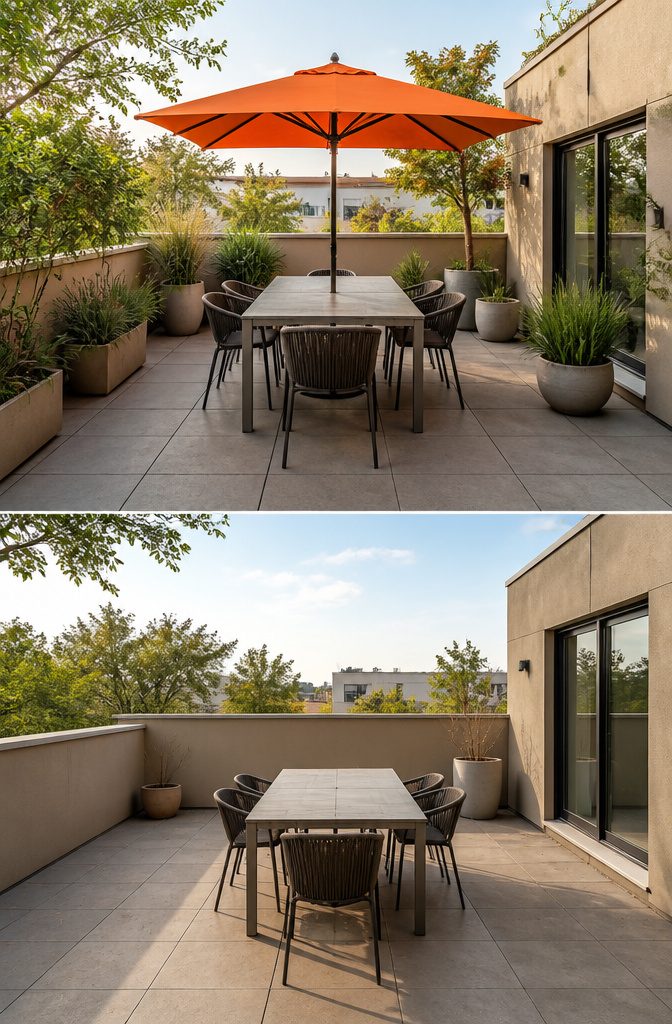
A single bold color beats scattering small bright objects everywhere. The eye needs somewhere to land, and a painted door or a saturated umbrella does that work without your terrace feeling like a yard sale.
I learned this the hard way with sunset orange, a shade that photographed beautifully for the listing but felt aggressive by the second morning coffee. The color hit like a shout at 7 a.m.
Navy blue, by contrast, photographed flat but read as calm and expensive in person. The camera lies about color the way it lies about everything else.
Bright yellow fabric on reupholstered seating can complement local architecture without demanding the whole visual budget, as some terraces manage.
The trick is committing to one large surface rather than peppering the space with orange chairs, turquoise accents, and competing cushions. Pick your hero, let the rest go quiet.
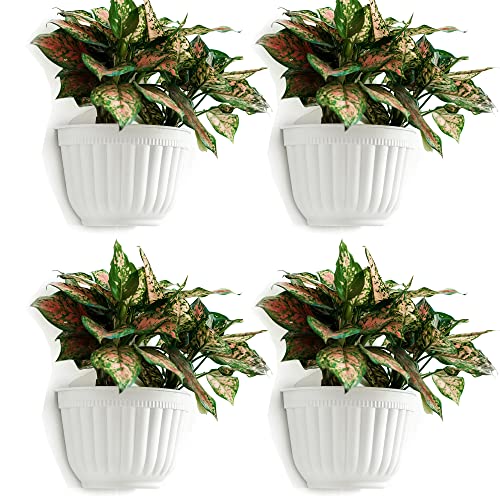
Lightweight for Indoor & Outdoor Wall Planter: A drainage hole with plug / keep in for indoor plants and removeable for outdoor plants. Vertical wall hanging planter made of high quality durable plastic, safe and non-toxic, this is a tough, lightweight, all-weather durability with UV protection for outdoor use, an alternative to clay or ceramic planters. SIZE (L*W*H): 8.1"x4.7"x6.8"; 8 x “S” hooks + 8 x Screws + 8 x self-adhesive hooks included

Material: Hanging fence planter made of metal iron. Durable and lightweight. Balcony flower pots are not easy to rust or damage, and have a long service life

9. Sunken Lounge
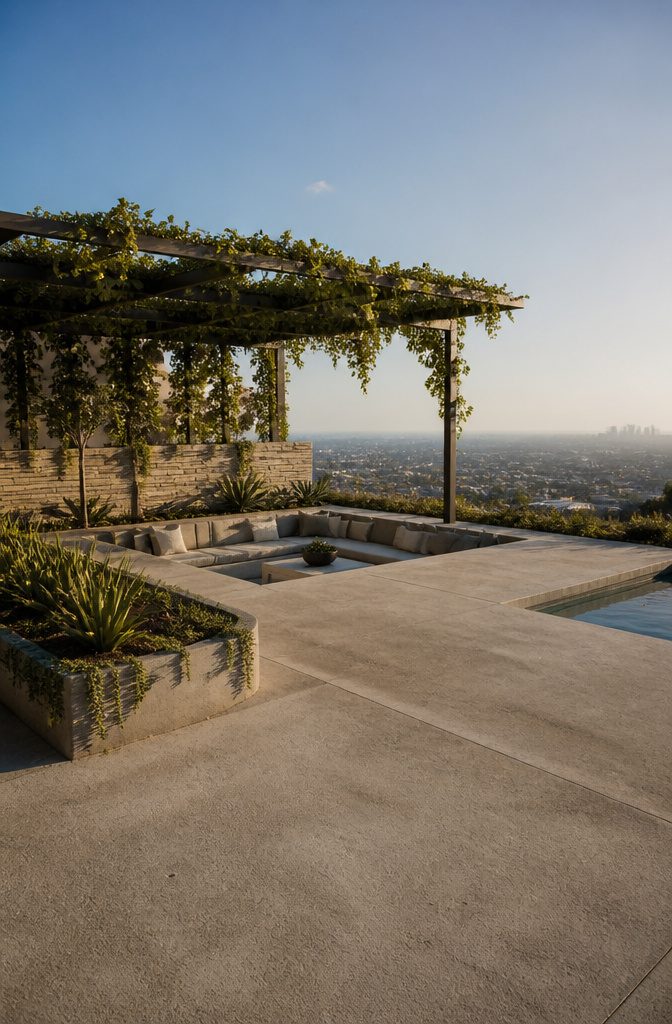
Sunken lounge installs work on both rooftop and ground-level terraces, but only where structural permission has been granted. The depth matters because you’re dropping the floor plane, and that displaced volume changes how water moves.
Proper drainage underneath is non-negotiable, and waterproofing has to run up the sides, not just across the bottom. Most damage happens at the joint where the vertical wall meets the horizontal surface, because that’s where settlement cracks form first.
I spent an afternoon running numbers on this for my own rooftop.
My building’s load limit capped out well below the aggregate weight of the soil, the retained drainage layer, and the concrete form itself. The live-load math killed it before I even priced waterproofing.
For renters especially, the membrane alone needs inspection access, which means your sunken feature has to come back out someday. That’s labor you pay twice.

Compact &Foldable -- The folding table can be easily folded up when not in use.It is big enough for almost any project, yet doesn't take up much floor space, and even old or child can easily set it up by themself

LIGHTWEIGHT AND PORTABLE: The PORTAL heavy duty folding chair is designed to be lightweight, weighing only 10.78 lbs, making it easy to carry and transport; whether you're camping, enjoying the outdoors, or heading to the beach, this foldable chair will be a convenient and comfortable choice

Ready to use straight out of the box with No Assembly Required: No tools and no complicated steps. Simply unfold and start working, saving time and effort while reducing setup stress for daily use in small spaces
10. Intimate City Setup
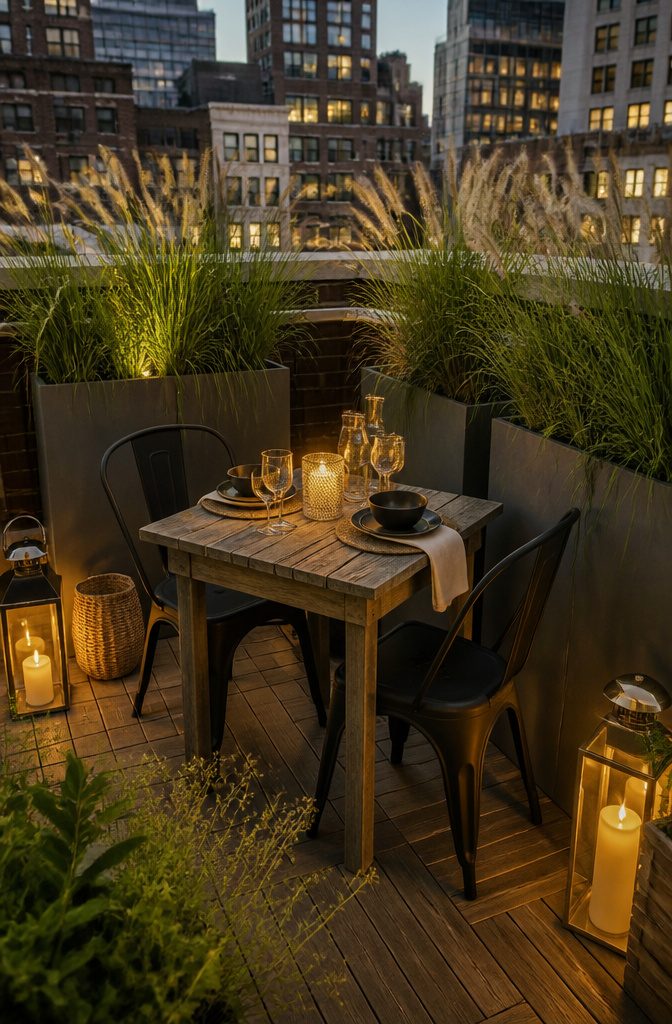
Privacy on a terrace two doors down from your neighbor’s kitchen window takes more than a wish.
I learned the hard way that a folding screen looks romantic until the first breeze catches it. Mine tipped at 15 mph, which in most cities is a Tuesday afternoon.
Renter-friendly screening means freestanding weight, not anchored posts. Tall planters packed with ornamental grasses or compact shrubs give you that green buffer without drilling into a landlord’s railing.
For a faster fix, a trellis with climbing ivy softens a concrete wall in one season, though you’ll need to check your lease or building code first; many terraces have height restrictions of 42 to 48 inches on anything that could act as a wind sail.
Sound travels further than light in these tight setups.
A small fountain, even a plug-in tabletop cascade, masks conversation better than music ever does. The running water covers the gaps.
For lighting, skip the single overhead fixture that turns your dinner into a parking lot scene. Battery-powered lanterns around seating areas let you layer the glow without hunting for an outlet.
Warm light against wood and beige reads intimate; cool light reads interrogation. Place them low enough to avoid tripping, though, or you’ll trade one problem for another.
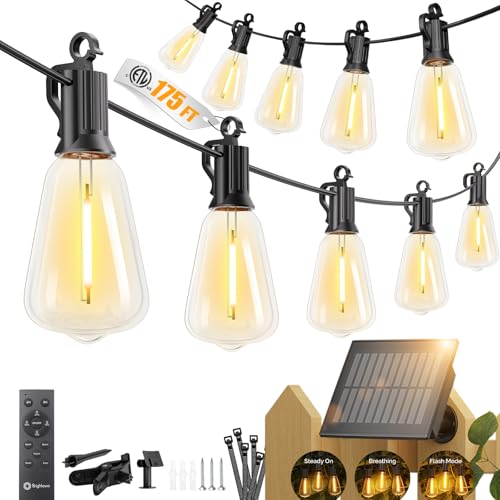
【175FT Pro Solar String Lights】Enjoy 175 feet of solar lights outdoor waterproof lighting featuring 56+2 shatterproof LED bulbs with upgraded remote control (4 brightness levels + 3 modes + 2 timers), and detachable solar panel. No outlets needed—auto-charges in sunlight for 10+ hours nightly. Waterproof IP65, 36" bulb spacing - perfect for patios, gardens, and parties!

Solar Brown String Lights: 54ft solar string lights with 150 clear mini lights on brown wire. create a warm, festive atmosphere, perfect for lighting up your home and welcoming guests at night

Strong metal drain clips: These light clips are made of high quality galvanized steel and manganese, with material upgrades from plastic easy to break, designed for outdoor use, the material is strong and durable, and not affected by any wind, snow, rain and hot weather.
11. Outdoor Fireplace
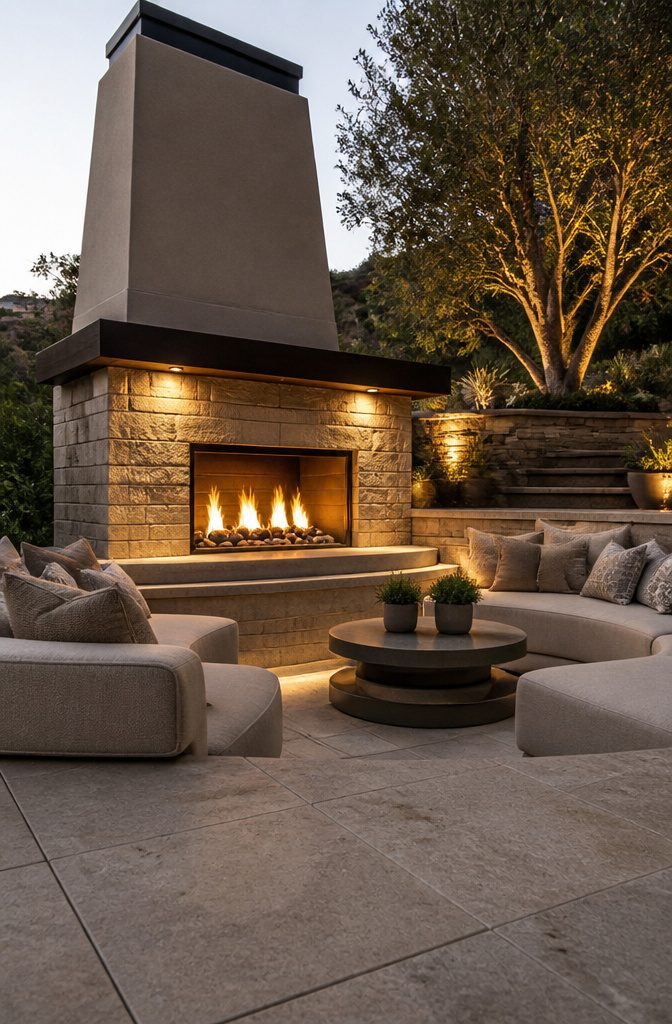
Portable fire pits, ethanol burners, and built-in gas setups each land differently on a terrace. The wood-burning bowl I ordered last October looked great at 4 p.m.
One smoke complaint from the neighbor upstairs and it went back to the store by Wednesday. Urban fuel restrictions now steer most of my recommendations.
A $200 propane table changed my mind about what "fire" needs to mean outdoors. It puts out enough heat for four people seated around it, starts with a button, and ships flat.
For renters, that matters more than the romance of a real flame. No masonry, no gas line, no conversation with the landlord.
Ethanol burners fill smaller gaps where propane feels like overkill.
They burn clean, need no venting, and move inside if the weather turns. The catch is running cost: fuel adds up fast if you light it more than once a week.
Built-in gas still wins for permanence, but only where you own the wall and the line. For everyone else, the portable route keeps the weekend timeline real and the budget under control.
12. Modern Farmhouse Blend
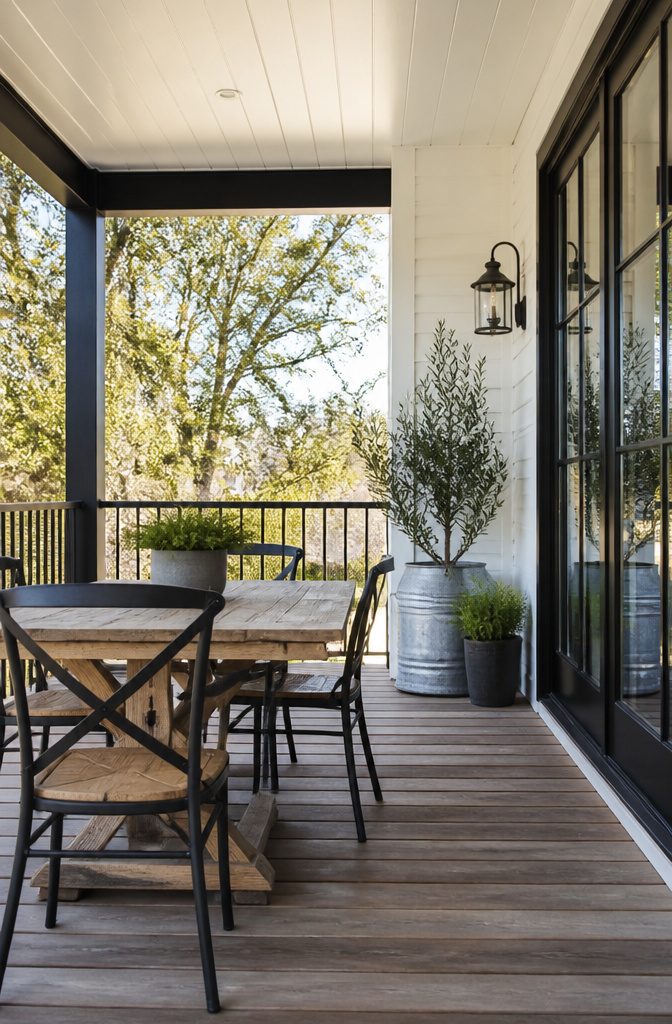
Black metal frames against white shiplap-look paneling gives a terrace the structure of modern design without losing the warmth that makes you want to sit down and stay.
The trick is keeping both sides honest: too much farmhouse and you end up with a themed restaurant patio, too much modern and the space feels like a waiting area.
I found the balance in cross-back chairs with matte black steel frames and unfinished wood seats. They read modern from a distance, up close they show the hand of the maker.
Galvanized planters soften the edge between the two styles better than terracotta or sleek fiberglass; the zinc has that utilitarian farmhouse history, but the clean cylinder shapes keep lines tight.
Start the paneling at chair-rail height, not the ground, so you get the texture without building a barn wall. The lower section stays plain, which also saves you from cutting panels around uneven terrace floors.
Galvanized steel dents if you look at it hard, so I use liners inside the planters and accept that the surface will age.
That weathering becomes part of the look, not a flaw, which is the whole point of blending these two styles rather than choosing one.
13. Low-Budget Weekend
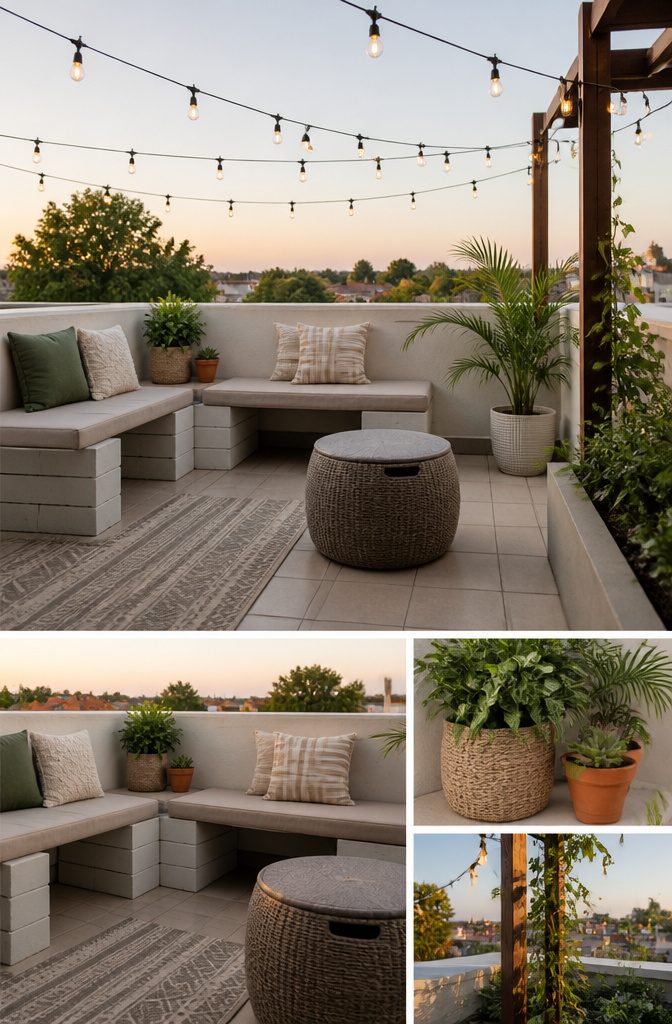
Concrete block benches look like what they are until you grout the joints and paint them.
I learned that the first summer I tried this: stacked blocks with a plywood seat read as a construction site, but the same stack with QUIKRETE mortar between layers and two coats of exterior deck paint looked intentional enough that a neighbor asked where I bought them.
The blocks ran about $2.50 each at my local hardware store, six per bench, and a half sheet of treated plywood finished the seat.
Pallet furniture carries the same risk. Untreated pallets turn gray and splinter within a season; pressure-washed and sealed with a deck stain rated for ground contact, they last two to three years in my climate.
The safe treatment matters more than the design. I skip any pallet marked with an MB stamp, methyl bromide, and look for HT, heat-treated, which is the standard for domestic shipping.
Solar string lights are where the budget breaks in the favor of looking expensive.
The small panel hides behind a planter, and by August the charge lasts past midnight. I hung mine on a galvanized steel cable so they sag evenly; fishing line worked for one season before it degraded.
Dark corners kill the mood on a terrace, and real plants die there. Quality artificial plants, the ones with varied leaf tone and no glossy factory shine, fill the gap for under $20 each.
I place them where the light is too low for anything living and let the solar lights graze across them at night. The shadows do the work.
The full refresh that year cost $340 total: blocks and paint for two benches, three pallets and sealant, two sets of solar lights, and six artificial plants.
What looked cheap was anything left raw or untreated. What looked intentional was the same material finished like I meant it to stay.
14. String Light Layout
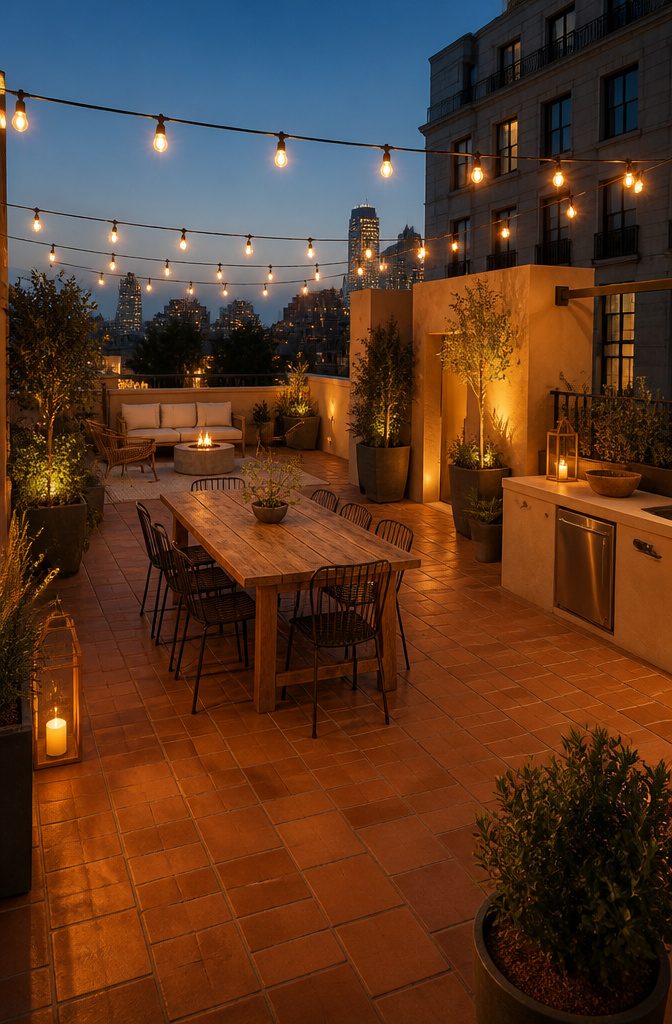
Solar lights charge during the day and switch on automatically at night, which sounds convenient until the panel sits under a shadow line from your railing and quits by nine.
Plug-in strands stay lit on demand, and the difference matters more than the electric bill.
Bulb spacing is where most terraces go wrong: six inches apart reads as a solid glow, twelve inches as scattered dots, and the sweet spot for actual illumination without turning the space into a parking lot sits around eight to ten inches.
Mood lighting and task lighting are different jobs; string lights do mood, so layer them with a small rechargeable table lamp if you need to read a label.
Attachment methods split by surface. For concrete, adhesive-backed cable clips work if the temperature stays moderate; heat makes them slide and cold makes them brittle, so a masonry bit and a plastic anchor cost more time but stay put.
Wood railings take screw eyes or simple cup hooks, the kind you twist in by hand.
My space measured forty feet of usable span, and the forty-eight-foot strand I bought sagged to forty under tension, leaving an eight-foot gap I patched with an extension cord that was not rated for exterior conditions.
The strand failed in October.
Hanging patterns that stay flat need a steel cable run above the lights as a messenger line, or a zigzag that carries its own tension; a straight drape between two points will always belly unless you pull it drum-tight, and drum-tight wire in wind sings and snaps.
15. Roof Garden Basics
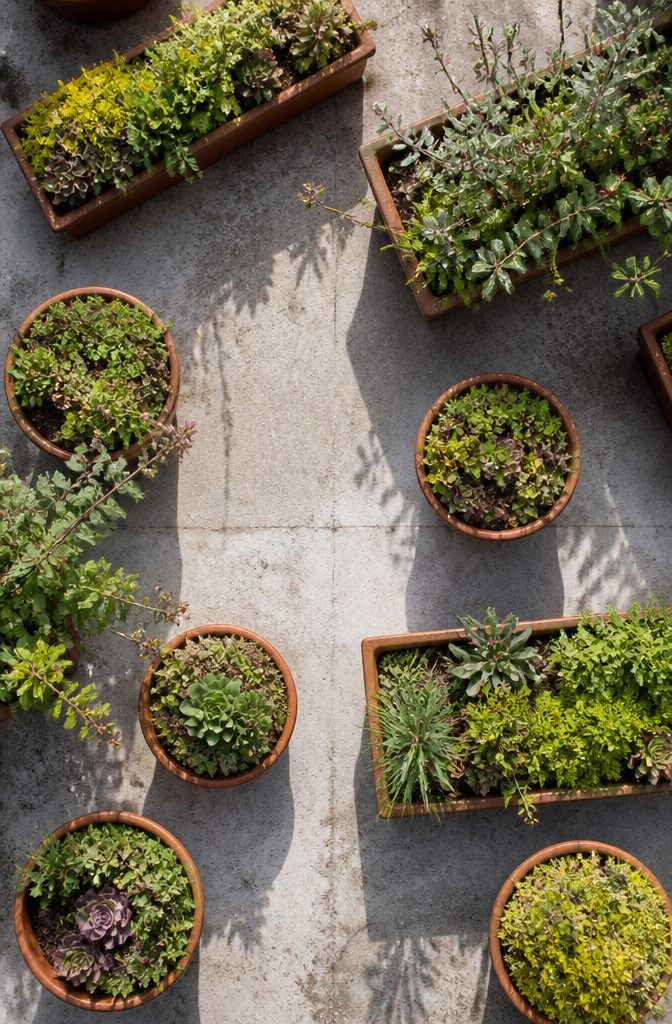
A roof garden is the first thing people picture for a terrace, but most skip the weight check and regret it later.
Soil, saturated after rain, runs about 100 pounds per cubic foot. Add a terracotta pot and a mature shrub, and a single container can land on a joist like a person standing there permanently.
The waterproofing layer beneath has to be intact before a single pot goes down, because water that gets through finds every crack in the ceiling below.
Wind exposure is the second surprise. Six floors up, gusts that feel pleasant on your face will shred broad-leaf plants and topple anything top-heavy.
Sedum varieties held up through my worst summers, the kind of weeks where I forgot to water and the heat baked the containers dry.
Their shallow roots and waxy leaves handle neglect better than anything else I tried. The tomato plant taught the opposite lesson: what looked like enough soil was half what it needed.
The roots ran to the bottom of that twelve-inch planter by July, then stalled, and the fruit stayed small and bitter no matter how much I fed the top.
Tomatoes want depth more than width, and a container that looks generous on a balcony floor is often barely adequate once the plant hits August.
16. Cozy Layers
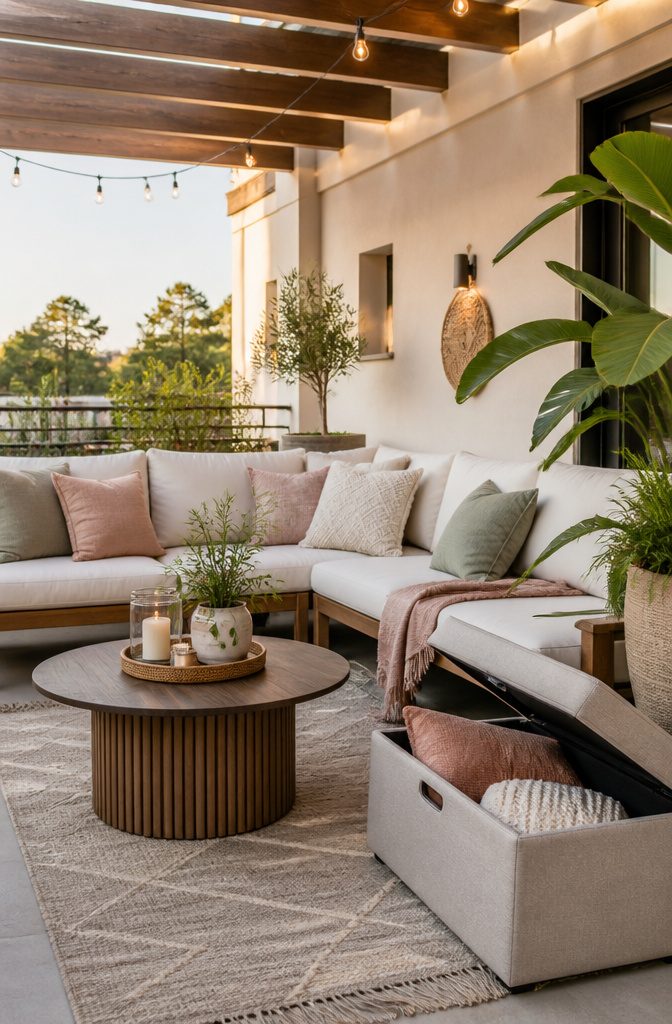
Outdoor textiles make a terrace feel finished, but the wrong ones become a mildew project by September.
I learned that with a set of down-alternative throw pillows that looked plush in May and had flattened into lumpy pancakes by July, holding water after every drizzle instead of shedding it.
The replacement was a quick-dry polyester fill with a tighter weave, and the difference showed up in the first light rain: beads of water sat on the surface long enough to brush off instead of soaking straight through.
For evenings that turn cool, a weighted blanket sounds excessive until you try one.
The one I keep out there is filled with glass beads, not the plastic kind that shift and bunch, and the cover unzips for washing since patio dust accumulates faster than you’d expect.
Storage is what makes this practical: a weather-resistant ottoman that opens on gas hinges holds the blanket, two spare pillows, and a deck of cards without the lid slamming in a breeze.
The hinge detail matters more than the fabric pattern. I skipped it once on a cheaper box and propped the lid with a planter all summer.
17. Wall Planter Systems
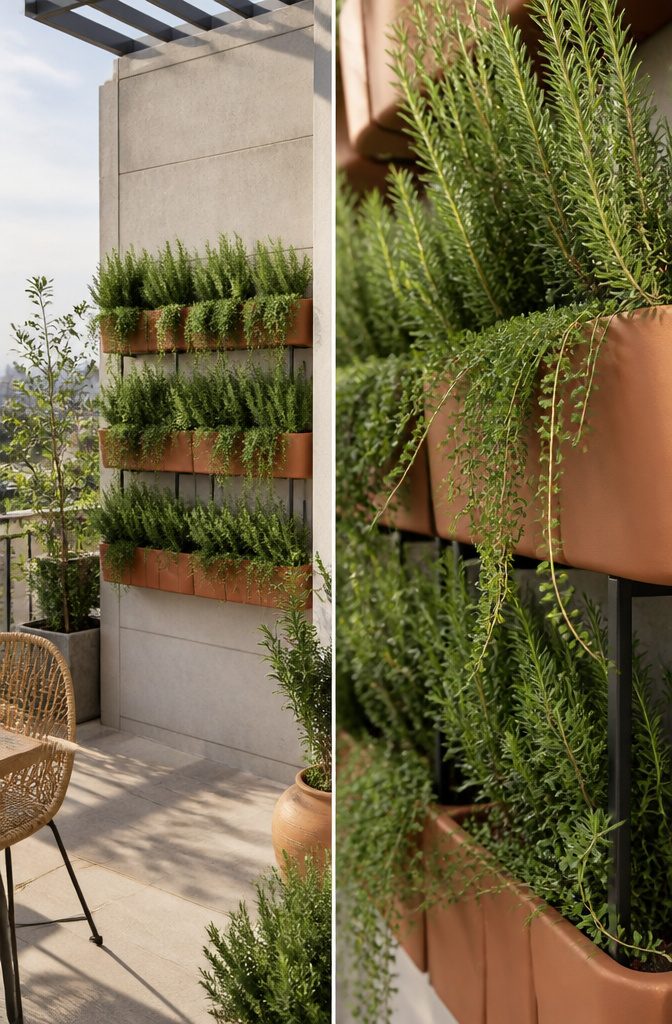
Freestanding planter stands saved my security deposit twice. The first mounted system I tried left circular stains where the drip tray overflowed, and that was on painted concrete that was supposed to be forgiving.
A freestanding stand with a saucer you can empty beats any wall-mounted promise of "self-contained" drainage, because renters don’t get to repaint.
For herbs that actually spill downward instead of growing toward the sun and looking awkward, stick to prostrate rosemary, trailing thyme, and the lower oregano varieties. Basil and cilantro want to go up; they fight the look.
The modular wall panels I added to came as single 12-inch squares with their own brackets.
I bought one panel the first spring, hung it on the railing with zip ties to test sun exposure, then bought a second panel mid-summer when I saw the thyme filled out faster than I expected.
By the next year I had five panels in an L-shape and had learned exactly which corner stayed too shady for anything but mint.
Spending thirty or forty dollars a season instead of committing to a full system upfront let me adjust without waste.
18. Bohemian Layers
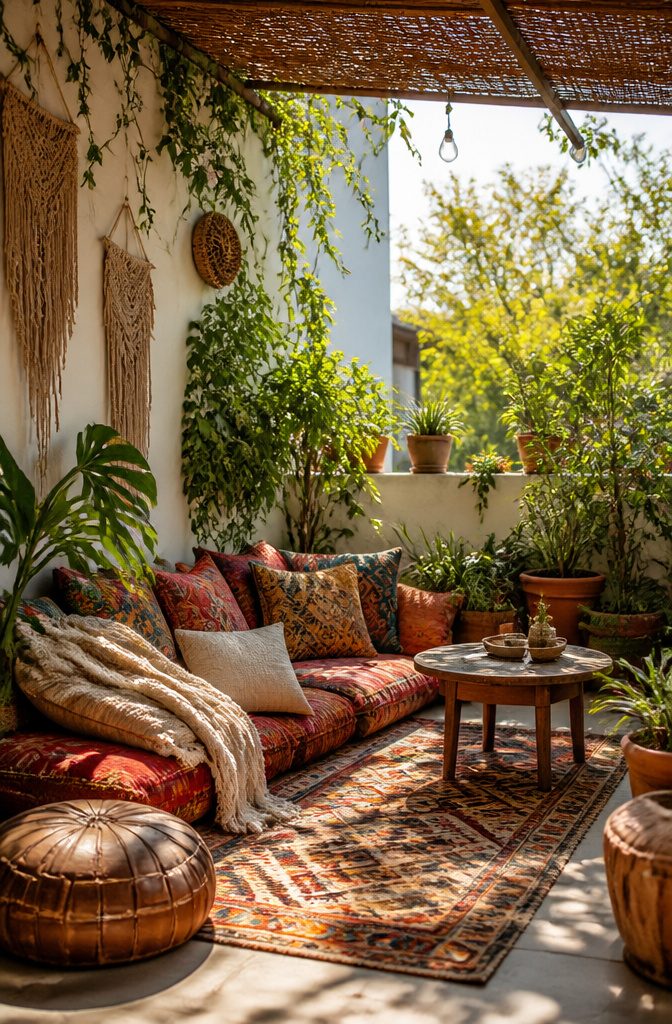
Macrame reads as costume the second it goes too clean. The pieces that last on an open terrace are the ones with some weight to the cord and a patina that suggests they actually hung somewhere before yours.
I found workable wall hangings and a plant hanger with proper cotton thickness at a store that imports from Oaxaca, a family-run spot in Austin I walked into on a Saturday, and a resale collective in Portland where someone had already done the fading work for me.
The third reliable source was a direct maker on Etsy whose shipping took ten days but whose prices sat under what the import shops charge for the same knot pattern.
Mixed patterns only hold together when at least one element is already sun-bleached.
A vintage kilim I bought in April looked rich against the cushions for exactly six weeks. By August it had gone the color of dishwater, and not in the deliberate way.
The reds ran to gray where the afternoon hit longest, which taught me to test any textile under direct sun for a week before building the layer around it.
Floor cushions now come from outdoor-rated canvas in a block print I can replace without mourning.
19. Al Fresco Dining
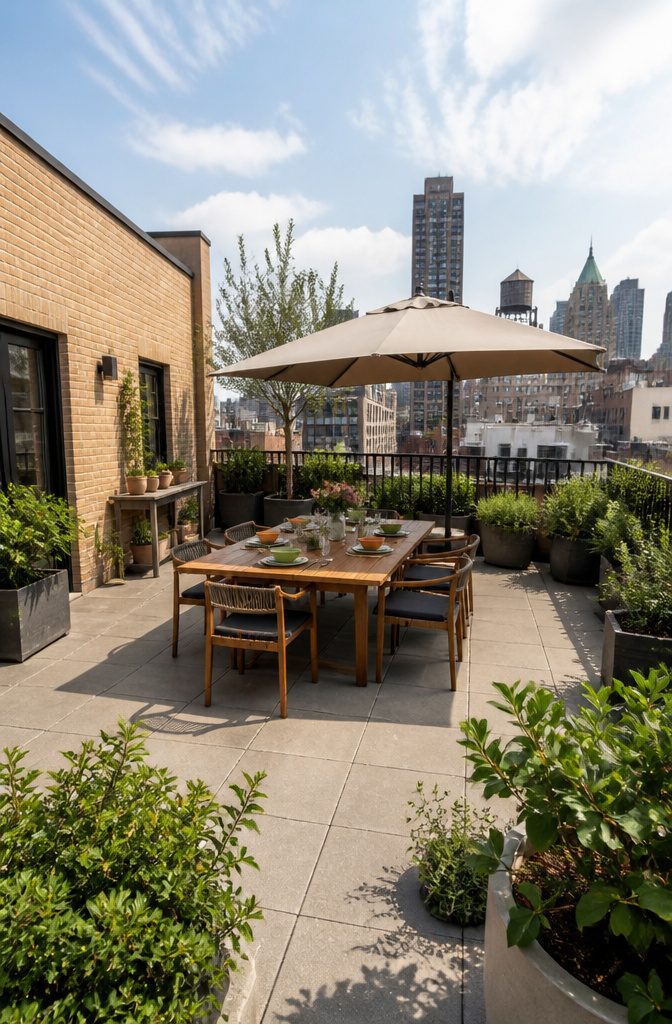
A dining table on a terrace needs to earn its footprint by doing real work.
I learned this the hard way with a folding six-seater that looked sensible on the listing but wobbled on my uneven tiles every time someone leaned to pass the salad.
The legs had adjustable feet in theory; in practice, the mechanism froze after one summer, and a folded napkin became a permanent fixture under the northeast corner.
For actual meals with plates and elbows, a rectangular table about 30 inches wide leaves room for serving dishes without shouting across the gap.
A smaller round table, maybe 36 inches, handles drinks and a board game fine, but six place settings turn into a puzzle with no solution.
All-weather dishware matters more than the table itself. Standard stoneware or everyday glass survives outside fine if you carry it in, but dedicated melamine or tempered acrylic stacks lighter and forgives a gust that takes everything sideways.
I skip the sets labeled "outdoor" at a premium; restaurant-grade melamine in solid colors costs less and photographs the same.
Shade determines whether you use the space at noon or only after six.
A canvas canopy installs without permits and folds down for storms. A wood or metal pergola with climbing vines takes longer but defines the zone architecturally; adjustable outdoor curtains hung from it block slanted afternoon sun.
The permanent route demands planning for wind load and waterproofing, and some landlords or codes have opinions.
Cooking proximity changes the math entirely. My kitchen door opens onto the terrace, but even ten steps multiply by trips for utensils, ice, forgotten butter.
A rolling cart stationed by the grill cut my trips inside by half. It holds prep trays, keeps tools dry, and rolls back against the wall when we need the floor space.
20. Eclectic Collected
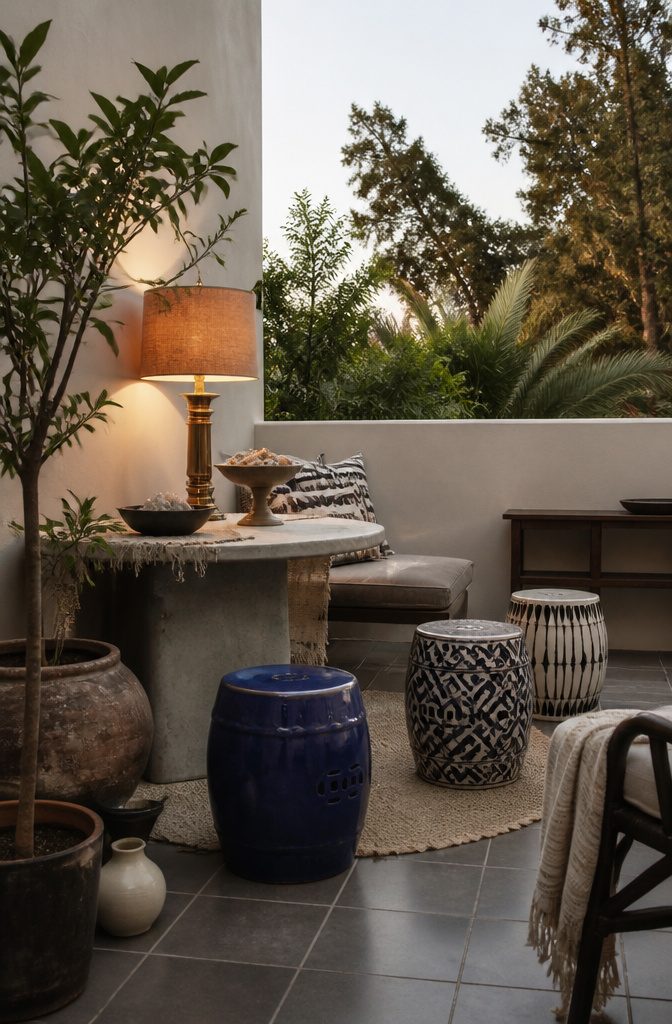
A brass lamp meant for the living room can survive on a terrace if you rewire it with outdoor-rated cord and a ground fault plug.
I did this with a thrifted pharmacy lamp after three cheaper string lights corroded inside a single season. The metal held up better than plastic, and the warm light made the concrete feel less like a parking slab after dark.
The stools came from different trips: one ceramic piece from Mexico, another from a tag sale in Queens, a third ordered during a sleepless night because the glaze matched the terracotta.
They share nothing in origin, but the scale is identical, roughly eighteen inches, and the clay bodies are all unglazed on the bottom half. That repetition of material and proportion keeps them from looking like a yard sale pile.
Leave one surface almost empty. A corner table with nothing on it but the lamp, or a stretch of railing with no planter for three feet, gives the eye somewhere to rest.
Without that negative space, collected starts looking like collected junk. I learned this the hard way when I tried to stage every level at once and the terrace felt smaller than it actually is.
Frequently Asked Questions
What are some easy terrace decoration ideas with plants?
Wall-mounted planters and railing planters get greenery off the floor and onto vertical surfaces, which matters most on terraces under 100 square feet. Freestanding planter stands with drip trays protect walls and deposits from water damage.
For trailing growth that actually spills downward, stick to prostrate rosemary, trailing thyme, and low oregano varieties rather than herbs like basil that fight the look by growing toward the sun.
Which material should you choose for safe terrace flooring?
Porcelain tiles cost 20–40 percent more per square foot than ceramic outdoors, but they pay for themselves the first winter freeze in zones where water gets under the surface.
Ceramic absorbs more water and cracks faster, so replacement labor eats the savings.
Quarzo Silver tiles bounce light instead of absorbing it, which reads as more room in tight spaces. For a minimalist approach, Slack Stone Grey tiles read as stone without demanding attention.
Is building a terrace garden safe?
A terrace garden is safe only after a weight check and a waterproofing inspection. Saturated soil runs about 100 pounds per cubic foot, and a single mature shrub in terracotta can land on a joist like a permanent person standing there.
The waterproofing layer beneath has to be intact before any pot goes down, because water that gets through finds every crack in the ceiling below.
Wind exposure is the second risk: six floors up, gusts shred broad-leaf plants and topple anything top-heavy, so sedum varieties with shallow roots and waxy leaves handle neglect better than most alternatives.