An open terrace design can run from a single herb wall to a full rooftop kitchen, and the only thing that sorts one from the other is how much weight your structure can actually carry. Saturated planters load heavier than empty pots suggest, and one failed waterproofing seam sends water straight to the ceiling below. That is the condition most people skip past when they start choosing tiles.
1. Outdoor Lounge Terrace
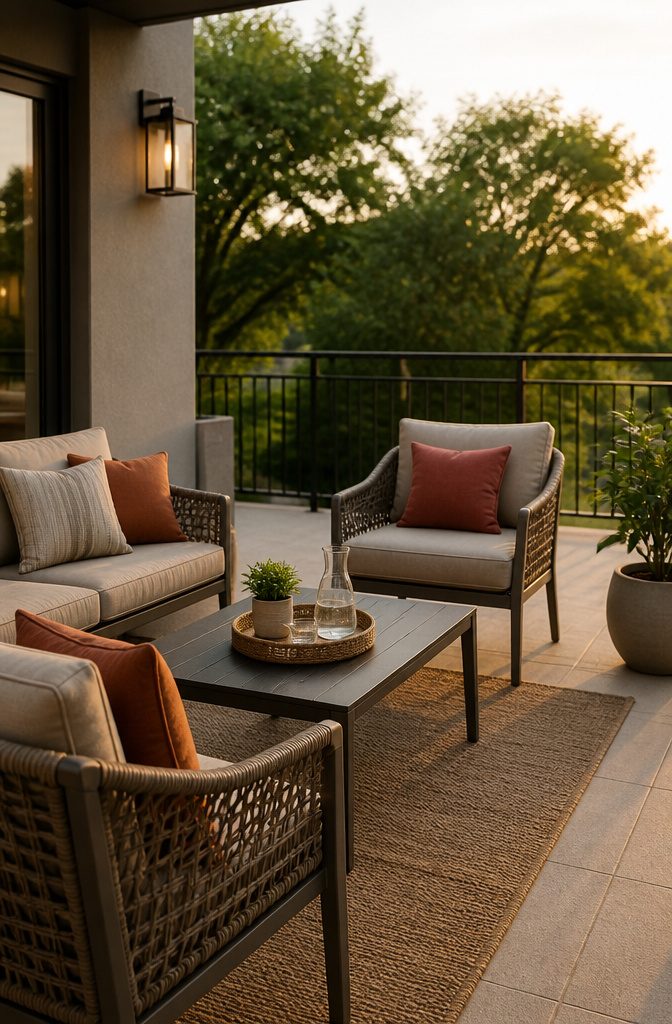
Aluminum and synthetic wicker are the only furniture materials I would buy again for a terrace that sits open to sun and rain. Powder-coated steel costs less but chips eventually, and the rust starts where you cannot see it. Teak wood looks warmer than anything else, yet it needs oiling twice a year or it silvers and cracks. I learned that the hard way with a bench I left alone for two seasons.
The lounge I planned was staged and photogenic: matching sets, accent pillows, a tidy coffee table. The one I actually use has deeper seats, lower arms, and a surface that can hold a wet drink without drama. Weather-resistant fabric on the cushions matters more than the frame material; mildew grows in the foam long before the structure fails.
Layout shapes the habit more than furniture does. A chair angled toward the view gets used. One squared to a table becomes a place to set bags. I moved my own seating away from the wall and toward the railing, and the terrace went from storage overflow to somewhere I sit with coffee. The change cost nothing but an hour.

FURNITURE PROTECTANT AND SPRAY: Furniture protectant creates a protective barrier on contact with simple spraying action; Removes light dust, dirt, salt spray, and grime

PATIO CHAIR COVER: Our durable cover fits most standard stackable patio chairs, high-back chairs, and bar stools up to 27" L x 27" W x 49" H. It does not entirely cover the chair's legs or wheels.

Outdoor furniture cover protects patio furniture from rain, snow, and other outdoor elements
2. Open-Air Dining Terrace
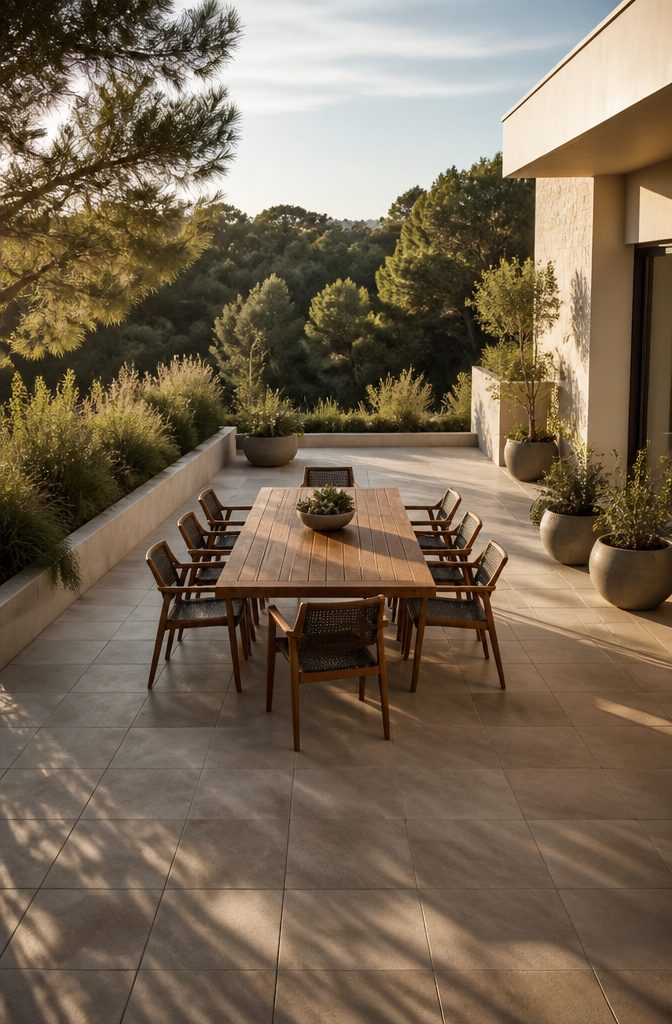
An eight-seater teak or aluminium table anchors the space without overfilling it, a boundary I learned the hard way. I measured my own terrace at 10 by 14 feet, ordered the table to fit, and forgot to account for the chairs pushed back. Six inches of walkway vanished. Guests had to slide sideways between the table edge and the planter wall, and one chair stayed permanently tucked in, useless.
For a rooftop setting, the table pairs with terrace tiles to keep the visual line clean; the material handles weather without the warping that defeats cheaper sets inside three seasons. Teak weathers to gray whether you oil it or not, so commit to the patina or to annual sanding. Aluminium skips that chore entirely.
If the terrace doubles as your only outdoor room, leave 36 inches minimum behind each pushed-back chair or the dining zone swallows the whole space. My six-inch shortfall cost me a seating corner I had planned for morning coffee. Measure twice, then add the chairs.
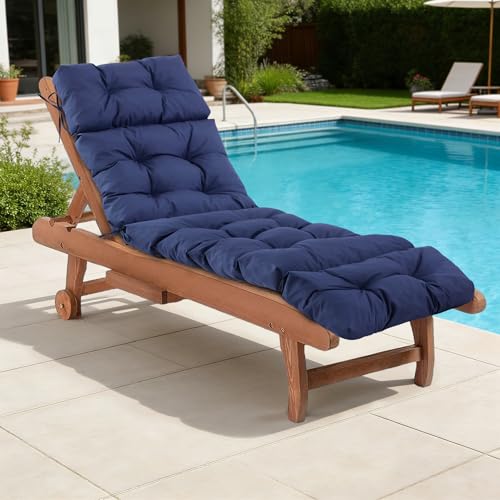
Ideal Size with Wide Compatibility: Our chaise lounge cushions outdoor dimension is 75.1*22.8*4.7 inch, widely compatible with most lounge chairs. Perfect for patio, porch, poolside, and beach settings. Please measure your lounge chair before purchasing to ensure compatibility. Due to variations in measurement methods, please allow for a 0.5-1 inch deviation.

Size & Colour: Our chaise lounge cushions outdoor feature seat cushion dimensions of 44L×21W×3H inches and backrest dimensions of 28L×21W×3H inches. Before purchasing, please carefully measure your lounge chair to ensure a proper fit. Additionally, the lawn chair cushions are available in a variety of colors to suit your personal style. These versatile chase lounge cushions enhance your comfort whether you're relaxing by the pool, on the patio, balcony, courtyard, backyard, or at the beach

🛒【LARGE DIMENSION】:Tycdiose outdoor chaise lounge chair cushions dimension is 74.4" L X 22" W X 4.7" H/189x56x12cm, can easily fit many styles of lounge chairs on the market, please measure your outdoor recliner before purchasing. Note: Please allow 1-2cm deviation due to different measurement methods.
3. Rooftop Garden Terrace
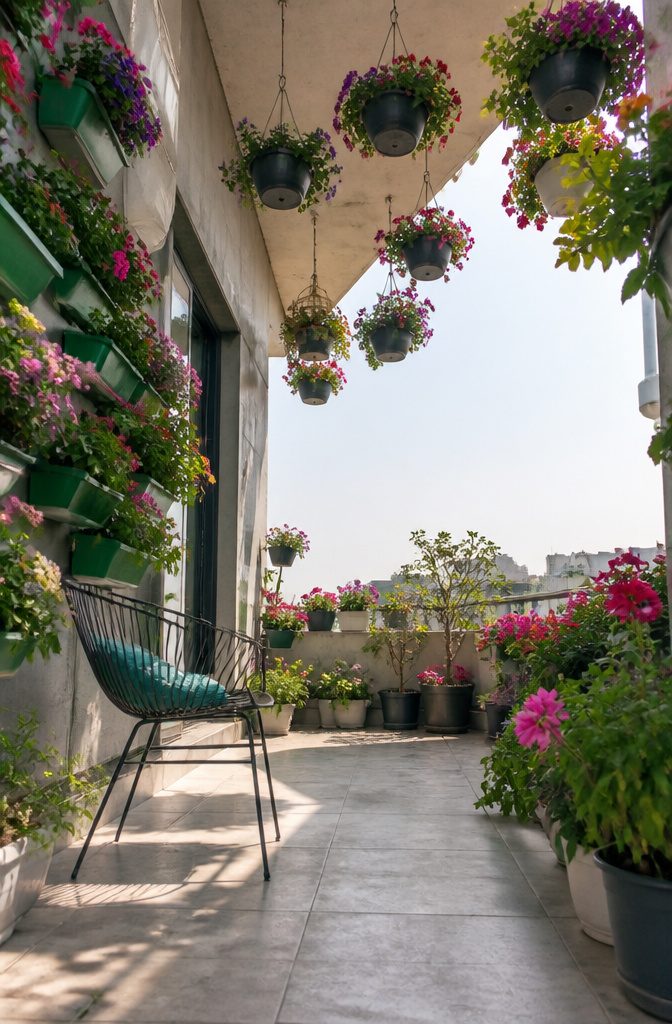
A rooftop garden terrace works because vertical space is the only space most city buildings give you. Wall-mounted planters stacked with petunias, geraniums, or marigolds climb upward instead of eating the few square feet you actually stand on. Hanging baskets add depth from above, and the cascading growth softens concrete edges without needing a single raised bed on the floor.
What stopped me short on my own project was not the plants. Weight limits and waterproofing are the hard lessons here, and I learned both the expensive way. Saturated soil in a planter weighs far more than the empty pot suggests, and not every roof is built to carry a distributed load that climbs as plants mature. Waterproofing has to be intact before a single container touches the surface; one compromised seam and water tracks straight down to the ceiling below. Raised masonry planters help with drainage and root control, but they also concentrate that load in one spot rather than spreading it.
For a small terrace, the vertical garden or a row of hanging planters is usually enough greenery. A larger roof can take clustered pots of roses or hibiscus, and fragrant plants like lavender or jasmine near where you sit pay off more than scattered color you never approach. Low-maintenance options such as a small herb garden keep the weekend commitment honest; you get usable leaves without the fuss of a full perennial border.

【 Outstanding Durability, Worry-free Maintenance 】 Made of high-quality HIPS material, outdoor dining set is waterproof and UV-resistant. Compared with ordinary outdoor materials, patio dining sets are more weather-resistant and durable, less prone to fading and aging, and requires no complex maintenance. Unafraid of sun exposure and rain, outdoor table and chairs remain beautiful and stable for a long time.

SPACIOUS DINING FOR 6 GUESTS: Transform your outdoor space into a social hub with this generous 63-inch rectangular dining table. Designed to comfortably seat up to six adults, it provides ample elbow room for family dinners, weekend BBQs, or festive gatherings. Its sleek profile fits perfectly on patios, decks, or porches, instantly elevating your outdoor living experience.

EASY EXTENDABLE DESIGN: Quickly and effortlessly adjust this extendable patio dining table to comfortably seat 6–8 guests with a smooth, hidden sliding mechanism that allows the tabletop to extend from 63" to 83". The design enables one person to operate the extension with minimal effort, providing ample space for outdoor meals, weekend family gatherings, or casual patio entertaining.
4. Terrace with Pergola Seating
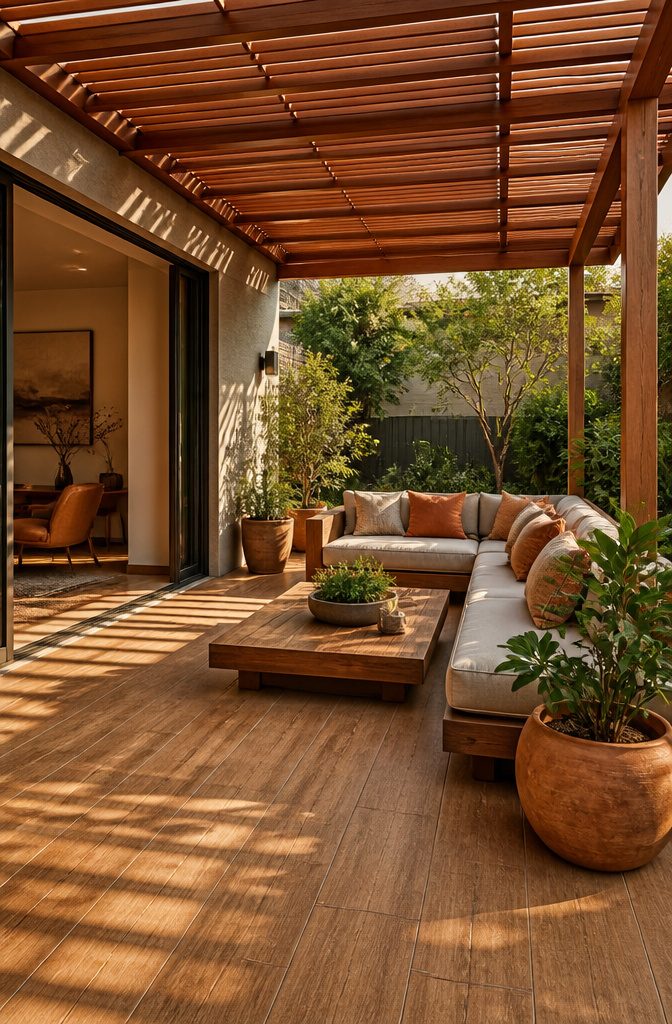
A steel or timber pergola turns an open terrace into a room you can actually sit in once the sun climbs past noon. Retractable louvres are the part that makes it work across weather, not just seasons; open them for morning light, angle them against a sudden shower, and the seating area stays usable instead of becoming a storage spot for damp cushions.
I placed mine parallel to the back wall without checking where the sun drops in late July. By six that first August evening, the angle coming under the roof line hit the exact middle of the sofa. The louvres handle overhead cover fine, but they do not block light that slips in sideways. Measure the afternoon line before you set post holes, or budget for a side screen you did not plan on.
Wood-look tile under the pergola carries the warmth through without the maintenance of actual decking. The combination reads as one continuous space from house to garden, which matters on a terrace where every square foot needs to earn its keep.
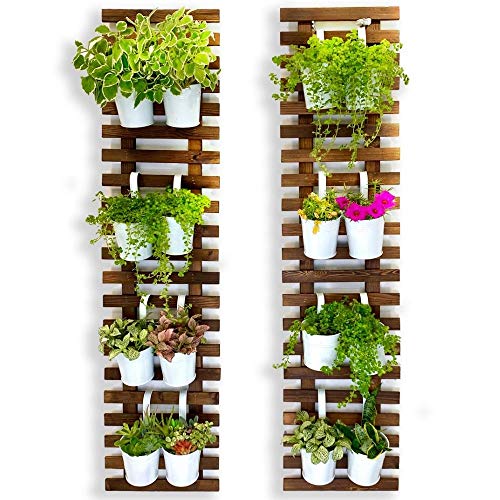
29x120cm (11.4" x 47.2") x 2 pcs. Plants, flowers, pots, decorations are NOT included

Innovative Space-saving Design: maximize your gardening potential with our stackable wall planter system; Each piece measures 9.45" x 5.71" x 5.51" and features two pockets, The overall dimensions are 47.5"x33"x5.5" offering ample growth space for a variety of plants; Nice for Fence Balcony Wall Decor, these vertical wall planters change limited spaces into gardens effortlessly

Design: Wall mounted flower pots are suitable for indoor and outdoor decoration or office walls, saving space. It is also suitable for indoor plant wall pots and vertical wall flower pots
5. Modern Entertainment Terrace
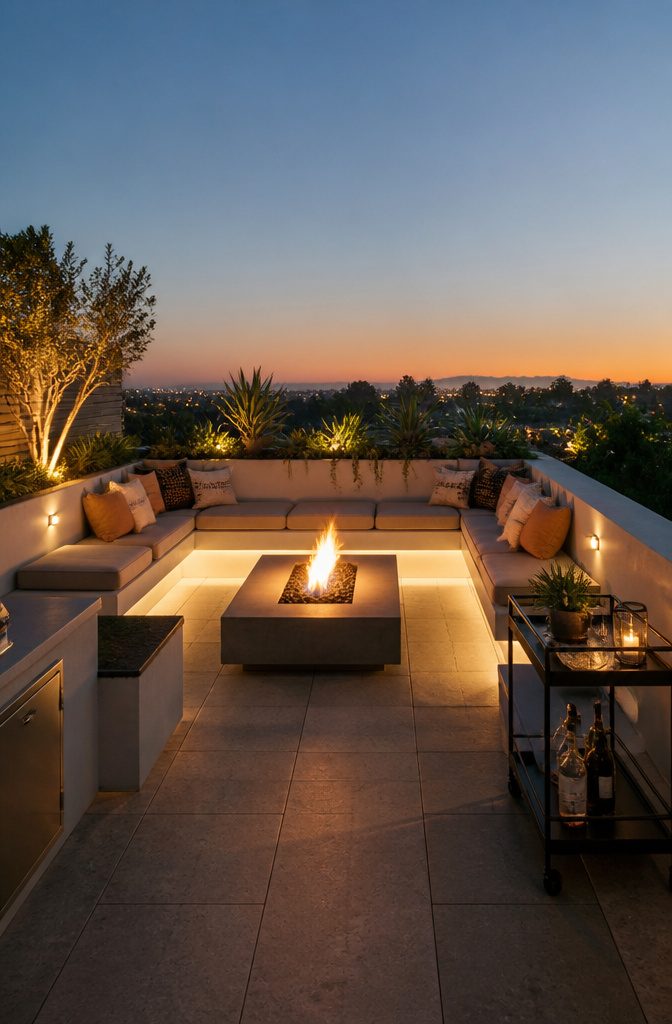
Built-in bench seating along the perimeter walls is what converts an open terrace into a party space that actually works. Guests stand near the grill, sit with a plate, or lean against the rail without blocking the flow between cooking and seating zones. I laid mine out in an L-shape to keep the center open, which sounds obvious now but took two weekends of shifting furniture to land on.
The power outlet placement is what I got wrong. I planned the kitchenette end perfectly, then realized the string lights, speaker, and every phone charger all wanted the opposite corner where there was nothing. An outdoor extension cord lived under the bench for two full years before I admitted the fix was running a proper line. Do that part first, before the benches go in.

Quality and Durable: founded atop a powder-coated steel frame, wrapped in dense all-weather wicker with woven details closely in a black finish with stereo arcuate stripe for a tastefully textured, cozy look, makes outdoor furniture set 3 PCS exceptionally durable


【Patio Chair Cover】-Outdoor chair cover designed for adirondack chair, swivel lounge chair, rocker chair, lounge deep seat. Chair cover size is 30”W x 34"D x 36"H. Please measure your chair dimensions before purchasing (Advice for Size Choosing: If the width and depth of your chair is 1 inch or more smaller than this size, please choose it)
6. Yoga and Meditation Deck
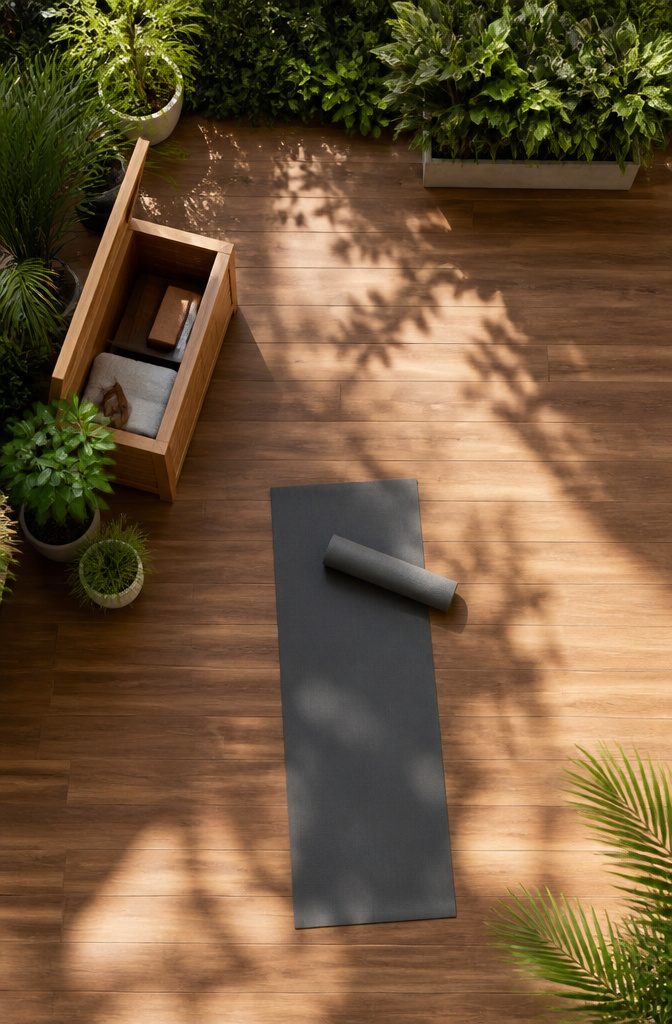
Morning light on a terrace changes everything about how a yoga space feels. I set my mat up facing east, and that first hour after sunrise gives enough brightness to move by without the glare that shows up later. The surface underneath matters just as much. Smooth timber-look flooring keeps bare feet from going numb on cold mornings, and it stays forgiving when you hold a pose long enough to notice. I learned the hard way that finish texture counts. My first attempt used reclaimed boards I had left over from another project, and a splinter caught my heel ten minutes into a session. That ended the morning fast. Storage needs to sit close enough that you are not walking across the mat in shoes, but not so close it blocks the moving space. A narrow bench with a hinged lid holds two rolled mats, a couple of blocks, and a strap without cluttering the deck. Keep the finish sanded to at least 120 grit if you are working with real wood; anything rougher invites the same problem I had.

【4-Section Folding Design for Better Fit】Designed with a 4-section folding structure, this outdoor chaise lounge cushion measures 72" x 21" x 3" and fits a wide range of patio and pool lounge chairs. The adjustable head and foot sections can fold forward or backward, making it compatible even with shorter or irregular chaise lounges.

🛒【LARGE SIZE】:Our outdoor chaise lounge chair cushion measures 71"L X 22"W X 4.7"H inches, it can easily fit many styles of lounge chair cushions in the market, please measure your outdoor furniture before purchase. Note: Please allow 1-2cm deviation due to different measurement methods.

✨【Waterproof & UV Resistant】: Outdoor chaise lounge chair cushion is made of high quality waterproof fabric, effectively prevent rainwater from seeping into the padding, while featuring UV protection to prevent fading under sun exposure. Ensures your outdoor chaise lounge cushion stays like new, perfect for poolside, patio and other outdoor scenarios. Not recommend to left outside in rainy days and cover when not use to prolong their using time.
7. Terrace Bar Setup
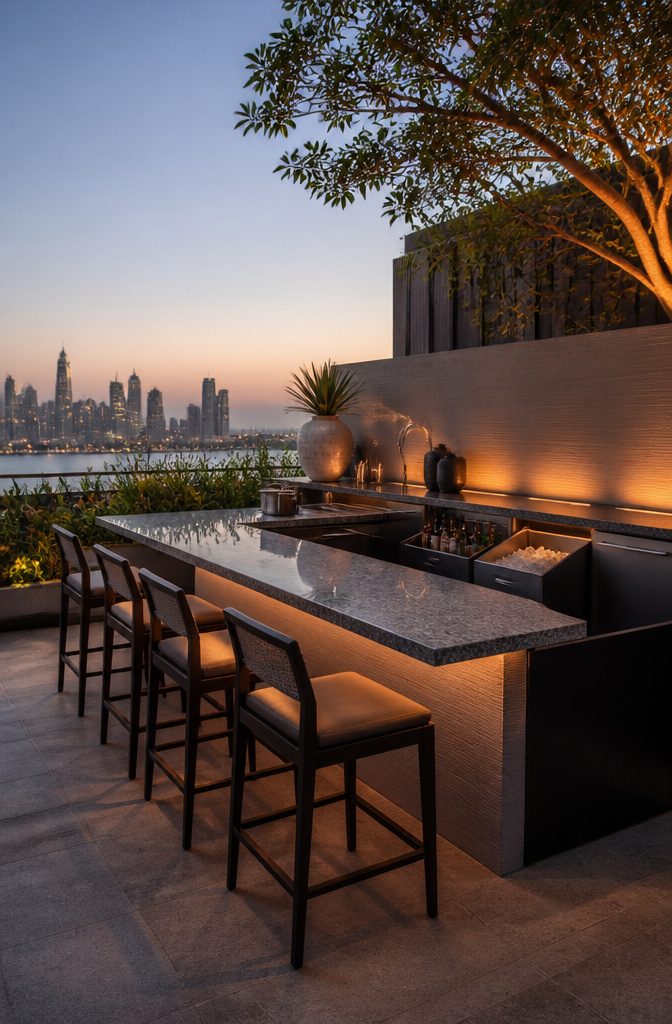
A granite-topped bar counter paired with weather-resistant high stools gives the setup its look, but compact storage underneath is what keeps it usable past the first week. I built mine with two shelves deep enough for bottles and a pull-out bin for ice, and that extra foot of planning meant the counter stayed clear for actual mixing. The granite surface itself wipes clean after spills, though the drainage I forgot to slope toward the edge cost me a morning of standing water after the first real rain. The fix was a quarter-inch drop per foot toward a channel drain, nothing fancy, just geometry I should have checked with a level before the adhesive set.
I reach for the bar area maybe two evenings a week, the lounge seating four or five. The bar works for sunset drinks with one other person; the lounge wins for anything longer or with more guests. If the terrace is small enough that only one zone fits, the seating pays back more hours.

【 Outstanding Durability, Worry-free Maintenance 】 Made of high-quality HIPS material, outdoor dining set is waterproof and UV-resistant. Compared with ordinary outdoor materials, patio dining sets are more weather-resistant and durable, less prone to fading and aging, and requires no complex maintenance. Unafraid of sun exposure and rain, outdoor table and chairs remain beautiful and stable for a long time.

Extendable Patio Table: This patio dining table effortlessly transforms from a 31.5” square to a spacious 63” rectangle. Therefore, the table seats up to 4-6 people, and will meet multiple demands for outdoor dining.

UNIQUE TEAK TABLETOP: The teak slabs used for the tabletop are handpicked cut and spliced by our skilled wood makers. Due to the organic texture of teak, the color of every piece tabletop is unique. The natural grain of teak is highly regarded. This dining table is a perfect combination of art and nature that will bring warmth and beauty to any outdoor space. Please apply teak oil every 2-3 months on the teak tabletop for maintenance.
8. Herb and Kitchen Garden Terrace
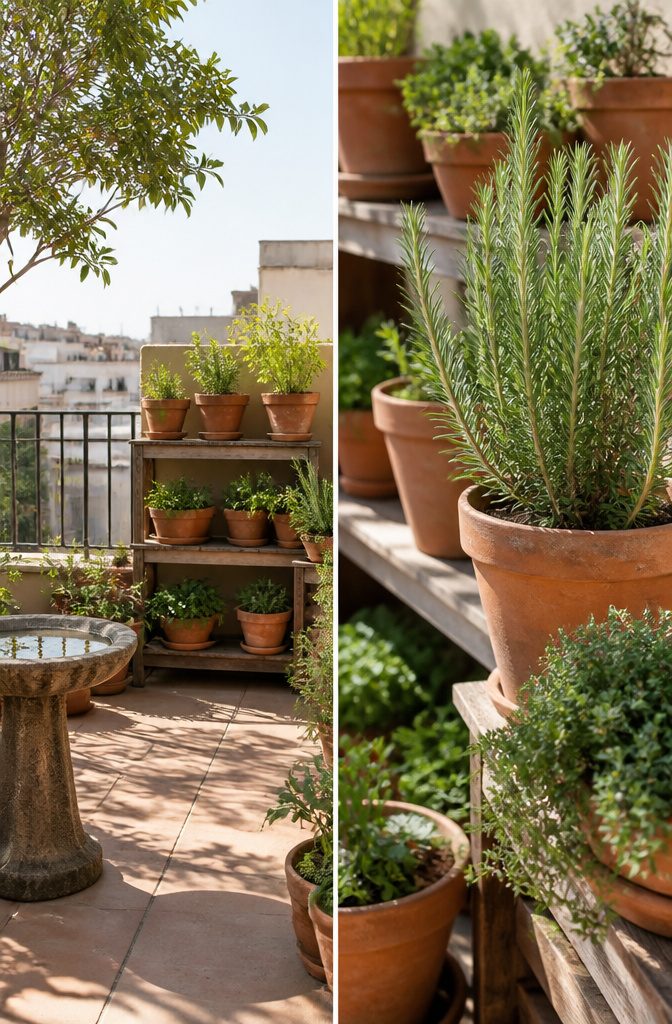
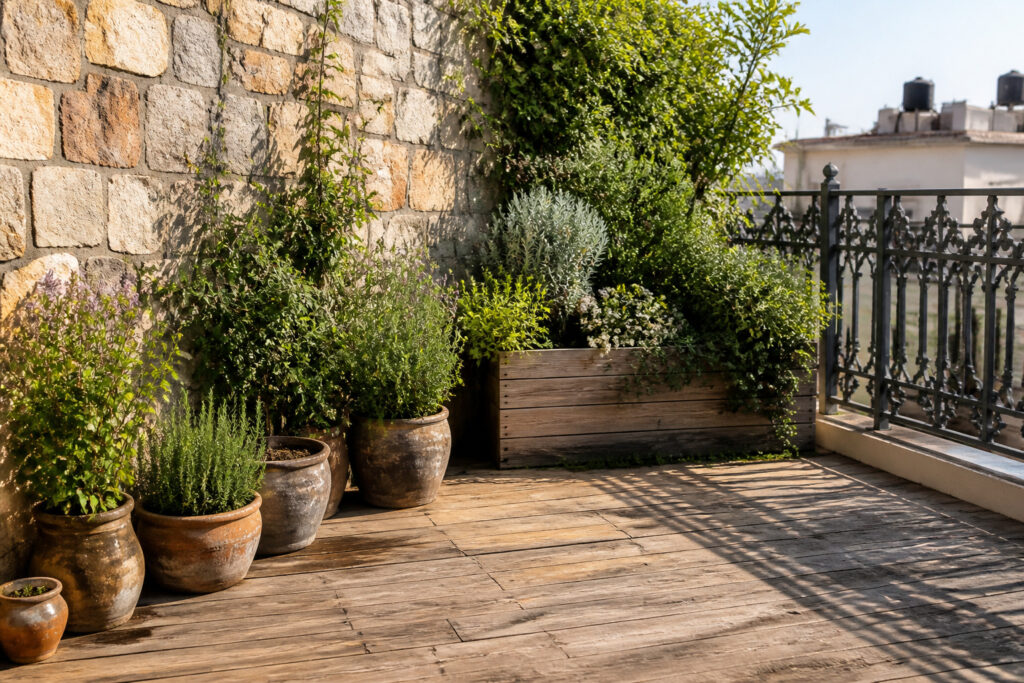
A terrace that earns its keep needs to work harder than a few pots of basil sitting in a corner. Container depth is where most people trip up. Six inches looks generous at the nursery, but rosemary and oregano send roots deep enough to split cheap plastic by midsummer. For anything woody or perennial, twelve to sixteen inches of soil is the floor, not the ceiling, and that depth buys you a buffer against the two-day stretch you forget to water.
Sun hours matter more than most renters want to hear. Four hours of direct light keeps mint and parsley alive, but it leaves thyme leggy and bitter. What convinced me, reading through a dozen grower accounts, was the pattern: the herbs that survive real neglect, the kind where you travel for a weekend or work late three nights running, are the ones that grew up dry and hungry to start with. Sage, thyme, and the tougher oreganos bounce back from wilt that would kill dill or cilantro flat. Cilantro in summer heat is basically a salad green you harvest once.
Vertical options keep the footprint honest. A steel mesh panel bolted to a terrace wall, or a leaning ladder shelf with pots wired in place, lets you stack sun exposure at different heights. The top row catches afternoon light that never reaches the floor. Just weight the base or bolt it; a full planter eight feet up is a concussion waiting to happen when the wind hits.

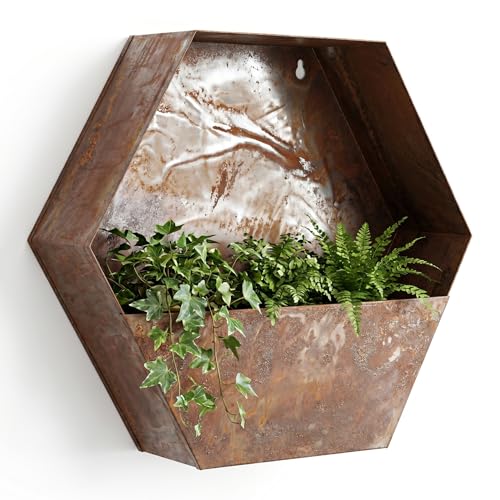
Rustic Patina Finish Design:Featuring a unique hexagon shape with a rustic patina finish, this metal wall planter adds vintage industrial charm to any indoor or outdoor space. A stylish accent for farmhouse, modern, or rustic décor.

SPACE-SAVING VERTICAL GARDEN – Create a lush green wall with 12 plants in a compact 23.5"L x 25.5"H x 5.5"D frame, perfect for small apartments, patios, or balconies.
9. Ambient Lighting Terrace
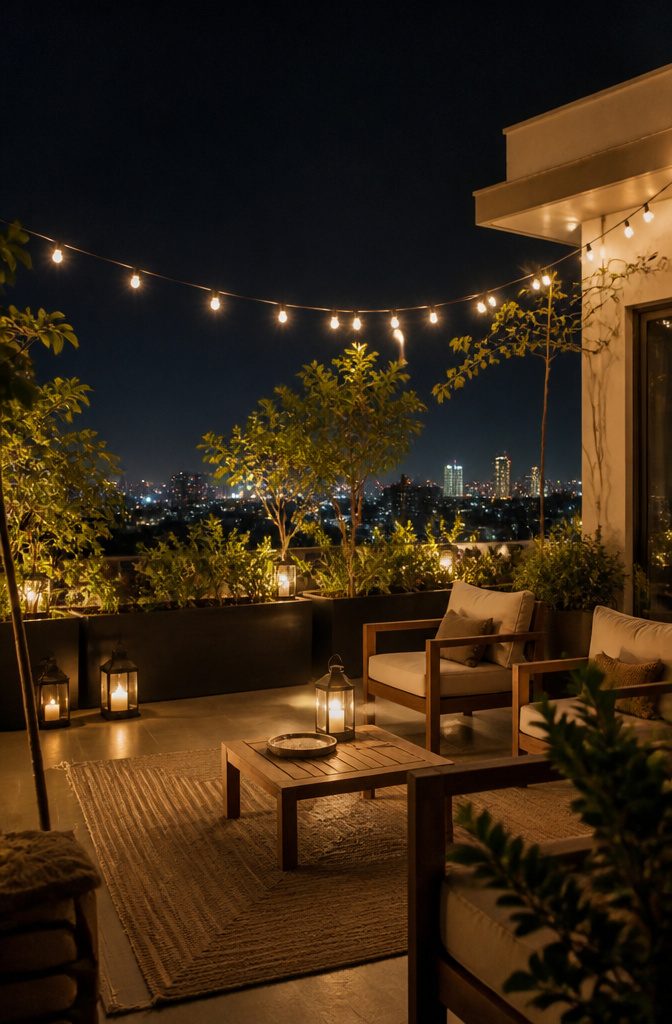
Fairy lights look effortless on Pinterest until you try to power them. My first summer on the terrace, I ran three strands of warm-white LEDs, two electric lanterns, and a string of globe bulbs off the same outdoor outlet. The breaker tripped within an hour of sunset, and I spent the rest of the evening resetting it every twenty minutes. The circuit was only 15 amps; I had loaded it past 18 without thinking to check. After that, I split the load across two separate outdoor circuits and dropped one lantern set for battery-operated candles instead.
That setup cost me about $140 total, mostly on the globe bulbs and a timer I stopped using because the mechanical ones hum. If I were doing it again, I would skip the timer entirely and put the savings toward a smart plug rated for outdoor use, which lets you dim instead of just on-off. The battery lanterns I bought for $22 each have outlasted everything else; three years later they still run 40 hours on a charge, and I can set them in corners where there is no outlet at all. For renters, that matters more than any hardwired solution.

SET OF 2 MODERN BISTRO CHAIRS: Offers comfortable, stylish seating for restaurants, bistros, dining rooms, living rooms, kitchens, and other indoor or outdoor commercial or residential environments

100% SOLID HARDWOOD: Crafted from premium solid hardwood known for its warmth, strength, and durability.

ALL-WEATHER PERFORMANCE: Constructed from Genuine POLYWOOD infinitely recyclable lumber, ClimateTuff durable material that stands up to moisture and temperature extremes and isn't prone to cracking, peeling, or chipping. Perfect for a firepit.
10. Multi-Purpose Family Terrace
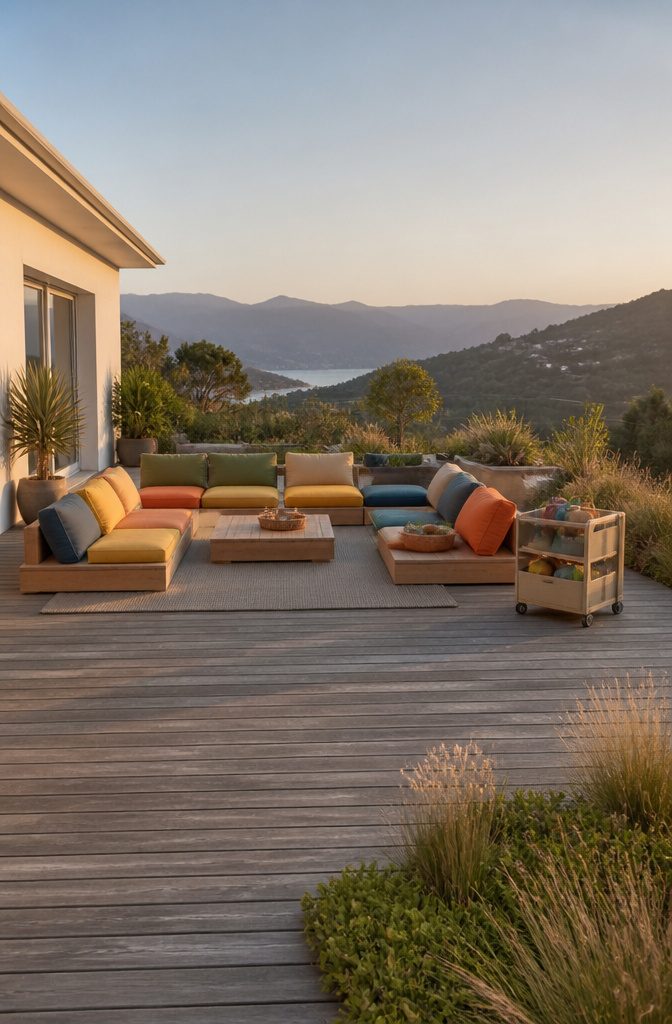
A terrace that has to work for everyone in the house ends up working for no one if every inch is claimed before noon. I learned that the summer my daughter turned four, when I painted three zones on the concrete with outdoor deck paint: coffee, play, lounge. She used the coffee zone for a mud kitchen and dragged every cushion into the play zone by 9 a.m. The paint wore off before the lesson did: zones only hold if the furniture does the work.
Now we run on modular pieces. Two low outdoor sofas with lift-off cushions rearrange into a single long daybed, an L-shaped conversation pit, or separate islands when she builds forts. The base of each sofa is hollow; lids flip up for LEGO bins, bubble wands, and the collection of rocks I have stopped trying to explain. A wheeled cart with three stackable crates holds outdoor dishes on top, sidewalk chalk and sunscreen below. It rolls to wherever we end up.
Morning coffee means the sofas face east, cart parked at the kitchen door. By evening the cart is a barricade between the hose and the cushions, and the sofas face the grill. Cleanup is five minutes because nothing lives on the terrace that does not fit in the sofas or the cart. The system flexes because I stopped drawing lines and started moving boxes.

Cloud-Like Comfort, No Collapse:Each cushion measures 72 x 21 x 5 Inches,Our 32D high-density foam measures 5 inches thick, outperforming standard 28D foam. It offers firmer support and longer-lasting resilience, resisting flattening or sagging even after repeated daily use

Practical Dimensions: Measuring 75.1"L x 22.8" W x 4.7"H and available in various colors, our outdoor chaise lounge chair cushion fit different chair types, from traditional lounge chairs to chaise lounges. Note: Please measure your outdoor recliner before purchasing. Allow 1-2cm deviation due to different measurement methods

🛒【LARGE SIZE】:Our outdoor chaise lounge chair cushion measures 71"L X 22"W X 4.7"H inches, it can easily fit many styles of lounge chair cushions in the market, please measure your outdoor furniture before purchase. Note: Please allow 1-2cm deviation due to different measurement methods.
11. Minimalist Terrace Design
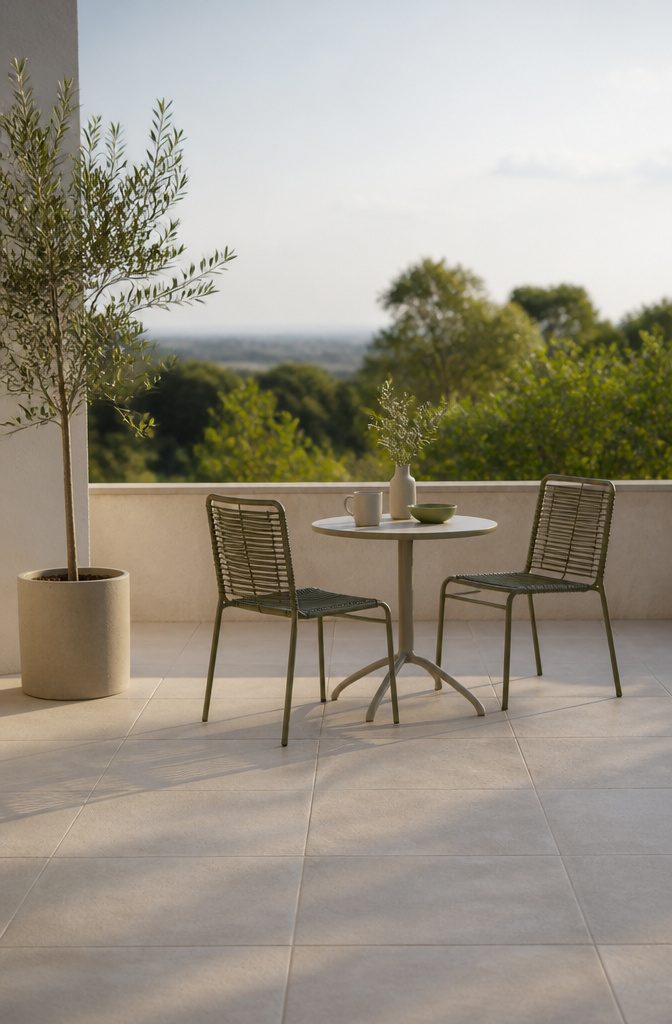
Porcelain slabs in a neutral tone give a minimalist terrace its breathing room, and that visual calm is something I underestimated until I lived with it. The surface stays clean across seasons in a way busier materials do not, and the eye reads the whole space as larger because nothing competes for attention.
The discipline of fewer pieces requires more storage than most people expect. A bistro table and folding chairs look spare on the terrace because the clutter lives in a closet or under a bench, not because the lifestyle is naturally tidy. I learned to plan for that square footage before committing to the look.
Materials that age without clutter are the ones that weather honestly. Slate or cotta stone flooring gains patina; cane or wicker softens rather than falling apart. One tall potted plant and one piece of outdoor art keep the space interesting without the visual noise I would have added five years ago. Monochrome colors stretch the sense of space further than I thought possible on a small terrace.
Terrace Covering Options
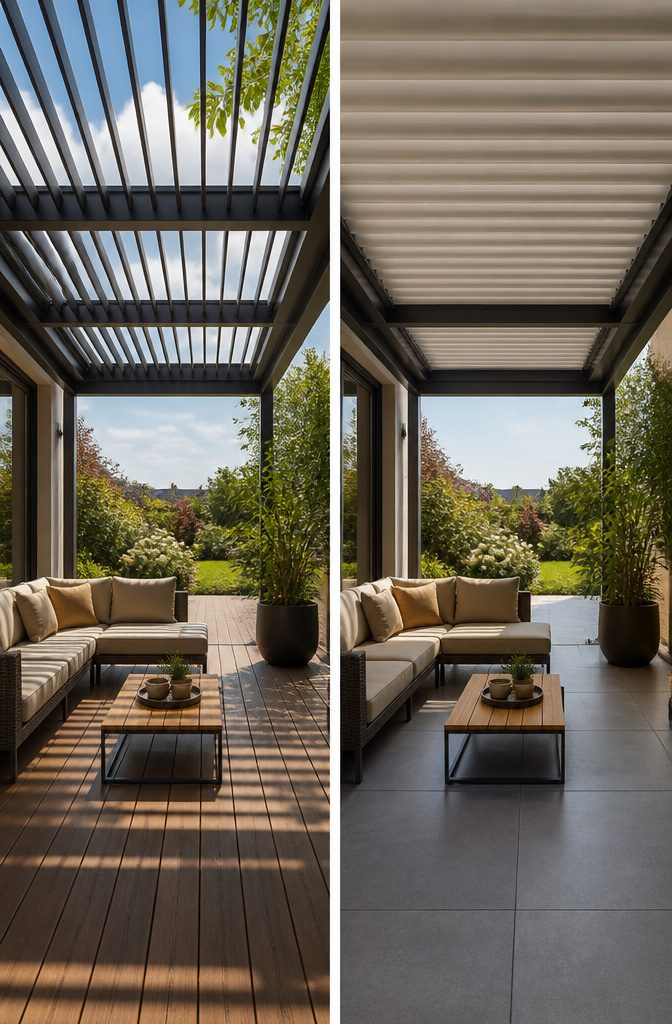
A wind-tolerant cover matters more than how the terrace looks on a sunny day. I learned that reading through dozens of installs that failed the first storm.
Gazebos give full enclosure but need anchoring; awnings and shade sails in triangular, rectangular, or square designs handle breeze better when tensioned right. Wooden slats filter light without trapping heat. Glass roofing stays permanent and rainproof, though the weight demands solid support. Pergolas with retractable louvres adjust from open sky to full shade, which is where the cost jumps but so does the year-round use.
| Covering | Permanence | Wind Tolerance | Best For |
|---|---|---|---|
| Gazebo | Permanent | Moderate (needs anchoring) | Full enclosure |
| Awning | Fixed or retractable | Moderate | Adjustable shade |
| Wooden slats | Permanent | High | Filtered light |
| Glass roofing | Permanent | High (if well-supported) | Rain protection + light |
| Pergola with retractable louvres | Permanent structure, adjustable cover | Moderate to high | Flexible weather use |
| Shade sails (triangular, rectangular, square) | Semi-permanent | High when tensioned | Budget flexibility |
Shade sails win on cost and wind tolerance if you accept taking them down before heavy weather. Glass roofing and louvred pergolas cost more to install but stay up year-round. The mistake I kept seeing: choosing a sail for a permanent look, or glass for a rental where the landlord will not allow the structural load.
Flooring Materials
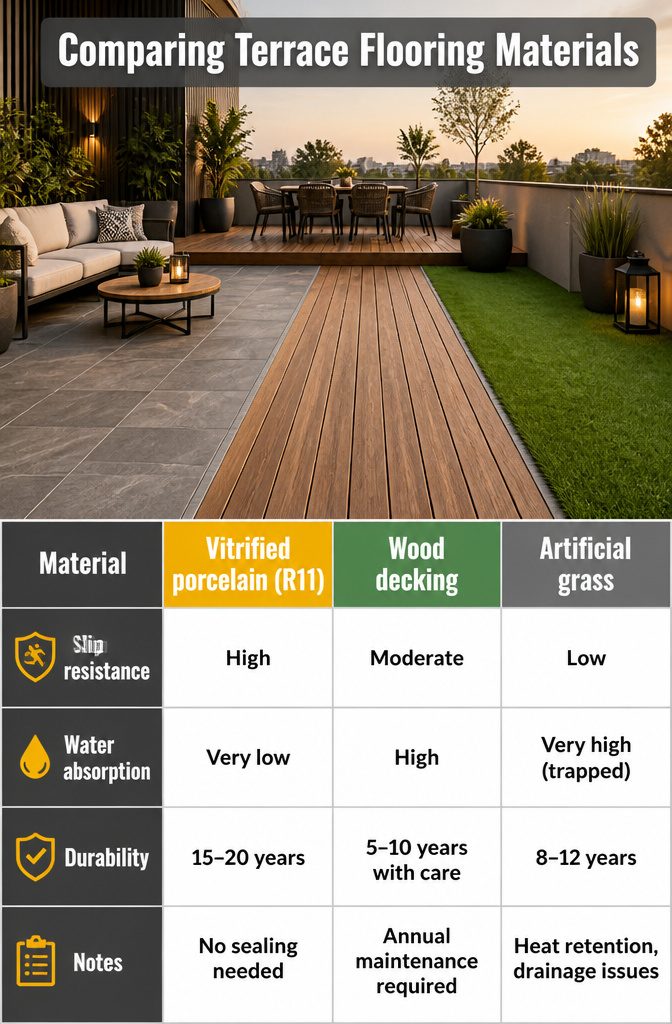
Vitrified porcelain outdoor tiles with an R11 anti-skid rating sit at the sweet spot for open terrace floors that see rain and foot traffic. The R11 classification means the surface grips at a wet-angle slope of 27 to 35 degrees, which is the range most sources cite for residential terraces where puddles happen but steep pooling does not. Water absorption on these tiles runs low enough that freeze-thaw cycles rarely crack them, and the vitrified body means stains from spilled wine or grill grease wipe off without sealing.
Wood reads warmer underfoot but demands annual sanding and oiling where I live; the maintenance cost overtakes the install cost by year three. Artificial grass drains poorly on a flat slab and holds enough heat in direct July sun that I have walked across it barefoot exactly once.
Here is how the four options compare for a terrace you actually use:
| Material | Slip resistance | Water absorption | Durability | Notes |
|---|---|---|---|---|
| Vitrified porcelain (R11) | High | Very low | 15–20 years | No sealing needed |
| Wood decking | Moderate | High | 5–10 years with care | Annual maintenance required |
| Artificial grass | Low | Very high (trapped) | 8–12 years | Heat retention, drainage issues |
I paid $3.80 per square foot for the porcelain in 2019. The same tile runs closer to $5.50 now, which still undercuts most composite decking and wins on time spent not maintaining it.
Furniture Materials That Last
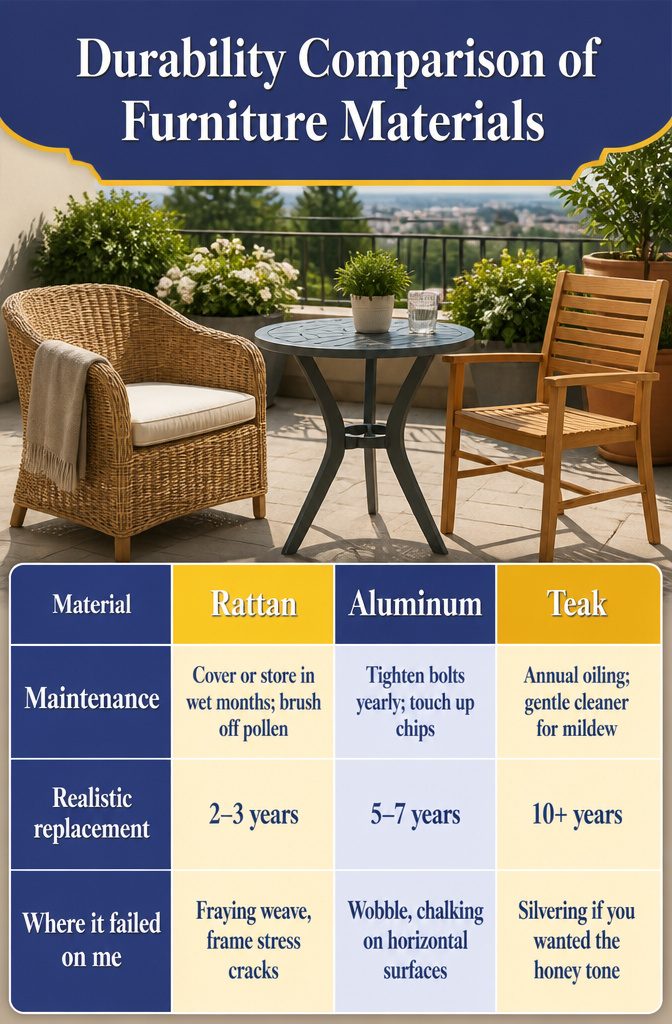
Three seasons in, the rattan loveseat on my terrace still looks presentable from ten feet away. Up close the weave has fuzzed where it sits against the frame, and last spring I noticed a crack in one arm that I now cover with a throw. Rattan needs a covered spot or it starts looking tired in year two. Aluminum has held up better; the café table I bought the same month wobbles now, but a few turns of the hex wrench fixes it, and the powder coat is only chalking slightly where the sprinkler hits it. Teak was the gamble. I oil it once each spring, which takes twenty minutes, and the grain has gone silvery rather than gray. No splinters yet, and the slats feel solid when I run my hand across them.
| Material | Maintenance | Realistic replacement | Where it failed on me |
|---|---|---|---|
| Rattan | Cover or store in wet months; brush off pollen | 2–3 years | Fraying weave, frame stress cracks |
| Aluminum | Tighten bolts yearly; touch up chips | 5–7 years | Wobble, chalking on horizontal surfaces |
| Teak | Annual oiling; gentle cleaner for mildew | 10+ years | Silvering if you wanted the honey tone |
For a weekend budget, aluminum wins. Teak only makes sense if you are keeping the piece through a move.
Adding Plants to Small Terraces
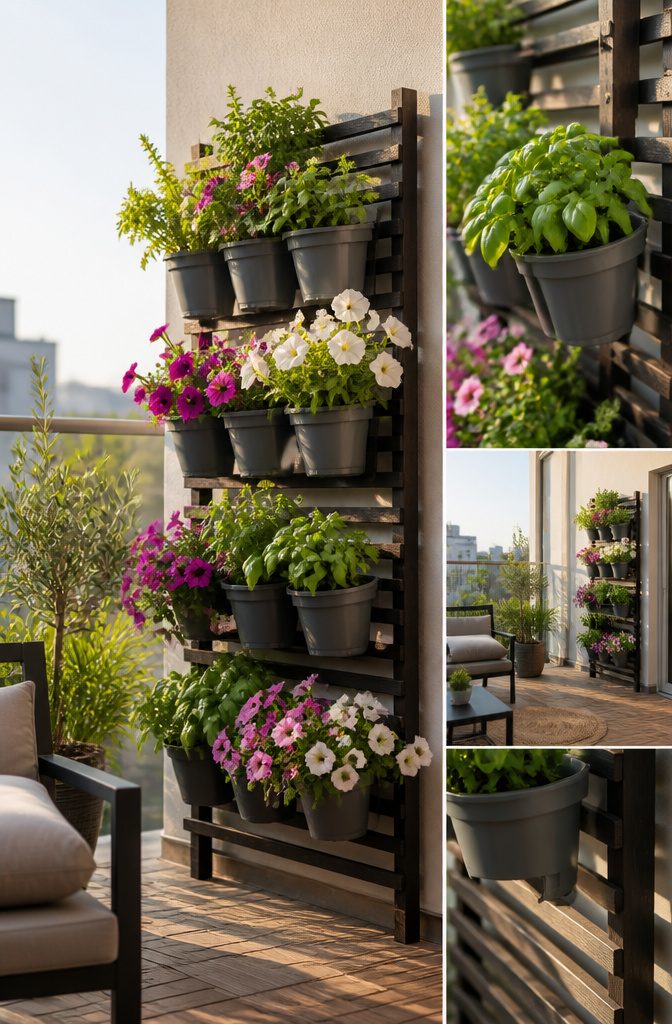
Vertical planters free up floor space on a small terrace while still giving you the green layer that makes an open terrace design feel finished. Wall-mounted racks with terracotta pots work well for herbs if you have a sunny wall; petunias, geraniums, or marigolds fill them out for color instead. Hanging baskets add depth overhead, though the weight adds up fast. I learned that the hard way: a saturated planter can pull more than you’d think on a hook rated for dry load only, and drainage is what saves both the plant and the hardware. My first setup had none. Water pooled, roots rotted, and the bracket loosened over a wet week.
The setup that actually forgave me was a simple herb cluster in pots with saucers, set on a slatted stand so air moved underneath. I forgot to water for seven days in July. The terracotta dried the soil slower than plastic would have, and the stand kept what drainage did happen from staining the terrace below. Lavender or jasmine near where you sit gives you the scent without the work of flowering annuals. If you cook at all, basil and thyme in that same cluster pay back the space they take. Built-in bench storage underneath keeps the pots from crowding you when you do need the floor.
Lighting and Safety
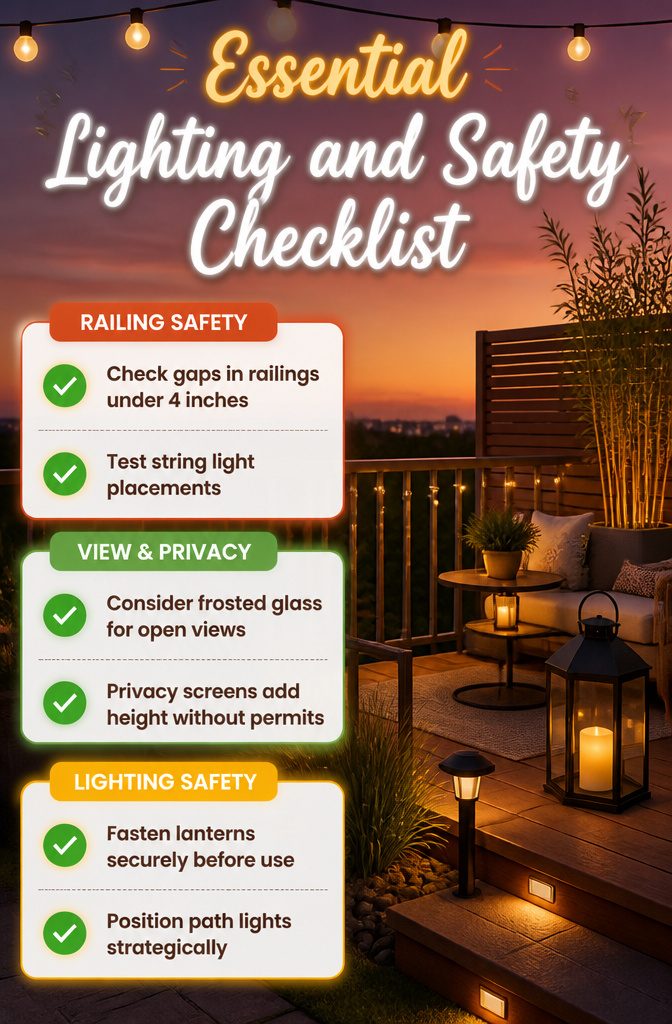
String lights look magical in product photos, but the ones I wired around my railing last spring stayed dark half the evening. The transformer was too far from the outlet, and I hadn’t tested the glow at 9 PM before mounting everything. Gaps in railings need to stay under 4 inches if children use the terrace, and that measurement includes the space between string-light cords and the top rail if you’re threading them through spindles.
Glass panels keep the view open, though frosted glass blocks the sightline both ways. Metal railings with wire mesh or plexiglass shields cost less and still pass code. Privacy screens in wood, bamboo, or composite sit behind railings easily, and tall planters with bamboo or grasses give height without permits. I skipped the permit question entirely on my first install, assuming a freestanding lattice screen was exempt. The rule of thumb is anything over 6 feet typically needs approval, though local codes vary.
Lanterns with real flames need stable footing; battery-operated ones are what I actually use now after one tipped in a breeze. The practical evening pattern is layered: low glow near seating, nothing blinding at eye level, and enough path light that a guest can find the step down without turning on a phone.
Frequently Asked Questions
How do you cover an open terrace?
Gazebos, awnings, wooden slats, glass roofing, and shade sails are all workable options, but the right choice depends on wind exposure and whether you need the cover to stay up year-round. Shade sails handle wind well when tensioned properly but need removal before heavy storms. Glass roofing and louvred pergolas cost more upfront but stay in place through all weather and give you the most flexible use.
What flooring is best for an open terrace?
Vitrified porcelain outdoor tiles with an R11 anti-skid rating grip well when wet, absorb almost no water, and need no sealing. Wood decking feels warmer underfoot but demands annual sanding and oiling; by year three the maintenance usually costs more than the install. Artificial grass traps both water and heat, making it a poor choice for most terraces.
What furniture works best on an open terrace?
Aluminum and synthetic wicker outperform other materials in open weather because they resist rust and rot without regular upkeep. Teak wood looks warmer than anything else but needs oiling twice yearly to keep its color and prevent cracking. Powder-coated steel costs less but chips eventually, and rust starts in places you cannot see until it spreads.
How do you incorporate plants into an open terrace design?
Wall-mounted planters and hanging baskets add greenery without eating floor space, which matters most on small terraces. For larger roofs, clustered pots of roses or hibiscus work well, and fragrant plants like lavender or jasmine near seating pay off better than scattered color you never approach. Just check weight limits and waterproofing before loading any planter; saturated soil weighs far more than the empty pot suggests.
How can I enhance lighting on my terrace?
Layer low glow near seating with path lighting guests can walk by, and keep nothing blinding at eye level. Split electrical loads across two outdoor circuits rather than stacking everything on one; a single 15-amp breaker trips fast with multiple strands and lanterns. Battery-operated lanterns outlast most hardwired options and go where outlets do not reach.